
Professor Kissinger a protégé of Jay Abraham for over 30 years has used this questionnaire used across various industries, contributing to over $75 billion in growth for numerous companies.
It is widely regarded as a valuable tool for identifying growth opportunities and strategic insights. Many appreciate its structured approach, which helps businesses analyze their revenue models, client bases, and strategies effectively.
Business Questionnaire Insights and Action Steps
To effectively utilize this business questionnaire, follow these action steps: first, thoroughly complete the questionnaire to gain insights into your business’s strengths and weaknesses.
Next, analyze the responses to identify key areas for improvement and strategic opportunities. Finally, implement actionable strategies based on your findings to enhance business growth and performance.
Implementing the questionnaire effectively can lead to significant business insights.
- Complete the Questionnaire — Take time to answer all questions thoughtfully, as this will provide a comprehensive view of your business.
- Analyze Responses — Review your answers to identify patterns, strengths, and weaknesses that can inform your strategy.
- Identify Key Areas for Improvement — Focus on the insights gained to pinpoint specific areas where changes can lead to growth.
- Develop Actionable Strategies — Create a plan based on your analysis to address the identified issues and leverage strengths.
- Monitor Progress — Regularly assess the impact of implemented strategies and adjust as necessary to ensure continuous improvement
Business Questionnaire Insights Phase I
This diagnostic and operational intake questionnaires is often referred to as the “Monster Questionnaire” or pre-consulting profile forms and is designed to strip away surface-level assumptions and expose hidden revenue, operational bottlenecks, and untapped leverage points in a business.
Core Categories Business & Operational Questionnaire
1. Market and Target Audience Analysis
- Target Market Definition: What is your exact target market, and how did you arrive at it?
- Market Potential: What is the total market size (universe), and what is your current market share?
- Geographic Scope: Does your business market locally, regionally, nationally, or internationally?
- Dream Clients: Who are your “dream” clients—the top 20% that drive 80% (or more) of your sales and profits?
2. Customer Data and Economics
- Active Customer Count: How many active customers do you currently have?
- Customer Data Depth: What exact data do you track (names, contact details, transaction history, purchase dates, source of origin)?
- Customer Acquisition Cost (CAC): What does it cost you in advertising, time, or resources to acquire a new customer?
- First-Year Value: What are the average sales and profits generated from a new customer in their first year?
- Lifetime Value (LTV): What is the total lifetime value of a typical customer across their entire relationship with you?
3. Marketing Strategy and Philosophy
- Company Description: How would you describe your company and its core mission in a single sentence?
- Marketing Philosophy: What is your company’s overarching marketing philosophy?
- Written Plan: Do you have a written marketing plan that you actively follow, and is it based on a fixed budget or a variable percentage of sales?
- Primary Acquisition Mode: What is your primary mode of marketing, and what exact percentage of your total business comes from it?
- Referral Systems: What percentage of your business comes from referrals, and do you have a systematic, proactive referral program?
- Back-End Monetization: Do you have a systematic back-end to sell additional products or services (yours or joint venture partners’) to existing customers?
4. The Three Ways to Grow a Business Audit
- Client Expansion: Are you maximizing the number of clients you attract?
- Transaction Frequency: Are you increasing how often each client buys from you?
- Average Order Value & Profit: Are you maximizing the revenue and profit per transaction?
- Note: traditionally we walk clients through roughly 30 standard growth/leverage options to check which ones are being utilized versus ignored.
5. Owner Philosophy, Leverage, and Operations
- Time Freedom: When was the last time you took two full weeks completely away from the business?
- Operator vs. Owner: Are you still trapped working in the daily operations, or have you transitioned to working on the strategic direction?
- Resource vs. Time Allocation: Where is all your business coming from (demographics/channels) versus where is all your personal time and money actually being spent?
- Core Bottlenecks: Why is a specific operational or revenue issue a problem right now, why do you need to fix it, and what happens if you don’t?
Business Questionnaire Insights Phase II
This Operational & Strategic Business Questionnaire is a legendary, deep-dive tool used to uncover hidden assets, overlooked opportunities, and underperforming areas inside a business.
Rather than focusing strictly on day-to-day administrative tasks, Abraham’s framework forces business owners to audit the intersection of marketing, sales data, infrastructure capacities, and client psychology.
Below is a synthesized, highly actionable version of the primary questions found across Jay Abraham’s core diagnostic questionnaires. ..
1. Market & Positioning
- The Target Market: What is your target market, and exactly how did you arrive at it?
- Market Share: What is your total market potential (your ideal universe), and what is your current share of that market?
- Geographic Scope: Does your business market locally, regionally, nationally, or internationally?
- Unique Selling Proposition (USP): What is your USP? How does it explicitly differentiate you from your competition, and how do you communicate it?
2. Customer Metrics & Asset Valuation
- Client Database Quality: Exactly what kind of data do you track on your customers? (e.g., names, emails, transaction dates, frequency, purchase histories)
- The 80/20 Rule: Who are your “dream” clients—the top 20% that drive (or could drive) 80% of your total revenue?
- Client Acquisition Cost (CAC): What does it cost you to acquire a new customer? (e.g., total marketing cost divided by total new customers)
- Lifetime Value (LTV): What is the exact lifetime value of your typical customer in terms of gross revenue and net profit over the entire duration of their relationship with you?
- The Database Breakdown: How many active buyers do you have? How many unsold prospects do you have? How many inactive past buyers do you have?
3. Sales & Revenue Architecture
- Core Economics: What is your average unit of sale? What are your gross yearly revenues and average profit margins for the last 3–5 years?
- Lead Generation: What is your primary, most reliable source of prospects or clients?
- Risk Reversal: What guarantee or risk reversal do you offer to remove the friction of buying?
- The Back-End System: Do you have a systematic back-end system for selling your own (or other people’s) products or services to existing customers? How does it work?
- Referral System: As a percentage, how much of your business comes from referrals? Do you have a formalized, proactive referral system?
4. Operational Capacity & Infrastructure
- Infrastructure Breakdown: What is the size of your current staff, broken down by department?
- Bandwidth & Leverage: How much more sales volume or business could you realistically handle with your current team and operational infrastructure before hitting a wall?
- Owner Bottlenecks: If you take two weeks off right now, what happens to your revenue? Why are you still the primary operational bottleneck of the company?
- Audit of Activities: Conduct an internal audit of daily workflows: Where is work being done, how is it being performed, who is executing the tasks, and are they aligned with their highest skills?
5. Constraints & Future Vision
- The Biggest Hurdle: What is the top sales, competitive, or operational problem you want to overcome right now? Where do you need a breakthrough the most?
- Growth Philosophy: Is your marketing plan based on a fixed, rigid budget or a variable percentage of sales that scales as you grow?
- The Vision Gap: What operational or strategic changes are strictly required to satisfy the projected 3–5 year vision of your business?
How to Use This Questionnaire
To get the most leverage out of this diagnostic, do not answer with generic summaries. Abraham’s methodology relies on exact numbers and concrete historical data. If you do not know the answer to a question (such as LTV or your exact capacity limit), that gap identifies your first operational priority.
For business owners wanting an automated framework, Jay Abraham also provides a free interactive AI consultation tool called Jay-I which utilizes these core principles to diagnose business bottlenecks.
If you want to tailor this framework specifically to your company, tell me:
- What industry are you in?
- What is your approximate annual revenue bracket?
- What is your primary operational bottleneck right now?
We’ll can help you prioritize which section you should focus on first.
Cultivate Breakthroughs Today
Step 1 Personalized Call
In this 15-60 minute Discovery Session, we will start to deep dive with you on what you want challenges, disputes or goals are and any current challenges you are having with achieving them.
Step 2 Match You
We’ll match you with a coaching strategist to help you uncover the root cause to what’s truly stopping you from getting what you want.
Step 3 Results Coaching Plan that Exceeds Expectations
You’ll get started with Professor Kissinger or the Reitenbach Kissinger Institute Coaching Team and close the gap to what or where you want to be quickly and efficiently.
Informed by four decades of extraordinary results, Michael Kissinger MKS Master Key System Results Coaching is built to help you discover ways to get you want you want or to grow your business, finances and profits exponentially. Professor Kissinger provides the tools for you to create massive, lasting change in your life finances, and business.
It significantly reduces costs, prevent delays, and improves outcomes by identifying issues early and ensuring robust documentation and communication throughout the lifecycle.
Professor Kissinger provides proactive strategies—such as comprehensive money management and thorough record-keeping—proves far more cost-effective coaching. Research shows that effective management can prevent project failure and cost overruns and achieve favorable outcomes.
“The path to get what you want success is to take massive, determined action.”
If not now, then when?
Consider the Alternative…FAILURE

Lasting Long Term Results
Professor Kissinger’s MKS Master Key Coaching options and programs vary widely in format and cost, ranging from entry-level digital coaching to intensive, multi-year certification tracks.
Whether you are looking for professional coaching or training or personal growth strategies, the investment depends on the depth of the commitment and the level of direct mentorship provided.
MKS Master Key System Growth Coaching typically ranges from $6,995 for a MKS Master Key System Business Results plan to $4,500 to $18,000+ for multi-month or annual packages.
Understanding the pricing structure can help in decision-making.
- MKS Master Key System Results Plan — Costs around $6,995 for a structured coaching program.
- MKS Master Key System Multi-Month Packages — Range from $4,500 to $18,000+, depending on the duration and services included.
- One-on-One Coaching — Prices can vary significantly, often between $500 to $3,000 per hour.
- Annual Coaching Programs — Results Coaching can range from $15,000 to $75,000 per year.
Professor Kissinger’s Legacy
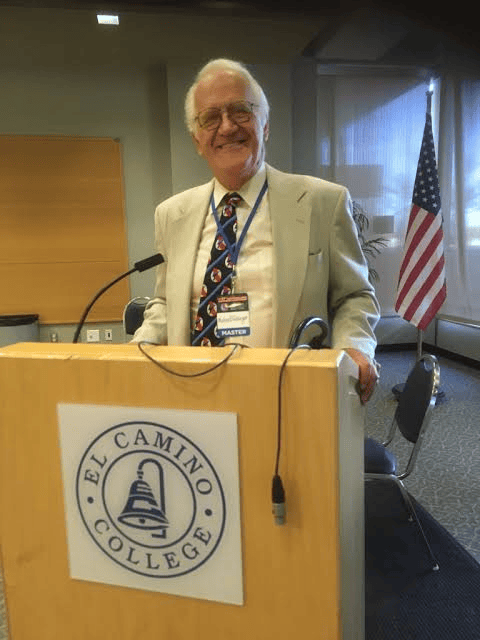
Professor Michael Kissinger is an owner and executive business coach, performance strategist, and former academic who operates the Reitenbach-Kissinger Success Institute and the MKS Master Key Coaching
Based out of California, he has spent over four decades working over 5,000+ business owners as a confidential business manager, analyst, and speaker focused on small business growth, leadership, and financial freedom.
Core Programs and Methodology
- The MKS Master Key Generational Wealth System: A structured, diagnostic framework built around six distinct core pillars: mindset, wealth, health, relationships, business, and leadership. The philosophy emphasizes that success is 80% psychology and 20% mechanics.
- MKS Master Key Generational Wealth Strategic Makeover Sessions: The institute offers targeted diagnostic sessions designed to audit business growth levers and outline scalability tracks for companies generally yielding between $400,000 and $3 Million in annual revenue.
- Contracted Engagements: Programs are heavily tailored to custom small business, corporate or personal timelines rather than flat-rate fees. Standard six-month operational contracts typically range from $4,500 to over $8,200 depending on the scope of the dynamic tracking involved.
Academic and Professional Background
- Teaching Career: He served over 17 years as an adjunct professor instructing courses in business and law at multiple California institutions, including San Francisco State University, Golden Gate University, and Cañada College where he coached and trained over 10,000 university students and small business owners. Author of over 14,000 LinkedIn Articles that have created 18,650 followers and contacts.
- Martial Arts and Other Accomplishments: He holds a 4th Degree Kukkiwon Certified Taekwondo Black Belt and has active ties spanning 40 years as an instructor at the Reitenbach Institute of Taekwondo. He is a former US Army Honorably Discharged Special Forces Vietnam Member. He also served over 20 years as a minister at Unity Church and St Stevens Church.
You can view his complete professional breakdown directly on his LinkedIn Profile.

Start on Your Operational Business Assessment and Results Today
Are you looking results? Schedule a diagnostic session, or would you like a breakdown of a particular coaching to get rich? Contact us.
Professor Kissinger emphasizes the importance of continuous improvement as a key to personal, business, financial and professional growth. By constantly acquiring new knowledge and skills, individuals can adapt to changes, overcome challenges, and achieve their goals more effectively.
Continuous learning and improvement is a fundamental principle in Professor Kissinger’s coaching philosophy.
- Adaptability — Continuous improvement helps individuals adapt to changing circumstances and environments.
- Skill Development — Regularly updating and improving skills can lead to better performance in both personal and professional settings.
- Resilience — Learning and updating new strategies and perspectives fosters resilience, enabling individuals to navigate challenges more effectively.
- Goal Achievement — Lifelong learning and improvement is essential for achieving long-term goals, as it equips individuals with the tools needed for success
Contact to discuss how leverage, ownership, scalability, necessity, attention, and compounding can create completely different financial outcomes for you.
Reitenbach Kissinger Institute
Sydney Reitenbach
Professor Michael Kissinger
Text: 650-515-7545
Email: mjkkissinger@yahoo.com
Reach Your Peak Performance Results. Embrace Your Unlimited Potential. Valued Between from $2,350 to $5,500+


