

At What Net Will You Transition from Being Poor or Middle-class to Well-Off to Truly Wealthy?
The transition from being well-off to truly wealthy is often marked by a net worth threshold of around $2 million. This figure is commonly cited as the point at which individuals or households are considered part of the wealthiest segments of society.
For instance, a recent analysis indicates that to be in the top 10% of U.S. households by net worth, one needs approximately $1.8 million. However, many financial experts suggest that a net worth of $2 million or more is a more accurate benchmark for being classified as truly wealthy.
This distinction is not solely about the amount of money one has but also involves the ability to generate passive income through investments and assets, which is a hallmark of true wealth.
So, if you’re aiming for that next level of financial success, focusing on building your net worth to that $2 million mark could be a great goal! Work With Us Keep Pushing Forward to Your Next Level!
Here’s How to Understand, Apply and Master the 7 Levels of Financial Freedom From Solvency to Independence and Legacy in Your Life.
You can navigate from financial uncertainty to ultimate wealth with the seven levels of financial freedom. This guide can help make it feel more tangible. More possible. We will show how each level contributes to your financial growth, tangible tools, and personal peace of mind. Straightforward and without fluff, get ready to transform your approach to finances and begin your ascent up the MKS Master Key Financial Coaching Ladder to financial prosperity today.
Identify Your Stage Key Takeaways
- Financial Freedom is reached through incremental levels, starting from getting financial clarity and setting goals, then moving toward self-sufficiency, stepping up, refining your strategy, flexibility, elevation to financial independence, legacy and attaining abundance and ultimately achieving the ability to live off passive income and abundant wealth.
- Key Strategies in ascending the levels include budgeting, eliminating debt, building emergency funds, increasing income, optimizing expenses, investing smartly, and diversifying investments.
- Reaching the Pinnacle of Financial Freedom allows for living a dream lifestyle and giving generously, illustrating the importance of managing finance with purpose, and planning for a lasting legacy.

Why Financial Freedom?
In today’s hyperconnected, digitally driven, and rapidly changing world achieving financial freedom is not just a lofty goal but a necessity. We need to take our future into our own hands, so that we can bring the most good to the world possible.
It is more than just accumulating wealth. It is about gaining the freedom to live life on your terms, free from financial stress and constraints.
Just as Neville Goddard notes in his coaching on “Financial Freedom,” this journey is not about being rich; it is about living richer. It is about being part of the FIRE movement (Financial Independence, Retire Early), where you set long-term financial goals and strategize to achieve them, eventually reaching a point where your rent covers more than just your living expenses. And it’s about living your own life by design, not by default, along the way.
The objective is to construct a life where money serves as a tool rather than a constraint.

MKS Master Key Financial Coaching Ladder to Financial Freedom Level 1: Clarifying Your Vision of Financial Independence
Imagine a ship setting sail without a destination. It is likely to be tossed around by the waves and winds, right? The same is true for your financial journey.
But just like that ship, the destination may change over time. Sure, French Polynesia sounds great when you start your round-the-world sailing adventure, but you may get stalled out in the Mediterranean and pivot to a European RV tour. Hey, it could happen.
The initial stage of financial freedom involves:
- Gaining financial clarity
- Comprehensive evaluation of your personal finances
- Establishing financial goals
- Formulating a budget (or not, more on that below)
The aim is to comprehend your current financial position and chart a course to your desired destination. Think of it as setting the coordinates for your financial ship, giving it a clear direction to sail towards.
Assessing Your Finances
You cannot begin a journey without knowing your starting point, and the journey to financial independence is no different. It begins with assessing your finances. This involves:
- Conducting a financial audit to track both your fixed and variable expenses
- Enhancing your financial literacy to make informed decisions
- Developing a habit of regularly tracking your financial progress
Think of it as a medical check-up, but for your finances. You are getting a clear financial picture of your financial health, understanding the state of your cash flow, and identifying areas that need attention. This step is crucial as it lays the foundation for your financial stability.
Do not judge yourself here. Just write it all down. If there are expenses that make you cringe, know that they are working toward either not making the same decision again or being able to afford those luxuries with ease.
Setting Financial Goals
With a lucid understanding of your financial condition, the next step is to determine your financial objectives or long-term financial goals. These are the destinations you want your financial ship to reach. Your goals could be anything from saving for a dream vacation, buying a home, or planning for retirement. The key is to make your goals specific, measurable, and time bound. This approach not only creates a sense of urgency but also provides a clear plan for achievement.
Bear in mind, these objectives serve as your compass, steering your financial journey and providing motivation to persist.
Creating a Budget
This is my least favorite step. I will tell you why after I present the reasons for doing this.
Imagine trying to stay within the speed limit without a speedometer. Sounds challenging, right? That is what trying to manage your finances without a budget is like. A budget functions akin to a financial speedometer. It aids in monitoring your income and expenses, helping to prevent overspending and ensure alignment with your financial objectives.
It involves listing all your monthly expenses and projecting how much you can spend in each category. Then, you will verify them by reviewing bank and credit card statements from previous months. Regularly reviewing your budget helps you stay on track and adjust, as necessary. Remember, a budget is not about restricting your spending; it is about understanding and managing it.
I do not like them because I have found that budgets require a level of time and scrutiny that I simply do not have. However, I am not a chronic over-spender (my upbringing and scaring from a money-scarce house did me well there I guess), so I do not naturally spend way more than I make.
That being said, I do go back and look at my expenses every few months to see if my general feelings about how much I am spending match my reality. Do what works for you but find a way to analyze your regular spending habits.

MKS Master Key Financial Coaching Ladder to Financial Freedom Level 2: Foundation of Self-Sufficiency
Armed with a clear financial outlook, the next phase is to achieve self-sufficiency on your way to reach financial independence. This stage is all about standing on your own two feet financially. It is composed of three essential thresholds:
- Earning enough to cover all your expenses without relying on external financial help. Think of it as learning to swim. First, you might need floaties or a lifeguard to keep you afloat. But with time and practice, you learn to swim on your own, becoming one of those financially independent folks.
- Establishing an emergency fund. This is part of the essential foundation of financial security because you never when what can happen to your paycheck. The construction of an emergency fund functions as your financial safety net, ensuring you have enough money during unforeseen circumstances.
- Eliminating debt. You will want to get to the point where you are not paying to borrow money (except for your primary residence, likely). The attainment of personal finance self-sufficiency requires debt elimination.
Building an Emergency Fund
An emergency fund resembles a lifeboat for your financial vessel. It is a buffer against unexpected expenses like unplanned medical bills or job losses. Building an emergency fund involves making small savings contributions and using windfalls such as tax refunds or bonuses.
The size of the fund should be tailored to your needs, typically covering around three to six months’ expenses. Remember, an emergency fund is not just a safety net; it is a peace of mind fund. It is there to ensure that even in the face of financial storms, your ship stays afloat. It is the rebar in your foundation.
Eliminating Debt
Debt is like a leak in your financial ship. It can slow you down and, if left unchecked, can even sink your ship. That is why eliminating debt, including credit card debt, is a crucial part of achieving financial security. This involves formulating a plan to pay off high-interest debt, such as credit cards.
Strategies like the snowball method, where you pay off the smallest balance first before moving on to the next, can create momentum and psychological wins. It is about taking control of your financial situation and steering your ship away from the stormy waters of debt.
MKS Master Key Financial Coaching Ladder to Financial Freedom Level 3: Stepping Up and Taking Your Financial Independence to New Heights
With the establishment of a firm foundation, the subsequent phase is to ascend to the launchpad. This stage is all about:
- Gaining financial breathing room
- Increasing your income
- Optimizing your expenses
- Starting to invest
Think of it as filling up your ship’s fuel tank, checking the engines, and preparing for launch. You are getting ready to take your financial journey to new heights.
Increasing Your Financial Income
Fueling your financial ship involves increasing your income. But now that you are not paying debt, this gets easier and easier.
This could involve advancing your career, selling personal items, or renting out unused assets. Each of these strategies can supplement your income, contributing to the forward momentum of your financial journey.
But remember, earning more does not mean having more. It is also about managing your income effectively and directing it towards your financial goals. This is where you need to be super careful to not let non-intentional lifestyle creep in.
Optimizing Expenses
While fueling your financial journey, it is equally vital to streamline your expenses. This involves creating a more refined budget, eliminating unnecessary costs, and adopting money-saving habits. By doing so, you will have living expenses saved, which can be thought of as streamlining your ship, reducing drag, and ensuring efficient use of your fuel.
Starting to Invest
As your financial ship gains momentum, it is time to start investing. Investing is like adding rocket boosters to your ship. It is about putting your money to work for you, generating passive income, and growing your wealth over time.
Commencing investments early and utilizing tax-advantaged savings and investment accounts can facilitate exponential growth of your wealth.
It is essential to start investing as soon as possible, so do not skip this step!
Start Real Estate Investing Early
One of the powerful rocket boosters you can add to your financial ship is real estate investment. By starting real estate investing early, you can create a passive income stream that grows alongside your career income.
Whether through crowdfunding platforms or rental properties, real estate can be a key engine of financial growth.

MKS Master Key Financial Coaching Ladder to Financial Freedom Level 4: Refining Your Financial and Investment Strategy
Now that your financial journey is underway, the next step involves refining your financial strategy. This is the fourth level of the seven levels of financial freedom, where you calculate your FI number, diversify your investments, and plan for unexpected events. It is about fine-tuning your financial ship’s course, ensuring it is set for the right destination.
Calculate Your Financial Independence (FI) Number
Your Financial Independence number (FI number) is the amount of wealth you need to have invested in to live off the passive income indefinitely. For stock market index fund investors, this is found by taking your annual expenses and multiplying by twenty-five. You could pull 4% of that number every year without depleting your principle to zero.
For real estate investments, your FI number may be when the cash flow is enough to cover your current living expenses. Because you will be reinvesting the proceeds and original capital with every asset sale, your wealth will continue to grow (fast), allowing you to have more and more cash flow every year.
Diversifying Investments
Diversification can be likened to having multiple engines propelling your financial journey. It is about spreading your investments across various asset classes to reduce risk and provide more stable returns over time.
Whether it is real estate, equity stakes, or bonds, diversification in your investment portfolio can help smooth out your financial journey.
Planning for Unexpected Events
As you sail towards your financial destination, you need to plan for unexpected events. This involves having insurance policies in place to protect you from large, unforeseen expenses. It is about preparing for the unknown storms that might come your way, ensuring your financial ship remains resilient.
MKS Master Key Financial Coaching Ladder to Financial Freedom Level 5: Financial Flexibility
Upon reaching the fifth stage of financial freedom, you start to enjoy financial flexibility. This is when your passive income starts to cover a significant portion of your living expenses, allowing you to explore new ventures and even take periods of rest.
It is like reaching a safe harbor where you can take a break, replenish your supplies, and prepare for the next leg of your journey.
This stage is reached when you have 50% of your expenses covered by your investments.
Alternative Income Streams
At this stage, you may have the opportunity to explore alternative income streams that could support you into retirement, beyond just portfolio income. These can include starting a side business, or other passive income opportunities. This is the time to play with some of your dream ideas while also helping to pay your living expenses.
Each new income stream, contributing to your annual income, is like a fresh gust of wind, propelling your financial ship further along its course and helping you break free from living paycheck to paycheck.
Lifestyle Changes
Achieving financial flexibility also involves making lifestyle changes. This may mean embracing simplicity or exploring creative living arrangements. Each change is like adjusting your sails, catching the wind more efficiently, and speeding up your financial journey.

MKS Master Key Financial Coaching Ladder to Financial Freedom Level 6: Elevate to Financial Independence
Upon departing the safe harbor of financial flexibility, you are prepared to ascend to the ensuing level: financial independence. At this level, you reach a point where you can live solely off the income generated from your investments, passive real estate investments, or rental properties. It is like reaching the open sea, where you are free to sail in any direction you choose, having achieved financial independence.
This is one of the higher levels of financial freedom that many aspire to attain, and understanding the levels of financial freedom can help guide your journey. You may choose to quit your job or take on a passion project.
Smart Investing
Navigating the open sea requires smart investing. This involves:
- Refining your investment strategy to generate portfolio income
- Making sure each investment serves its intended strategic purpose.
- Steering your financial ship with precision and expertise, ensuring it stays on course.
Passive Income
In the open sea of financial independence, passive income becomes a significant reliance. This income stream is like a constant wind, steadily pushing your financial ship forward. Whether it is from rental properties, crowdfunded real estate platforms, or other investments, passive income is key to sustaining your journey towards financial independence.
Disciplined Spending
In the vast expanse of the open sea, resources are finite, underscoring the necessity for disciplined spending. It is about managing your resources wisely, ensuring you have enough to last the journey.
Whether it is adopting a frugal mindset or distinguishing between needs and wants, disciplined spending is key to navigating the open sea of financial independence.
MKS Master Key Financial Coaching Ladder to Financial Freedom Level 7: Legacy and Attaining Abundant Wealth
Ultimately, you arrive at the pinnacle of financial freedom: abundant wealth and a lasting legacy. Here, you have more money than you may ever need, effectively eliminating financial concerns from your life. It is like reaching a tropical paradise, where you are free to enjoy the fruits of your labor and live life on your own terms.
However, you may find at this stage that money does not actually buy happiness. Here’s where true happiness can unlock, when we explore what it means to live intentionally and what brings us the most meaning.
Living Your Dream Lifestyle
In this blissful utopia, you have the liberty to lead your dream lifestyle. This could involve traveling to exotic locations, spending quality time with loved ones, or pursuing personal passions. It is about enjoying the journey and the destination, living a life that truly reflects your values and interests.
Giving Generously
With abundant wealth, you are also free to give generously. Whether it is donating to causes you care about, tipping generously, or participating in community service, giving back is a way to share the fruits of your labor with others. It is about making a positive impact and leaving a legacy that lasts beyond your journey.

Frequently Asked Questions
What are the seven levels of financial freedom?
The seven levels of financial freedom start with clarity and build to abundant wealth. It is a journey that takes time and commitment.
What are the stages of financial freedom?
Financial freedom can be broken down into stages, such as building an emergency fund, paying off debts, and growing investments. It is a journey that requires patience and discipline.
What is the MKS Master Key System for Thinking into Results?
The Thinking into Results System comprises key principles designed to facilitate personal, financial and professional transformation. These principles focus on mindset, financial literacy, goal-setting, and effective problem-solving.
Here’s a brief overview of some of the core principles:
- Definiteness of Purpose: Establishing clear goals is essential for success.
- The Power of Thought: Thoughts shape reality; positive thinking leads to positive outcomes.
- The Law of Attraction: Attracting what you focus on through your mindset.
- Self-Image: Developing a strong self-image is crucial for achieving goals.
- Overcoming Fear: Addressing and overcoming fears to unlock potential.
- Persistence: Consistent effort is key to achieving long-term goals.
- Creative Visualization: Using imagination to visualize success.
- The Power of Habits: Forming productive habits to support goals.
- Taking Action: Implementing plans and taking decisive steps.
- Continuous Learning: Emphasizing the importance of lifelong learning.
These principles are designed to work together, creating a comprehensive framework for achieving success, financial independence and personal growth.
See: The ONE Mental Labor That PRODUCES All Physical Riches-Wallace Wattles: https://youtu.be/QVWmCK7iSEY?si=aDKO1CWtrJ3EuEhj
See: How to ‘Rewire’ Your Brain to Manifest a New Reality-Dr. Joe Dispenza: https://youtu.be/r82xYCZPXEM?si=7VtdBzUys-l9zWQV
See: The Ultimate Battle for the Secret to Wealth–Hill vs. Wattles: https://youtu.be/5m4Uk31mxB0?si=71-guMJxPor2HTOe
See: The Science Of Getting Rich-Wallace D. Wattles: https://www.youtube.com/watch?v=epqr2LszCUk&t=14s
See: Think and Grow Rich-Napoleon Hill: https://www.youtube.com/watch?v=dIgz7DKWx5s&t=85s
See: Thinking into Results-Bob Proctor: https://www.youtube.com/watch?v=d6Y2ra4zMj4&list=PLqJGKSG_4vg06j5XWyE_y-hkDKIoFAQd9
What are the MKS Master Key System for the Laws of Wealth Coaching?
Do You Feel a Secret Shame in Wanting More Money? If so, Consider this.
This crippling internal conflict is one of the greatest lies ever sold to humanity, but the truth is it’s your divine responsibility to be rich through these Universal Laws of Wealth.
1. The Law of Cause and Effect: Your financial decisions will lead to specific outcomes.
2. The Law of Attraction: You attract what you focus on.
3. The Law of Abundance: Abundance is your natural state.
4. The Law of Clarity: Being clear about your financial goals helps you achieve them more effectively.
5. The Law of Flow: Money is energy that flows.
6. The Law of Giving and Receiving: What you give comes back to you. Generosity creates a cycle of abundance.
7. The Law of Intention: Setting clear intentions about your financial goals can help manifest them into reality.
8. The Law of Non-Attachment: Letting go of the need to control outcomes allows for greater flow of wealth.
9. The Law of Action: Taking consistent action towards your goals is essential for achieving financial success.
10. The Law of Vibration: Your thoughts and feelings emit vibrations that attract similar energies.
11. The Law of Compensation: You will receive rewards in proportion to your efforts and contributions.
12. The Law of Manifestation: Your beliefs and thoughts can create your financial reality.
13. The Law of Rhythm: Recognize the cycles in your financial life and learn to navigate them.
14. The Law of Polarity: Understanding that opposites exist helps you appreciate the full spectrum of financial experiences.
15. The Law of Relativity: Your financial situation is relative to your perspective; gratitude can shift your viewpoint.
16. The Law of Gender: Both masculine (action) and feminine (intuition) energies are necessary for balanced wealth creation.
17. The Law of Perpetual Transmutation of Energy: Energy can change forms; your thoughts can transform into financial results.
18. The Law of Opportunity Cost: Every choice has a cost; be mindful of where you invest your time and resources.
19. The Law of Happiness: True wealth includes emotional and spiritual fulfillment, not just financial gain.
20. The Law of Discipline: Consistent habits and discipline are crucial for building and maintaining wealth
Need Help to Learn, Understand Apply the Laws of Wealth?
We have always believed that thoughts and ideas are our most powerful possessions. For an idea can change the way we look at the world and the way we think. And, it can also improve every area of our life – career, relationships, personal wealth, and self-confidence.
Powerful ideas are at the very heart of success and are the driving force behind everything we do at the Reitenbach Kissinger Institute. We are the world leader in self-development and it is our aim to help you reach your highest and most desired destination.
Thank you for over 40 wonderful years and many more to come.
Our Unconditional Guarantee

At the Reitenbach Kissinger Institute,
we stand behind our coaching and programs 100%.
If you decide for any reason within the next 30 days that your coaching program is not for you, simply contact us in writing with your reason for a refund or exchange.
Contact us for MKS Master Key Coaching to discover the timeless universal laws that govern the flow of wealth and how to align yourself with these powerful forces of abundance. Learn why traditional financial advice fails and how understanding these wealth laws creates unstoppable prosperity through energetic alignment
Need Help to Get Rich in Your Future?
Contact us for MKS Master Key Financial Coaching to create a Plan and apply proven strategies to help you by following proven strategies so you can build wealth gradually and ensure it lasts for the long term
Who is Michael Kissinger?
He is a founder of Reitenbach-Kissinger Institute and partnered with Sydney Reitenbach. They Created Evolution of Dreams Executive Coaching: Focused on Your Life, Business and Lifelong Results. where he Transforming Your Current Results into Your Desired Vision-Reality through MKS Master Key Coaching-Law-Engineering! [650-515-7545]
Their Focus is Business Coaching/Consulting • Financial Advisory • Executive Coaching • Leadership Development • Change Management • Corporate Training • Public Speaking • Team Building • Training • Life Coaching
Briefly, Michael has over 40 years experience helping and coaching over 25,000 entrepreneurs and companies. He is graduate from the University of San Francisco, obtained a law degree, started his own consulting firm, has taught in 3 California Universities for over 17 years, is an world class author, and is an Honorably Discharged US Army 10th Special Forces Member and Vietnam Veterans

Reitenbach-Kissinger Institute
Sydney Reitenbach
Michael Kissinger
Text: 650-515-7545
Email: mjkkissinger@yahoo.com
LinkedIn: https://lnkd.in/gE7s99mP
Customer Service and Sales

We take pride in our fast and courteous customer service.
For customer service inquiries, send us a message, at
All Messages are responded to within the next business day
Email Support: mjkkissinger@yahoo.com
MKS Master Key System Financial Coaching and Trainings that Will Rewire Your Brain and Transform Yoor Life and Wealth
See: MKS Master Key System Millionaire Financial Coaching: mksmasterkeycoaching.com
See: Outwitting The Devil: Napoleon Hill: https://www.youtube.com/watch?v=BZGnJImTlfw&t=17s
See: The Law of Authority-Wallace Wattles-https://www.youtube.com/watch?v=g4ip1A22ZG8
See: The ONE Mental Command That ORDERS The Universe to Give You Wnat You Want-Wallace Wattles: https://lnkd.in/gHaQPfZH
See: Laws of Wealth – Universal FORCES That Magnetize Your Money | Abundance https://www.youtube.com/watch?v=CvnAbyQRO6M
See: 7 Hidden Spiritual Laws That Govern Your Money-Napoleon Hill https://www.youtube.com/watch?v=VMpWk9oHD9E
See: The Law of Creative Mind-Wallace D. Wattles: https://www.youtube.com/watch?v=JgemfSh6Byo
See: The Law of ‘Mental Form’ (Your Riches Already Exist in This Dimension)-Wallace D. Wattles: https://www.youtube.com/watch?v=P0UTWK0teN4
See: The ONE Law That Turns ‘Thinking Stuff’ Into Cold, Hard Cash-Wallace Wattles: https://www.youtube.com/watch?v=-S2kQ5drFco&t=6273s
See: The Law That FORBIDS You to Fail (The Secret of the ‘Certain Way’)-Wallace Wattles: https://www.youtube.com/watch?v=uMT5O3Ra9Ys&t=1883s
See: The Law That Makes Procrastination Impossible-Wallace Wattles’ Secret of ‘Acting in the Present’: https://www.youtube.com/watch?v=LgZx4_AR_ZM
See: The ONE Law That Makes All Competition Irrelevant-Wallace Wattles: https://www.youtube.com/watch?v=1waLMW_AMGE
See: Law of Money Attraction – Manifest Wealth While You Sleep (Proven Method)https://www.youtube.com/watch?v=2KuAP5xwOWo
See: Law of Compound Interest–How To Apply Compound Interest To Everything-Charlie Munger: https://www.youtube.com/watch?v=vHRMfOxoc2E
See: Law of Efficiency-The ONE Action That GUARANTEES Wealth-Wallace Wattles: https://www.youtube.com/watch?v=tyWsuX8cnbw
See: The Law Of Opulence-Wallace D Wattles: https://www.youtube.com/watch?v=G7eicnFIyd4
See: The Law of Opulence– Joseph Murphy: https://www.youtube.com/watch?v=bY8h6h9tI5k
See: Why Being Poor is a SIN (Your Inalienable Right to Be Rich)-https://www.youtube.com/watch?v=THS7aH9pQ2Q

MKS Master Key System Financial Coaching Blueprint
See: How to Become a Millionaire ~ Earl Shoaff https://lnkd.in/gYVSWC7E
See: The Millionaire Schedule – Repeat Daily Until You’re Rich https://lnkd.in/gzFcenMf
See: I Am Multimillionaire From Today – Neville Goddard Motivation https://lnkd.in/gGrHDswt
See: YOU WILL BE A MILLIONAIRE IN 1 MONTH” – Neville Goddard Manifestation Power https://www.youtube.com/watch?v=N70jT62gGSE
See: How To Get Rich Slowly And Stay Rich Forever-Warren Buffett:
See: https://lnkd.in/gd3-iRey
See: Millionaire Behaviors That Most People Wouldn’t Believe-Charlie Munger: https://www.youtube.com/watch?v=JjaPUqjNFXE

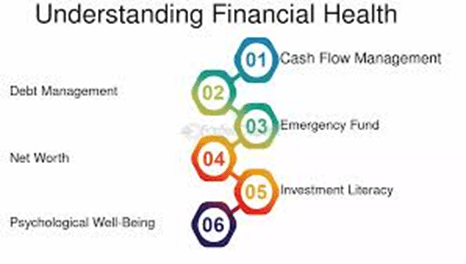
14 of the Most Useful Personal Finance Ratios to Establish Finncial Health
Consider these Money Ratios Within the Context of Your Life
Let’s go through a lot of math—take a breath! Now is the time to consider math math equations that are most insightful when you put them into context. A single ratio isn’t going to provide a comprehensive view of your financial health.
You should never feel bad if some of your ratio results are above or below the ideal numbers. You don’t have to live and die by money ratios! They’re just a guide, and there’s always room for exceptions and flexibility based on your unique situation.
Maybe your desired college degree doesn’t come with an amazing starting salary…but it’s a field you’d love working in, with great future growth opportunities. Don’t rule it out because of a math equation.
Consider them all within the context of your personal core values, needs, and goals to make them work for you.
- Why are personal finance ratios important for you?
These ratios are great ways to distill tried-and-true financial wisdom into simple formulas that anyone can use.
If you want to know whether your savings are on track—there’s a ratio for that. Curious if you’re spending too much on housing? There’s a ratio for that.
- Knowing your financial numbers can help you improve your life
Furthermore, keeping a record of these numbers lets you reflect on where you came from. As you learn new frugal life hacks, you can pare down your expenses and improve your cash flow ratio.
As your income grows and you pay off debt, those debt ratios shrink in front of your eyes while your net worth swells.
They’re some satisfying little equations that give you another way to track your finances and set new goals.
- Monthly cash flow ratio
Monthly expenses divided by monthly income
The monthly cash flow formula helps you understand what percentage of your income is dedicated to your monthly expenses. Think about the cash flow ratio as how much cash flows in vs flowing out.
2. Savings ratio
Monthly savings divided by monthly income
This is basically the flip side of the one above. Instead of telling you how much you’re spending monthly, it tells you your savings rate.
3. Emergency fund ratio
Essential monthly expenses x 6
An emergency fund exists to protect you in the event of unexpected expenses or job loss. It’s money you want to keep easily accessible so you can use it as soon as needed.
4. Liquidity ratio
Liquid assets divided by monthly expenses
The liquidity ratio is one of the personal finance ratios closely tied to your emergency fund since they both revolve around the idea of liquidity. Put simply, liquid assets refer to (A) cash or (B) other financial assets you can quickly convert into cash.
5. Debt-to-assets ratio
Total liabilities divided by total assets
Now we’re getting into some potentially less fun territory: a couple of debt ratios. Don’t be scared if your numbers are higher than you’d like at first. It’s all part of your debt reduction journey!
If you don’t know where you’re starting from, you’ll just be stumbling around in the dark, hoping your debt will be gone one day.
6. Debt-to-income ratio
Annual debt payments divided by annual income
This is one of the personal finance ratios that will help you figure out how much of your income is being funneled toward your debts each year.
To start your equation, look at the debts you gathered above. But this time, add up your yearly payments towards each of them.
7. Net worth ratio
Total assets minus total liabilities
The net worth ratio is going to be short and sweet! Grab the same numbers you used in #5, but instead of dividing, we’ll simply subtract.
Assets minus liabilities help you calculate your net worth! It’s motivating and fulfilling to watch this number grow over time.
8. Debt to net worth ratio
Total liabilities divided by net worth
This is very similar to the debt-to-assets ratio.
However, you aren’t just comparing total debt to total asset value with this one. Instead, you’re comparing your debt to the net worth figure from #7—where debt has already been subtracted from your asset value.
The ratio is meant to help you determine how much debt you’ve taken on relative to your net worth.
If your ratio is over 100%, you may feel over-leveraged and struggle with payments. The lower the result, the more comfortable you’ll feel with your debt levels.
9. Housing-to-income ratio
Monthly housing costs divided by monthly income
You’ve probably heard some advice for spending a certain percentage of your income on housing. In the past, the rule of thumb number was 30%. Now, there’s a slightly more detailed model called the 28/36 rule.
The first part (28) means you should aim to spend no more than 28% of your income on your total house payment, including taxes and insurance.
The second part (36) adds your mortgage payment to all your other debt payments and recommends that this total not exceed 36% of your income. It’s effectively the same thing as your debt-to-income ratio from #6 (but a mortgage-inclusive version).
The 28/36 rule is a way to help you weigh whether your home purchase would put you in too much debt.
For instance, if a potential home purchase would bump you too far over the 36% debt-to-income figure, you might want to look at cheaper properties.
Otherwise, you run the risk of becoming house poor! If you’re spending $1,000 a month on housing while making $3,500, you’re spending $1k / $3.5k = just about 28% on housing
10. Needs/wants/savings budget ratio
50/30/20, 60/20/20, or other
Want a personal finance ratio that gives you a quick guide on dividing your expenses? There are several ways to do this.
Usually, the simplest methods involve breaking down your expenses into needs, wants, and savings. Needs are everything you can’t live without, wants are the nice-to-haves, and savings are what you put aside for your future.
The 50/30/20 rule
One common budget ratio is called the 50-30-20 rule. In this formula, 50% of your income goes to necessities, 30% is reserved for discretionary income, and 20% gets saved.
Let’s see how this might work for someone who makes $3,000 a month.
The 50/30/20 ratio would mean $1,500 goes to needs, $900 to wants, and $600 to savings/investments.
Other percentages
All of these numbers can be tweaked depending on your situation.
So if you’re spending 60% of your income on necessities, you might want to aim for more of a 60 20 20 breakdown or even the 70-20-10 budget.
11. Retirement ratio
25x your annual expenses
Ever find yourself asking, “Can I retire yet?” Once you stop working, you want to be confident that your savings and investments will be able to continue funding your life.
It’s a tried-and-true method for understanding what you need in retirement. It’s also based on something called the 4% rule, which refers to the idea that a retiree can safely withdraw 4% of their savings each year with little risk of running out.
Calculating your retirement expenses
Look at your current annual expenses and try to figure out if they’ll be higher or lower in retirement. Perhaps you’ll have a paid-off house by then and eliminate rent/mortgage expenses.
On the flip side, you might want to try full time traveling or have extra for medical care. It never hurts to pad the numbers, but the 25x expenses formula is a great place to start.
Someone who spends $50,000 a year would ideally want $50,000 * 25 = $1.25 million to retire confidently.
12. Credit utilization ratio
Sum of credit card balances divided by total available credit
Your credit card utilization ratio helps show how effectively you manage your available credit. High utilization could signify that you have an unhealthy reliance on debt.
Utilization is also a big factor in determining your FICO credit score, so it’s worth paying attention to if you’re trying to improve your credit. Understanding and managing this ratio can positively impact your creditworthiness and financial well-being.
Figuring out your credit utilization
To calculate it, take the current sum of your revolving credit account balances and divide it by the total credit limits across all your accounts.
A lower credit utilization rate helps your credit score. Avoid going over a 30% credit utilization ratio—keeping it at or below the 10% range is ideal. Focus on paying off outstanding debts and limiting the balances you carry from one month to the next.
Consider a scenario where your credit card balances amount to $2,000, and your total credit limits across all cards are $10,000. The credit utilization ratio would be $2k / $10k = 20%. This indicates that you’re using 20% of your available credit.
The good thing about utilization is that it essentially changes every month. Even if you have a high ratio for one month, you can pay down your balances and return to a low utilization in no time.
13. Student loan debt to starting salary ratio
Total amount of student loan, divided by expected starting salary
College is notoriously expensive. And unless you know how to get a full ride scholarship or have a college fund, it can be hard to stare those student loan offers and interest rates in the face and ask yourself, is it worth it?
The debt-to-salary ratio provides a simple guide for college students and their families to help answer this question. Will your degree be worth the debt in the long term?
This formula helps you determine the maximum loan amount to borrow for a particular degree program.
How do I tell if my college degree will be worth it?
Since you can’t predict the future, it’s impossible to calculate the exact ROI (return on investment) for a college degree. But you can look at the job market in your target field and determine what starting income you can expect after graduation. Websites like salary.com can help with this research.
Your results will also help you plan a realistic debt repayment schedule for your college loans. As a rule of thumb, students should limit their debt-to-starting-salary ratio to less than 100% to repay the loans over approximately a 10-year period. (Of course, interest rates can affect the exact timeline.)
So, let’s say you take out $30,000 in loans, and your anticipated starting income is $50,000. The debt to starting salary ratio would be $30,000 / $50,000 = 60%. The result indicates that your debt would be 60% of your expected starting salary, which is relatively conservative and reasonable.
On the other hand, borrowing $60,000 for a degree that leads to an average starting salary of $30,000 does not make as much financial sense. That would put the ratio result at 200%—double the recommended amount.
14. Loan-to-value ratio
Remaining mortgage amount on a property, divided by its appraised value
The loan-to-value (LTV) money ratio is a crucial metric in the realm of real estate financing. Lenders reference this ratio as a part of the mortgage approval process. They also consider it for refinancing and home equity line of credit (HELOC) applications. A low LTV is good because you owe less on the loan.
Whether you’re a current homeowner or a prospective first time home buyer, this personal finance ratio will be relevant to you.
How the LTV ratio works for new home buyers
If you’re buying a home, your initial LTV will depend on the size of your house down payment. Let’s say you put 20% down on a house valued at $200,000, so your down payment is $40,000 and your mortgage is $160,000.
That makes your LTV ratio equation $160,000 / $200,000 = 80%.
If you only put 10% down, you’ll be left with an LTV of 90%. Higher LTVs on new home purchases can come with additional costs, like higher mortgage interest rates and private mortgage insurance (PMI).
The larger your down payment is, the smaller your LTV will be, and vice versa. Saving up at least a 20% down payment will get you the most favorable terms.
How the LTV ratio works for homeowners
For current homeowners, the LTV represents how much equity has built up in your home, i.e. how much of the mortgaged property you own. This figure also determines whether you can refinance at a lower interest rate or access a home equity line of credit.
Your LTV will decrease as you pay your mortgage, but it can also change if your appraised property value changes.
In some cases, LTV can increase if a property’s market value drops. It can happen if there’s property damage (e.g. from flooding) or a recession hits. But it’s much more common for your LTV to decrease as your real estate value grows, which is a beneficial change.
Let’s say you bought our example home when it was valued at $200,000. After five years, you still owe $125,000, but your property value has appreciated to $250,000. That new value is the figure you’ll use for the ratio: $125,000 / $250,000 = 50% instead of $125,000 / $200,000 = 62%. It’s like getting extra equity for free!
Now Consider money ratios within the context of your life
Okay, you’ve just gone through a lot of math—take a breath! Now is the time to remember these math equations are most insightful when you put them into context. A single ratio isn’t going to provide a comprehensive view of your financial health.
You should never feel bad if some of your ratio results are above or below the ideal numbers. You don’t have to live and die by money ratios! They’re just a guide, and there’s always room for exceptions and flexibility based on your unique situation.
Maybe your desired college degree doesn’t come with an amazing starting salary…but it’s a field you’d love working in, with great future growth opportunities. Don’t rule it out because of a math equation.
Consider them all within the context of your personal core values, needs, and goals to make them work for you.
What are the most important ratios for money?
Finance is a highly individualized journey, so the importance of specific ratios can vary based on individual circumstances and financial goals. But in general, there are a few ratios that everyone should be paying attention to.
The emergency fund ratio is one of our top recommendations for the beginning of your financial journey. Life can throw curveballs at anyone, anytime.
Having at least six months of expenses squirreled away helps give you a runway to figure things out if you get laid off, need to pay for a surprise home or car repair, etc.
We’ll also highlight the savings ratio, which includes traditional savings and investments. Savings are essentially your key to the future. They put all your goals in reach, whether it’s buying a house, paying off your loans, or early retirement.
What is a good debt to net worth ratio?
A good debt to net worth ratio strikes a healthy balance between leveraging debt for wealth-building and avoiding excessive indebtedness.
You might think it’s best to strive for no debt.
However, while that may be a worthy goal for some people, it isn’t always the case. In some situations, debt can be a tool to help you better your financial health.
It ties into the concept of types of debt, like good debt vs. bad debt.
For example, student loan debt or business debt can help you earn more money throughout your lifetime. But credit card debt will eat your income with its high-interest rates.
You can think about it in terms of these ranges:
- Safest range: A ratio below 50% is generally considered healthy—indicating that your net worth is at least twice your total debt.
- Moderate range: Ratios between 50-100% can still be manageable, depending on the situation. Evaluate the types of debt you have, its purpose, and whether it contributes to your overall financial well-being.
- Cautionary levels: Ratios exceeding 100% indicate that your total debt surpasses your net worth. It signals a higher level of financial risk, so proceed carefully and ensure you have a solid debt repayment strategy.








 + learn to systemize their companies so they can run without the owner, reduce costs, and optimize profits.
 MKS MASTER KEY COACHING-LAW-ENGINEERING: Unlocks Your True Potential with Tailored Engineered Success Strategies and Support. It Turns Your Vision into Reality. Its World Class Life, Business and Financial Coaching - Focused on Strategic Coaching - Executive Leadership - Career and Team Coaching and Financial Coaching. You Do Not Pay for Coaching- Pay for Results Only. FREE Session! Call 650-515-7545