
Many appreciate Professor Kissinger’s focus on mindset and personal growth and the importance of mindset in achieving financial success, his teaching students to rewire their thinking to attract wealth. Many report his dedicated coaching sessions provide clarity and direction, aiding in personal growth. His common theme is that students still need to figure things out for themselves, indicating that his coaching is a supplement rather than a complete solution.
Transformative – Mindset Focused – Excellent Experience – Self-Discovery – Results
The Wealth Secret: Stop Chasing Money and Start Becoming More Valuable to Others.
Professor Kissinger’s emphasizes that college students can achieve financial success by mastering specific principles, including goal setting, mindset, and leveraging resources effectively. By focusing on these areas, students can create a clear path to wealth and personal fulfillment.
Professor Kissinger emphasizes that building wealth, even during college years, is primarily a matter of shifting one’s psychology, raising personal standards, and adopting a mindset of resourcefulness over limited resources. His coaching framework for financial success focuses on treating wealth as more than just a bank balance, defining it instead through emotional, time, and relational freedom while committing to disciplined, automatic savings.
Cultivating a Wealth Mindset
Professor Kissinger asserts that financial success begins with identifying and overcoming the limiting beliefs—such as the idea that the system is unfair or that struggle is inevitable—that prevent people from taking necessary action. He teaches that by changing these internal narratives, individuals can move from being passive consumers to active, strategic investors.
- Growth Mindset — Cultivate a desire for continuous improvement, seeing new challenges and adversity as essential opportunities for growth.
- Resourcefulness — Focus on your ability to find solutions and generate value rather than feeling constrained by current financial resources.
- Identity Shift — View yourself as an investor who makes decisions based on long-term abundance rather than short-term consumption.
- Psychological Architecture — Understand that your beliefs dictate your potential actions; changing these is a prerequisite for all practical financial steps.
These mindset shifts are designed to ensure that when you apply specific financial strategies, they become sustainable habits rather than temporary efforts.
Practical Strategies for Financial Independence
Practical wealth building relies on creating automatic systems that eliminate friction, such as unnecessary fees or emotional decision-making, allowing money to grow consistently over time. Robbins advises that students should begin by tracking their financial baseline and implementing routines that make saving a non-negotiable priority.
- Pay Yourself First — Commit to saving and investing a fixed percentage of every payment you receive automatically, before spending anything else.
- Financial Literacy — Take ownership of your financial education by tracking your income and expenses to understand exactly where your money is going.
- Define Standards — Set high minimum behaviors for your financial life and create routines that make maintaining those standards easier.
- Accountability — Seek feedback or use mechanisms that reveal whether your current financial actions are producing measurable progress toward your goals.
- Eliminate Friction — Focus on minimizing the impact of fees and taxes, as these can silently erode long-term returns.
By consistently applying these principles, students can transition from managing their current circumstances to actively creating their future financial destiny.
Key Coaching Principles for College Students
Professor Kissinger’s coaching principles provide a roadmap for financial success.
- Goal Setting — He stresses the importance of defining clear, specific goals, akin to setting coordinates in a GPS, to effectively chart a course for success.
- Mindset — A positive and growth-oriented mindset is crucial; Robbins believes that wealth is built through focus and determination rather than luck.
- Leveraging Resources — Utilizing available resources and networks can significantly enhance opportunities for financial growth.
- Continuous Learning — He advocates for lifelong learning and adapting to changing circumstances to stay ahead in the financial landscape
Multiply Your Impact: How College Students Earn More with MKS Master Key System Action Steps
Professor Kissinger emphasizes that college students can achieve financial success by taking decisive action and mastering essential skills. He outlines practical steps such as developing a wealth mindset, setting clear financial goals, and taking consistent action towards those goals.
Professor Kissinger emphasizes that building wealth is rooted in a foundation of psychology and disciplined financial mechanics. For college students, he advocates for shifting toward a growth mindset and taking personal responsibility for financial habits early in life to ensure long-term freedom.
The first financial habits Professor Kissinger recommends for college students
Cultivating a Wealth Mindset
Professor Kissinger identifies financial success as being composed of 80% psychology and 20% mechanics, noting that limiting beliefs about money are the primary barrier to building wealth. By changing these internal beliefs, students can transition from managing daily circumstances to actively creating their future.
- Growth Mindset — Strive for continuous improvement by embracing new challenges and viewing adversity as an opportunity to grow.
- Raise standards — Decide to take ownership of your financial destiny and surround yourself with people who elevate your thinking.
- Clarity and awareness — Track your income and expenses to understand exactly where your money is going, as clarity provides the power to make better decisions.
- Focus and energy — Direct your focus toward your highest values and vision, as Robbins teaches that where focus goes, energy flows.
The journey toward mastery is defined by consistent action and progress rather than achieving immediate perfection.
Practical Financial Mechanics
To build lasting security, Professor Kissinger recommends mastering essential money skills that prepare students for life beyond graduation. He suggests that these habits should be started as early as possible to take advantage of growth opportunities like compound interest.
- Spending plans — Create a simple budget that gives every dollar a job, prioritizing essentials, debt repayment, and savings.
- Pay yourself first — Start saving and investing even small amounts immediately to allow your money time to grow.
- Manage debt — Avoid credit card debt entirely, using credit cards only to build credit responsibly if you can pay bills in full and on time.
- Continuous education — Become a learning machine by reading personal finance books, listening to podcasts, and consuming investment articles.
- Preserve capital — Be obsessed with not losing money, as it requires significant effort to rebuild wealth once it has been lost.
By deciding today to educate yourself and take massive action, you can transform your financial life regardless of your current income level.
Practical Essential Strategies
Here are essential strategies Professor Kissinger recommends for financial success.
- Mindset Development — Cultivating a positive and growth-oriented mindset is crucial for success.
- Financial Literacy — Understanding budgeting, saving, and investing is essential for managing finances effectively.
- Goal Setting — Setting SMART (Specific, Measurable, Achievable, Realistic, Time-bound) goals helps in tracking progress.
- Taking Action — Consistent and bold actions towards financial goals can significantly impact wealth accumulation.

Smart Money Moves for College Students and Parents Trying to Get Rich Before Graduation
What College Student or Young Adult or Poor People Need to Know About Making Money to Become Rich at Graduation | An Eye Opening Message.
Discover the transformative steps to financial independence in our latest information, “Any Poor Person Who Does This Will Become a MILLIONAIRE before Graduation.”
Unveil the secrets of transitioning from financial struggles to millionaire status through practical and proven strategies. We dive into the importance of a growth-oriented mindset, crucial financial education, smart budgeting, wise investing, and creating additional income streams.
Learn from the inspiring journeys of icons like Howard Schultz and Oprah Winfrey, and understand how a positive mindset and financial literacy are instrumental in building wealth. Ready to reshape your financial future?
For the class of 2024, nearly 70% of college students took out loans, with students graduating with an average debt load of $29,900+ – which includes both federal and private student loan debt.
Actions to Get Rich Before Graduation
What can You do as a College Student to Start Building Wealth?
Remember that learning is earning, while you may not actually earn money but how you learn at a college will determine how much you will be paid later in your life. How well you learn will determine if you will earn $5 per hour or $50 per hour.
Start a business while in college, not to be a millionaire but to realise the importance of money. Once you are out there asking strangers for money in exchange for your product/service, you will understand how hard it is to make money and hence realise its importance.
Take up a part-time job, if you cant run a business you can always work at a part time job. There is nothing to be ashamed of working at McDonalds or any other menial job. This will teach you how to let go of your ego and also make you understand the value of money.
Learn a marketable skill, learn how to design simple websites and sell it to customers. If you are not into programming or tech, just learn any marketing skill from your domain. For example, if you are a marketing student, put your knowledge to good use and generate leads for local businesses and charge for it.
Do not get into relationship while in college, it consumes a lot of your time and energy which is better spent on working towards your career. Relationships can wait. This is solely my opinion.
Don’t fall into MLM schemes, colleges are a breeding ground for MLM schemes and you should be aware about it. Never fall for a MLM scheme they are not designed for your benefit.
Save pocket money & invest it, no you don’t need a trading account to invest that money, instead invest in buying books, read them and you will get the best return on your investment.
Build relations with friends who have bigger goals. College might not be a good place to find love but you can definitely find good set of friends who are ambitious. If you nurture your relationship with them they can be your business partners in the future.
Final point: Remember that you wont get rich or become a millionaire while in college, it is highly unlikely to happen. However, what you do in college will surely lay out the foundation for your future financial life.
MKS Master Key System College Financial Survival Plan
If that is not enough to give a college student a moment to pause, perhaps this statistic will – Nearly 45 million borrowers owe about $1.7 trillion in student loans, which amounts is $730 billion more than the total credit card debt in the United States.
Create a Budget –
When learning how to save money as a student, the first order of business should be to create a budget – one that is realistic and manageable.
You wouldn’t manage a full course load without some sort of calendar/schedule as a student. The same is true for a budget, which is simply a financial plan that is reduced to writing.
Adjust the Budget as Needed –
As a college student, you are likely to face many financial firsts. As such, it is critical to learn how to manage money in your 20s, as this is an excellent habit that will benefit you for a lifetime.
After you have had a chance to work with your budget (give it six months, at least), take some time to determine if the first budget you have created is realistic and practical.
Be Mindful of Spending Habits –
One of the most straightforward financial tips for college students is simply to be aware of how you spend money by tracking it using a personal financial management application or Excel.
Search for Available Financial Help –
There are many scholarships (and other types of financial help for students available) for which students only have to submit an online application if they qualify.
Begin to Establish a Credit History –
It is important to begin to establish a credit history, which can be done by applying for a credit card.
Boost Your Credit Score –
There are several ways to improve your credit score that requires little effort and expense. Maintaining a solid and robust credit score is some of the best financial help for college students as they move towards an independent financial future.
Take Identity Protection Seriously –
The Federal Trade Commission has seen student loan-related identity theft soar in recent years. Use a free credit monitoring service, keep a check on your passwords, and check your bank account regularly.
Saving Money: Treat Student Loans as a Last Resort, Not a Given –
There’s a reason one of the first things your college sends you is information about student loans – it’s how they make their money. Max out scholarships, grants, and other options before you even consider student loans. And if you can’t afford college without a loan, reconsider your college options. Transferring credits from community college is one of the best ways to save.
Start an IRA –
Yeah, retirement seems like it’s a long way off, but trust your elders – it’s not. If you have any earned income, even from a part-time job, you can open an IRA account and start putting money away. The benefit of an IRA is simple – since it’s taxed up-front, you can always remove money when you need it, or you can keep it in to grow with the stock market. Even an investment of a thousand dollars a year will grow enormously by the time you retire.
Open a Savings Account –
If a Roth seems like a big investment, please, seriously, at least open up a savings account or a Money Market at your bank. It will provide a marginal amount of interest, but it will also help keep you mindful of saving.
Avoid ATM Fees & Other Bank Junk Fees –
One of the easiest ways to learn how to save money as a student is by avoiding bank junk fees – like ATM charges unnecessarily.
Steering clear of avoidable ATM fees offers some of the simplest financial tips for young adults.
If you must take out cash at an ATM that charges a fee, be sure to take out a large enough amount, so you do not have to use the ATM often. In the years ahead, you will come to see the value of this financial advice college students.
Open an Amazon Prime Student Account –
One of the best tips for college students to save money is to take advantage of the companies that offer student discounts, like Amazon’s Prime Student Account. Amazon also provides students with a number to earn money which may offer additional financial help for students in college.
Don’t Buy Coffee Out –
Save yourself money on food wherever you can, from abusing the student cafeteria to taking up every student discount.
Use the Campus Gym & Other Athletic Facilities –
College campuses typically offer students discounted or free access to the school’s gym, athletic and aquatic facilities. Taking advantage of all the college has to offer to its enrolled students is one of the simplest saving money tips for young adults attending college to implement, as it allows students the option of avoiding the monthly expense of a gym membership. Some college campuses even offer discounts to student’s families as well.
Buy Used College Textbooks & Sell Your Used Books When No Longer Needed –
Students interested in understanding how to save money will find that a surefire approach is to buy used textbooks online or at the college bookstore.
This is among the easiest of the money saving tips for young adults and college-level students to achieve. Very often, used textbooks are in as good condition as new textbooks, only at significantly lower prices, offering greater savings.
Become a Notary Public –
One of the lesser-known ways to learn how to make money in college is to become a Notary Public.
Each state sets forth its own qualifications to become a Notary Public, which generally includes being at least 18 years old, having no record of criminal behavior, and being a legal resident of the state in which you practice.
Some states require training and most require an exam but becoming a Notary. This is one of the greatest financial tips for students, especially for those who wish to give back to their community.
Get Paid for Giving Your Opinion by Taking Surveys Online –
If you are searching for how to make money when in college without a job, you can get paid for giving your opinion in many places on the Internet.
It is easy to understand how to make money as a college student online by completing surveys, with many offering rewards in the form of cash, gift cards, or points from companies like Target, Walmart, and Office Depot, among others.
Drive for Uber/Lyft or Other Ride-Shares –
Students looking how to make money in college – who also own a car can consider driving for ride-share companies or Uber/Lyft.
Working part-time while studying often provides the financial help college students need when funds become short, as students can choose the work those times that fit their schedules.
Holding a job while maintaining a full course load simultaneously is a great way to learn how to manage finances as a student and prepare for your financial future.
Capitalize On Your Special Skills Part-Time –
This mean is recognizing what you can do that others can’t, and making it work for you. You might consider:
* Computer Repair
* Oil Change
* Car Detailing
* Alterations/Sewing
* Translating
* Baking
* Hairstyling
* Editing/Tutoring (just don’t writing their papers for them)
* Pet Sitting/Dog Walking
* Painting
* Mover
Consider Being a Resident Advisor in a College Dormitory–
The cost of room and board can be avoided/reduced if you are accepted as a resident advisor in a college dormitory which makes this financial tip among the most significant of the money saving tips for young adults available. Don’t be middle class for long time. First plan to become rich in 5 years

College Students MKS Master Key System Plan to Get Rich Before Graduation
* Learn how to double your income.
* Invest in your skills that will double or triple your income
* Have a budget for expenses and investments or saving
* Try leasing the home instead of rent
* Don’t spend of liabilities like phones, clothes, phones, Footwear, TV etc..
First save before you spend, at least save 10% of your income monthly read the book The Richest Man in Babylon.
* Invest in passive income. Refer to Rich Dad Poor Dad Book.
* Build Passive income by blogging, YouTuber etc..
* Create a secondary active income. Start to build it with no capital or a minimal cap. Buy assets
* Buy a property to rent. You stay in lease.
* Join sales If you really want to become Rich soon. It helped us lot
* Triple your knowledge to double your income
* Take proven actions to succeed
* Just don’t buy a car to your use. Instead rent it
* Always concentrate on dividends
* Become rich and marry middle class mate or partner. You can fulfill his or her rich dreams.
* Build multiple income sources
* Love yourself
* Bargain everything and get for cheap
* Love is expensive. Be rich before you fall for the liability
* Be healthy it’s saves lots money on healthcare
* Be busy
* Have a Mentor and MKS Master Key Self Made Millionaire Coach
* Don’t showoff anyone
* Pretend poor until you have great Wealth
* Learn the 50-30-20 Rule and the Concept of Compound Interest
Cultivate Breakthroughs Today
Step 1 Personalized Call
In this 15-60 minute Wheel of Goals Discovery Session, we will start to deep dive with you on what you want challenges, disputes or goals are and any current challenges you are having with achieving them.
Step 2 Match You
We’ll match you with a coaching strategist to help you uncover the root cause to what’s truly stopping you from getting what you want.
Step 3 Results Coaching Plan that Exceeds Expectations
You’ll get started with Professor Kissinger or the Reitenbach Kissinger Institute Coaching Team and close the gap to what or where you want to be quickly and efficiently.
Informed by four decades of extraordinary results, Michael Kissinger MKS Master Key System Results Coaching is built to help you discover ways to get you want you want or to grow your business, finances and profits exponentially. Professor Kissinger provides the tools for you to create massive, lasting change in your life finances, and business.
It significantly reduces costs, prevent delays, and improves outcomes by identifying issues early and ensuring robust documentation and communication throughout the lifecycle.
Professor Kissinger provides proactive strategies—such as comprehensive money management and thorough record-keeping—proves far more cost-effective coaching. Research shows that effective management can prevent project failure and cost overruns and achieve favorable outcomes.
“The path to get what you want success is to take massive, determined action.”
If not now, then when?
Consider the Alternative…FAILURE

Lasting Long Term Results
Professor Kissinger’s MKS Master Key Coaching options and programs vary widely in format and cost, ranging from entry-level digital coaching to intensive, multi-year certification tracks.
Whether you are looking for professional coaching or training or personal growth strategies, the investment depends on the depth of the commitment and the level of direct mentorship provided.
MKS Master Key System Growth Coaching typically ranges from $6,995 for a MKS Master Key System Business Results plan to $4,500 to $18,000+ for multi-month or annual packages.
Understanding the pricing structure can help in decision-making.
- MKS Master Key System Results Plan — Costs around $6,995 for a structured coaching program.
- MKS Master Key System Multi-Month Packages — Range from $4,500 to $18,000+, depending on the duration and services included.
- One-on-One Coaching — Prices can vary significantly, often between $500 to $3,000 per hour.
- Annual Coaching Programs — Results Coaching can range from $15,000 to $75,000 per year.
Professor Kissinger’s Legacy
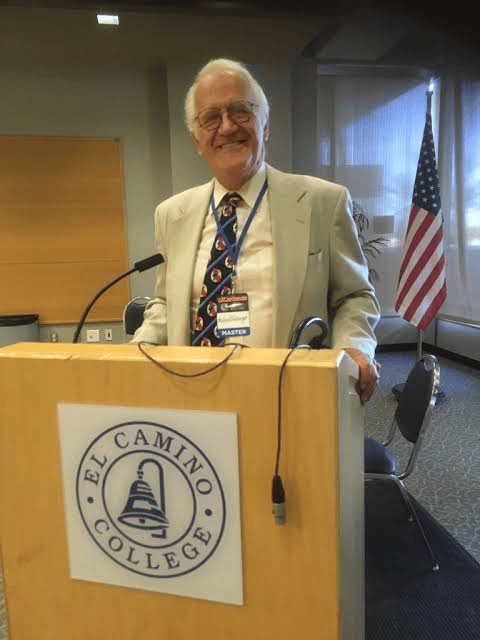
Professor Michael Kissinger is an owner and executive business coach, performance strategist, and former academic who operates the Reitenbach-Kissinger Success Institute and the MKS Master Key Coaching
Based out of California, he has spent over four decades working over 5,000+ business owners as a confidential business manager, analyst, and speaker focused on small business growth, leadership, and financial freedom.
Core Programs and Methodology
- The MKS Master Key Generational Wealth System: A structured, diagnostic framework built around six distinct core pillars: mindset, wealth, health, relationships, business, and leadership. The philosophy emphasizes that success is 80% psychology and 20% mechanics.
- MKS Master Key Generational Wealth Strategic Makeover Sessions: The institute offers targeted diagnostic sessions designed to audit business growth levers and outline scalability tracks for companies generally yielding between $400,000 and $3 Million in annual revenue.
- Contracted Engagements: Programs are heavily tailored to custom small business, corporate or personal timelines rather than flat-rate fees. Standard six-month operational contracts typically range from $4,500 to over $8,200 depending on the scope of the dynamic tracking involved.
Academic and Professional Background
- Teaching Career: He served over 17 years as an adjunct professor instructing courses in business and law at multiple California institutions, including San Francisco State University, Golden Gate University, and Cañada College where he coached and trained over 10,000 university students and small business owners. Author of over 14,000 LinkedIn Articles that have created 18,650 followers and contacts.
- Martial Arts and Other Accomplishments: He holds a 4th Degree Kukkiwon Certified Taekwondo Black Belt and has active ties spanning 40 years as an instructor at the Reitenbach Institute of Taekwondo. He is a former US Army Honorably Discharged Special Forces Vietnam Member. He also served over 20 years as a minister at Unity Church and St Stevens Church.
You can view his complete professional breakdown directly on his LinkedIn Profile.

Get Started on Your Ricess and Results Today
Are you looking results? Schedule a diagnostic session, or would you like a breakdown of a particular coaching to get rich? Contact us.
Professor Kissinger emphasizes the importance of continuous improvement as a key to personal, business, financial and professional growth. By constantly acquiring new knowledge and skills, individuals can adapt to changes, overcome challenges, and achieve their goals more effectively.
Continuous learning and improvement is a fundamental principle in Professor Kissinger’s coaching philosophy.
- Adaptability — Continuous improvement helps individuals adapt to changing circumstances and environments.
- Skill Development — Regularly updating and improving skills can lead to better performance in both personal and professional settings.
- Resilience — Learning and updating new strategies and perspectives fosters resilience, enabling individuals to navigate challenges more effectively.
- Goal Achievement — Lifelong learning and improvement is essential for achieving long-term goals, as it equips individuals with the tools needed for success
Contact to discuss how leverage, ownership, scalability, necessity, attention, and compounding can create completely different financial outcomes for you.
Reitenbach Kissinger Institute
Sydney Reitenbach
Professor Michael Kissinger
Text: 650-515-7545
Email: mjkkissinger@yahoo.com
Reach Your Peak Performance Results. Embrace Your Unlimited Potential. Valued Between from $2,350 to $5,500+


