
Many praise Professor Kissinger’s coaching frequently highlighting their positive experiences and the impact of his programs on personal, business and financial growth. They often mention his coaching facilitates meaningful development in their personal and professional lives and his personalized attention. He is often described as instrumental in helping them navigate unique personal situations and reframing challenges. He is credited with helping them reframe negative circumstances into opportunities for development often referred to by participants as a hero’s journey.
Transformative – Empowering – Personalized – Perspective Shifting – Motivating -Passive Income – Financial Education – Goal Setting – Expense Management – Investment Strategies – Results Driven
Build a “Money Machine” by Using Automated, Tax-efficient Savings Strategies that Rely on the Compounding of Returns Over Time.
Professor Michael Kissinger and the Reitenbach Kissinger Institute emphasize a strategic approach to retirement that focuses on financial mastery and personal growth. Their principles encourage individuals to create a clear action plan, prioritize wealth creation, and maintain a mindset geared towards abundance, ensuring prosperity at any age.
Professor Kissinger emphasizes building wealth through an ownership mindset, tax-efficient strategies, and the creation of diversified passive income streams regardless of age or current salary. His approach encourages individuals to shift from being consumers to owners, treating retirement planning as an ongoing strategy layered over time rather than a single event.
Core Financial Principles
Professor Kissinger highlights the importance of transitioning from a consumer mindset to an ownership mentality to ensure future lifestyle control. This foundation involves paying yourself first by consistently setting aside a portion of every dollar earned into long-term investment accounts.
- Pay yourself first — He advises setting aside a percentage of income immediately, a practice that allows savings to compound significantly over time.
- Ownership mindset — Shifting from a consumer to an owner allows individuals to take control of their financial future rather than leaving it to external circumstances.
- Tax-efficient investing — Strategies should prioritize after-tax returns by maximizing contributions to vehicles like 401(k) plans, IRAs, and other retirement programs.
- Avoid hidden fees — Investors are encouraged to be diligent about identifying and reducing hidden investment or account fees that can significantly erode long-term savings.
Establishing these habits early is critical, but Professor Kissinger suggests it is never too late to begin applying these methods to secure financial stability.
Wealth Building Strategies
Building a sustainable retirement requires a “money machine” that generates passive income, ensuring financial security whether or not you are still working. Diversification across multiple asset classes and income streams serves as the primary method for maintaining resilience against economic volatility.
- Passive income streams — Essential to a healthy retirement, layers of wealth should be built through varied sources such as rental properties and dividend-yielding investments.
- Asset diversification — Professor Kissinger points toward strategies like the All Seasons portfolio, which allocates capital across stocks, long-term bonds, intermediate bonds, gold, and commodities to handle diverse economic conditions.
- The 4% rule — This strategy suggests withdrawing 4% from retirement funds annually while accounting for inflation to help determine the total savings target needed for a specific lifestyle.
- Conservative planning — To calculate a retirement number, Professor Kissinger recommends estimating the cost of your current lifestyle and multiplying that total by 20, keeping projections conservative rather than optimistic.
By moving away from a focus on a specific retirement age and toward a goal of total financial freedom, individuals can create a plan that provides peace of mind throughout their lives.
Key Principles for Wealthy Retirement
Professor Kissinger’s coaching offers actionable insights for achieving financial success in retirement.
- Financial Mastery — He advocates for understanding wealth creation and money management to secure financial independence.
- Goal Clarity — Establishing clear, actionable goals is crucial for effective retirement planning.
- Mindset Shift — Emphasizing a mindset of abundance helps overcome limiting beliefs about retirement.
- Continuous Learning — Engaging in lifelong learning and personal development is vital for adapting to changing financial landscapes.
- Coaching Support — Utilizing personalized coaching can provide accountability and guidance throughout the retirement journey.
Key Action Strategic Allocation Steps — Resilient Investment Models which Use a Specific Mix of Stocks, Long-term Bonds, Intermediate Bonds, and Commodities for Wealthy Retirement
Professor Kissinger emphasizes a structured approach to achieving financial freedom and retiring wealthy, focusing on actionable steps that anyone can implement regardless of age. His strategies include understanding your financial goals, eliminating unnecessary expenses, and investing wisely to build wealth over time.
Professor Kissinger emphasizes that achieving financial freedom and a wealthy retirement requires transitioning from a consumer mindset to an investor identity. His approach centers on anticipating your financial needs, automating your savings, and utilizing specific investment strategies to grow wealth over time despite market volatility.
Foundational Planning Strategies
Professor Kissinger advises that financial success begins with clarity, urging individuals to calculate exactly how much money is required to maintain their current lifestyle. Once this target is identified, it serves as the foundation for a structured retirement plan.
- Calculate your number — Determine the total amount needed to sustain your lifestyle, then multiply that figure by 20 to set a conservative retirement goal.
- Pay yourself first — Commit to saving a fixed percentage of every payment you receive automatically and non-negotiable before spending on anything else.
- Prioritize debt reduction — Before allocating funds to long-term investments, focus on paying down high-interest liabilities such as credit card bills or student loans.
- Anticipate and plan early — Start saving as soon as possible to maximize the power of compounding, as starting early allows your retirement savings more time to grow.
By taking these preliminary steps, you create a clearer path toward the freedom to work only if and when you choose.
Wealth Preservation and Growth
To build long-term prosperity, Professor Kissinger stresses the importance of understanding the financial system and minimizing the negative impact of fees and taxes. He advocates for strategies that provide resilience across various economic conditions.
- Use a fiduciary — Work with a fiduciary advisor rather than a commission-based broker to ensure recommendations are in your best interest.
- Minimize advisory fees — Cutting investment management fees by even 1% can significantly preserve and grow wealth over a multi-decade retirement.
- Implement tax-smart strategies — Utilize traditional retirement plans to defer taxes on contributions until you begin withdrawing funds, at which point you are taxed at your current income rate.
- Adopt resilient portfolios — Consider strategies like the MKS Master Key System All Seasons Portfolio, which seeks to balance risk by allocating assets across stocks, long-term bonds, intermediate bonds, and a mix of gold and commodities.
- Avoid compounding fee traps — Regularly review plan costs, as high fees can gradually shrink savings by nearly 30% over the long term.
These actions are intended to help protect your assets from the “tyranny of compounding fees” and ensure your money lasts throughout a potentially long lifespan.
Essential Retirement Steps
Professor Kissinger outlines several essential steps for a prosperous retirement.
- Define Your Goals — Clearly identify what financial freedom means to you, including specific retirement targets and lifestyle desires.
- Eliminate Unnecessary Expenses — Assess your spending habits and cut costs that do not contribute to your happiness or financial goals.
- Invest Wisely — Diversify your investments across various asset classes to mitigate risk and maximize returns over time.
- Create a Financial Plan — Develop a detailed plan that outlines your savings, investments, and retirement strategies to ensure you stay on track.
- Continuous Learning — Stay informed about financial markets and investment strategies to adapt your plan as needed and seize new opportunities.

Are You as Rich as You Want to Be? What Are Your Life Time Goals? Will You Be a 1%er?
U.S. Wealth Percentiles Might Provide Answers. See the U.S. wealth percentiles and what Americans think is the magic number for them to be considered rich.
People with the top 1% of net worth in the U.S. have $10,815,000 in net worth.
The top 2% had a net worth of $2,472,000.
The top 5% had $1,030,000.
The top 10% had $854,900.
The top 50% had $522,210.
For more perspective, according to the most recent Federal Reserve Board Survey of Consumer Finances, which is released every three years the median net worth of all families (meaning half made more and half made less) in 2025 was $121,700, and the mean, or average, net worth was $748,800.
The Average Net Worth by Age
Younger than 35: $76,300
35-44: $436,200
45-54: $833,200
55-64: $1,175,900
65-74: $1,217,700
75 or older: $977,600
Have You Reached Your Retirement Level of Riches Yet?
Ready to become a MKS Master Key System Self-Made Millionaire? To Achieve Financial Freedom and Business Success? Contact and Join us in the MKS Master Key System Self-Made Millionaire Coaching Program.

Steps to Achieve Your Retirement Financial Objectives
Retiring rich requires a hefty nest egg so you won’t worry about running out of money. If you want plenty of financial security in your senior years, the actions you take right now are important.
The good news is, you don’t need a huge salary to build wealth and retire rich. And you can do it even if you’re worried about your finances as the country is officially in a recession.
Having a million-dollar portfolio is a retirement dream for many people. Making that dream come true requires some serious effort. While success is never a sure thing, the steps outlined below will go a long way toward helping you achieve your objective.
1. Set a Goal
Nobody plans to fail, but plenty of people fail to plan. It’s a cliché, but it’s true. Making a plan is the leading self-help advice from athletes, business moguls and everyday people who have achieved extraordinary goals.
2. Start Saving
If you don’t save, you’ll never reach your goal. As obvious as this might seem, far too many people never even start to save. If your employer offers a 401(k) plan, enrolling in it is a great way to put your savings on auto-pilot.
Simply sign up for the plan and contributions will be automatically taken out of your paycheck, increasing your savings and decreasing your immediate tax liability.
If your employer offers to match your contributions up to a certain percentage, be sure to contribute enough to get the full match. It’s like getting a guaranteed return on your investment.
Finding the cash to stash may be a challenge, particularly when you’re young, but don’t let that stop you from pursuing future riches. And remember that the younger you start, the more time your money has to grow.
3. Get Aggressive
Take a hard look at your asset allocation. If you are looking to grow your wealth over time, fixed-income investments such as annuities, which offer fixed payments that can neither grow nor shrink, aren’t likely to get the job done. Why? Because inflation can take a big chunk out of your savings.
Studies have shown that the majority of the returns generated by an investment are dictated by asset allocation. Investing in equities entails more risk, but is also statistically likely to lead to greater returns. For many of us, it’s a risk we have to take if we want to see our wealth grow. Asset-allocation strategies can help you learn how to make picking the right mix of securities the core of your investing strategy.
4. Prepare for Rainy Days
Part of long-term planning involves accepting the idea that setbacks will occur. If you are not prepared, these setbacks can put a stop to your savings efforts. While you can’t avoid all of the bumps in the road, you can prepare in advance to mitigate the damage they can do by always maintaining an emergency fund.
This fund will also help keep you from building up credit card debt or prematurely tapping your retirement funds, two ways people pay for emergencies that can undercut their financial security.
5. Save More
Your income should rise as time passes. You’ll get raises, change jobs, and maybe get married and become a two-income family. Every time your salary rises, so should the amount that you save. The key to reaching your goal as quickly as possible is to save as much as you can.
6. Watch Your Spending
Vacations, cars, kids, and all of life’s other expenses take a big chunk out of your paycheck. To maximize your savings, you need to minimize your spending. Buying a home you can afford and living a lifestyle that is below your means and not funded by credit cards are necessities if you want to boost your savings.
7. Monitor Your Portfolio
There’s no need to obsess over every movement of the Dow Jones Industrial Average. Instead, check your portfolio once a year. Rebalance your asset allocation to keep on track with your plan.
8. Max Out Your Options
Take advantage of every savings opportunity that comes your way. Make the maximum contribution to tax-deferred savings plans, then open up a taxable investment account, too.2 Don’t let any chance to save get away.
9. Catch-Up Contributions
When you reach age 50, you are eligible to increase your contributions to tax-deferred savings plans. The IRS calls this a catch-up contribution. Make sure to take advantage of the opportunity.
10. Have Patience
Get-rich-quick schemes are usually just that—schemes. The power of compounding takes time, so invest early and often, and accept that the road to riches is often long and slow. With that in mind, the sooner you get started, the better your odds of achieving your goals.
There are just three steps to take, and anyone can take them — even during turbulent times and with a modest income.
11. Prioritize Investing when Making Your Budget
With only so much money to go around, there’s a very real chance retirement investing will fall by the wayside if it’s not a budget priority. Rather than spending on other things first and then trying to invest what’s left over, treat retirement investing like an essential bill you have to pay each month.
You should have a clear retirement savings goal, know how much you need to invest to hit it, and budget for it every month before allocating any cash to discretionary spending. If you do, you’re almost guaranteed to retire with the nest egg to be a wealthy retiree.
12. Automate Your Investments
It can take a lot of willpower to move money out of your checking account (where it’s spendable) into your investment accounts each month. Instead of forcing yourself to continually make this responsible choice, automate your investing.
Once you’ve budgeted for a specific amount of retirement savings each month, sign up for automatic 401(k) contributions to have the money withdrawn from your paycheck before you receive it. If you don’t have a workplace plan, you can also set up automated money transfers through your bank or brokerage firm where you have your IRA.
Automated investing means you save enough for a secure retirement without any effort and you don’t ever miss a contribution since the money is gone before you have the choice to do something else with it.
13. Invest Wisely
Getting your money into a retirement savings account is half the battle; investing it wisely is the other half.
First and foremost, you need an appropriate asset allocation for your age. Younger people should have a larger percentage of their portfolio in stocks since they have more time to wait out market downturns. To find out how much of your money should be in the market, subtract your age from 110 and invest that percentage of your assets in stocks.
You also need to pick the right stocks, which means a diversified portfolio of sound investments. If you don’t want to take the time to really learn about companies you’re investing in, index funds are your best approach. But if you’re interested in investing and willing to put in the work, you may be able to do better by buying shares of strong companies.
Start Taking These Steps Today
The sooner you take these three steps, the more likely it is that you’ll accomplish your goal of retiring rich. Rework your budget today, find some cash to invest, get your money into the market, and you’ll be well on your way to financial success.
Planning for retirement is a way to help you maintain the same quality of life in the future. You might not want to work forever, or be able to fully rely on Social Security.
Retirement planning has five steps: knowing when to start, calculating how much money you’ll need, setting priorities, choosing accounts and choosing investments. Generally, financial advisors suggest you invest more aggressively when you’re younger, then slowly dial back to a more conservative mix of investments as you approach retirement age.
There is no single best retirement plan, but there is likely a best retirement plan — or combination of retirement accounts — for you. In general, the best plans provide tax advantages, and, if available, an additional savings incentive, such as matching contributions.
To retire as a millionaire, the first thing you need is a proper retirement plan for the long haul. Employer-sponsored retirement accounts where your company matches your contributions are a great way to sock away cash.
The Bottom Line
Retirement might seem far away, but when it arrives nobody ever complains about having too much money. Some people even question whether a million is enough. Test that theory by figuring out whether your retirement income goal still makes sense. That said, with lots of planning and discipline, you can reach your retirement goals and live a comfortable life after work.
Apply these best practices of retirement planning to each phase of your life can help put it on track for your dreams.
Most people have the idea that as soon as you leave school and start working, you should save for retirement. You keep saving until it’s time to retire, at which point you (hopefully) have enough money stashed away to start your permanent vacation.
That’s an overly simplistic view, however, that fails to take into account key steps you should take based on your age and how many years you are from your desired retirement date. The better approach is to consider retirement planning in phases of life, each with its own unique best practices.
20s to 30s: Early-phase Retirement Planning
The most important thing to remember as you begin your career and start saving for retirement is, most people are not saving nearly enough in their early working years. Above all, you do not want to be one of those people! These early savings years are in many ways the most important ones.
The power of compounding interest cannot be understated. Putting $100 into a retirement account every month starting at age 20 is more effective than putting $100,000 into a retirement account at age 65. Even assuming a relatively low 5% rate of return, that $100 per month for 45 years will cost you $54,000, but thanks to compounding interest, it could be worth more than $200,000 when you turn 65.
Furthermore, you should increase your contributions as your income increases. Anytime you get a raise, a promotion or a new job with a higher salary, you should increase the amount you’re contributing to your retirement accounts. This will help you grow your retirement savings even faster.
If your employer offers matching contributions to your 401(k), take advantage of them. Always contribute at least enough to get the company match; to do otherwise is to turn down what is literally free money.
Don’t forget to consider taxation in retirement. Remember that you will pay income and capital gains taxes on money you withdraw from your 401(k) and IRA in retirement. That should give you pause when being told of the advantages of not having to pay taxes on that money now. After all, it’s unlikely the tax environment you’ll face in retirement will be as favorable as the one we have now.
Early career is when workers often find themselves in a considerably lower tax bracket than much later in their working lives. It’s likely you will make considerably more in the middle and late stages of your career than you will in your first, entry-level position.
In other words, it might be wise to consider contributing to a Roth retirement account. You’ll have to pay taxes on contributions now, but any increase in value that account experiences will not be subject to capital gains tax, and withdrawals in retirement won’t be subject to income tax. It may be considerably more tax-efficient to contribute to a Roth now than to convert your traditional retirement account to a Roth later in your career.
40s to 50s: The Middle Years
As you move through middle age, some significant life changes begin to happen. If you have children, they’ll likely move out during these years. By the end of your 50s, helping them pay for college will, hopefully, be an expense you’ll no longer have. In addition, you’re likely to be compensated much higher than you were earlier in your career. In short, you’ll have more disposable income: Make sure at least some of it is enriching your retirement accounts.
Once you enter your 50s, you have the chance to make catch-up contributions to your retirement accounts. This is a great opportunity to make up for any lax habits you had in your younger years.
This is also a good time to consider dialing back the risk in your retirement portfolios. The closer you are to your desired retirement date, the harder it will be to recover from market downturns.
In the 2008 downturn, many who were very close to or in retirement discovered they were in trouble, as they’d been invested under the assumption that returns on market investments would always be healthy. Once those returns fell off, so did the retirement savings of many people. Don’t follow their example: Especially later on in your investing journey, it’s not always necessary to hit home runs. Some singles and doubles along the way are perfectly fine. Make sure your risk is appropriate to your retirement savings phase.
60s: The End of Accumulation
By the time you reach your mid-60s, you’ll need to decide what kind of lifestyle you want to maintain in retirement. Will you be happy sitting on the porch reading books, or do you want to travel and enjoy other expensive experiences?
If you hope to maintain a similar lifestyle in retirement to the one you have now, while you’re still working, it’s a good idea to have at least 10 times your annual salary saved. Social Security will not, and is not meant to, fund your whole retirement. It’s meant to be supplemented by your own savings.
Your sixth decade is a good time to seriously consider dialing back the risk in your retirement portfolio. If the market should fall, and much of your retirement savings is invested in stocks, you will have little to no time to recover your losses before you need to start drawing money from your accounts. This could result in a much leaner retirement, or worse, force you to exit retirement and get a job to make ends meet.
Your 60s is also a time of decision-making. You need to choose your Social Security strategy: Do you begin taking reduced payments early, or do you delay beyond full retirement age in order to receive larger checks? Do you start taking checks at the same time as your spouse, or should one of you delay?
Medicare is another important step in your 60s: You need to sign up for Medicare by age 65 or when you retire, whichever comes last. Failure to enroll on time can cost you a great deal of money throughout your retirement.
Finally, carefully consider whether you obtain or continue life insurance coverage. Life insurance can be a powerful tool to ensure your spouse and children are taken care of should you pass away unexpectedly. However, term-life insurance may never pay your family anything if you should live past the end of the term, and whole-life insurance is expensive, especially if you sign up when you’re older.
These are all complicated decisions that you should consider not making alone. A financial adviser can help you navigate the phases of retirement savings and help you pick the most prudent path to maximize your chances of enjoying your golden years in financial comfort. Especially as you approach retirement age, it’s important to be guided by a professional who can help you work through options and decisions on your way to a dream retirement.
Cultivate Breakthroughs Today
Step 1 Personalized Call
In this 15-60 minute Retirement Discovery Session, we will start to deep dive with you on what you want challenges, disputes or goals are and any current challenges you are having with achieving them.
Step 2 Match You
We’ll match you with a coaching strategist to help you uncover the root cause to what’s truly stopping you from getting what you want.
Step 3 Results Coaching Plan that Exceeds Expectations
You’ll get started with Professor Kissinger or the Reitenbach Kissinger Institute Coaching Team and close the gap to what or where you want to be quickly and efficiently.
Informed by four decades of extraordinary results, Michael Kissinger MKS Master Key System Results Coaching is built to help you discover ways to get you want you want or to grow your business, finances and profits exponentially. Professor Kissinger provides the tools for you to create massive, lasting change in your life finances, and business.
It significantly reduces costs, prevent delays, and improves outcomes by identifying issues early and ensuring robust documentation and communication throughout the lifecycle.
Professor Kissinger provides proactive strategies—such as comprehensive money management and thorough record-keeping—proves far more cost-effective coaching. Research shows that effective management can prevent project failure and cost overruns and achieve favorable outcomes.
“The path to get what you want success is to take massive, determined action.”
If not now, then when?
Consider the Alternative…FAILURE

Lasting Long Term Results
Professor Kissinger’s MKS Master Key Coaching options and programs vary widely in format and cost, ranging from entry-level digital coaching to intensive, multi-year certification tracks.
Whether you are looking for professional coaching or training or personal growth strategies, the investment depends on the depth of the commitment and the level of direct mentorship provided.
MKS Master Key System Growth Coaching typically ranges from $6,995 for a MKS Master Key System Business Results plan to $4,500 to $18,000+ for multi-month or annual packages.
Understanding the pricing structure can help in decision-making.
- MKS Master Key System Results Plan — Costs around $6,995 for a structured coaching program.
- MKS Master Key System Multi-Month Packages — Range from $4,500 to $18,000+, depending on the duration and services included.
- One-on-One Coaching — Prices can vary significantly, often between $500 to $3,000 per hour.
- Annual Coaching Programs — Results Coaching can range from $15,000 to $75,000 per year.
Professor Kissinger’s Legacy
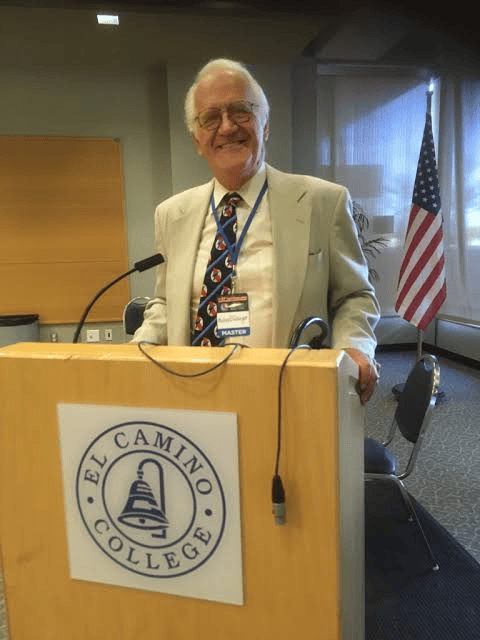
Professor Michael Kissinger is an owner and executive business coach, performance strategist, and former academic who operates the Reitenbach-Kissinger Success Institute and the MKS Master Key Coaching
Based out of California, he has spent over four decades working over 5,000+ business owners as a confidential business manager, analyst, and speaker focused on small business growth, leadership, and financial freedom.
Core Programs and Methodology
- The MKS Master Key Generational Wealth System: A structured, diagnostic framework built around six distinct core pillars: mindset, wealth, health, relationships, business, and leadership. The philosophy emphasizes that success is 80% psychology and 20% mechanics.
- MKS Master Key Generational Wealth Strategic Makeover Sessions: The institute offers targeted diagnostic sessions designed to audit business growth levers and outline scalability tracks for companies generally yielding between $400,000 and $3 Million in annual revenue.
- Contracted Engagements: Programs are heavily tailored to custom small business, corporate or personal timelines rather than flat-rate fees. Standard six-month operational contracts typically range from $4,500 to over $8,200 depending on the scope of the dynamic tracking involved.
Academic and Professional Background
- Teaching Career: He served over 17 years as an adjunct professor instructing courses in business and law at multiple California institutions, including San Francisco State University, Golden Gate University, and Cañada College where he coached and trained over 10,000 university students and small business owners. Author of over 14,000 LinkedIn Articles that have created 18,650 followers and contacts.
- Martial Arts and Other Accomplishments: He holds a 4th Degree Kukkiwon Certified Taekwondo Black Belt and has active ties spanning 40 years as an instructor at the Reitenbach Institute of Taekwondo. He is a former US Army Honorably Discharged Special Forces Vietnam Member. He also served over 20 years as a minister at Unity Church and St Stevens Church.
You can view his complete professional breakdown directly on his LinkedIn Profile.

Get Started on Your Retirement Goals and Results Today
Are you looking results? Schedule a diagnostic session, or would you like a breakdown of a particular coaching to get rich? Contact us.
Professor Kissinger emphasizes the importance of continuous improvement as a key to personal, business, financial and professional growth. By constantly acquiring new knowledge and skills, individuals can adapt to changes, overcome challenges, and achieve their goals more effectively.
Continuous learning and improvement is a fundamental principle in Professor Kissinger’s coaching philosophy.
- Adaptability — Continuous improvement helps individuals adapt to changing circumstances and environments.
- Skill Development — Regularly updating and improving skills can lead to better performance in both personal and professional settings.
- Resilience — Learning and updating new strategies and perspectives fosters resilience, enabling individuals to navigate challenges more effectively.
- Goal Achievement — Lifelong learning and improvement is essential for achieving long-term goals, as it equips individuals with the tools needed for success
Contact to discuss how leverage, ownership, scalability, necessity, attention, and compounding can create completely different financial outcomes for you.
Reitenbach Kissinger Institute
Sydney Reitenbach
Professor Michael Kissinger
Text: 650-515-7545
Email: mjkkissinger@yahoo.com
Reach Your Peak Performance Results. Embrace Your Unlimited Potential. Valued Between from $2,350 to $5,500+


