
Many expressing deep appreciation for Professor Kissinger’s guidance and the transformative nature of his programs. They value the dedicated guidance and practical tools for personal growth.
Transformational – Tailored Strategies – Structured Support – Meaningful Breakthroughs – Overcome Limiting Beliefs – Dedicated Guidance – Goal Achievement – Practical, Actionable Strategies – Results Driven
Success Leaves Clues: Why the World’s Top Performers Don’t Compete Without a Coach
The best way to implement Professor Kissinger’s coaching services after analysis is to engage in personalized one-on-one coaching sessions that focus on specific goals and challenges. This tailored approach allows for targeted strategies and accountability, ensuring effective progress toward desired outcomes.
They find his live coaching and virtual sessions deeply transformative. Exceptionally valuable, fostering clarity and personal development. Allows them to gain momentum and navigate life’s or businesses difficulties more effectively. A powerful way to unlock potential and create lasting change.
Implementation Strategies
Here are key strategies for effective implementation of Professor Kissinger’s coaching services.
- Personalized Coaching — Engage in one-on-one sessions with him or a trained coach to address individual goals and challenges.
- Goal Setting — Clearly define specific, measurable goals to guide the coaching process.
- Accountability — Utilize regular check-ins and progress assessments to maintain focus and motivation.
- Feedback Mechanism — Establish a system for receiving constructive feedback to refine strategies and approaches.
Identify and Prioritize Core Coaching Needs
Identify and Prioritize Core Coaching Needs
Instead of overwhelming the client or team with every data point from your evaluation, distill the findings.
- Filter the Data: Isolate 2 to 3 critical growth areas (e.g., skill deficiencies, communication gaps, or leadership behaviors).
- Determine Gaps: Use a problem matrix to categorize if the issue stems from a lack of knowledge or a lack of motivation.
Co-Create Personalized Coaching Plans
Do not dictate the solution. Translate the insights into a collaborative strategy.
- Align Goals with Business Metrics: Tie coaching objectives directly to measurable organizational Key Performance Indicators (KPIs) or overarching company objectives (such as retention or productivity). [1, 2, 3]
- Define clear timelines: Establish an agreement detailing the cadence (e.g., weekly, bi-weekly) and the baseline commitment period (typically 6 to 12 months).
Your Next Level Demands More Than Motivation: Secure Your Massive Action Plan Today
Structure the Sessions Using an Action-Oriented Framework
When launching the individual or team sessions, use a reliable structure—such as the 3 S’s framework—to guarantee that the initial assessment translates immediately into action:
| Phase | Core Objective | Actions to Take |
|---|---|---|
| 1. Share Takeaways | Build mutual awareness and trust. | Present big-picture data findings, validate feelings, and ask clarifying questions to surface blind spots. |
| 2. Strategy | Align on a macro roadmap. | Map out high-level phases of the coaching journey, ensuring the plan remains tentative and adaptable to their pace. |
| 3. Specific Actions | Establish immediate momentum. | Co-create minor, time-bound habits and milestones to complete before the next session. |
Shorten the Feedback Loop
Shorten the Feedback Loop
Implementation fails when coaching happens in isolation from day-to-day work.
- Timely Interventions: If coaching is triggered by a specific event or behavior (e.g., a flagged customer call or performance metric), conduct the coaching session within 48 hours while the context is fresh.
- In-Vivo Observation & Audit: Use active observation, role-plays, or review recordings rather than relying entirely on self-reported progress.
Monitor, Evaluate, and Adjust
Build a continuous growth loop into your implementation architecture.
- Track Both Metrics: Evaluate success using qualitative metrics (such as psychological safety and confidence self-assessments) alongside quantitative metrics (such as 360-degree feedback or role-specific KPIs).
- Review Commitments: Dedicate the first 5 minutes of every follow-up session to reviewing micro-commitments from the previous week to maintain strict accountability.
After the Analysis and During Implementation
1. Translate Analysis into Tailored Coaching Plans
- Pinpoint specific gaps: Use your analysis (surveys, performance metrics, or diagnostic assessments like DISC or 360-degree reviews) to isolate exact skill, behavioral, or mindset deficits rather than generic training needs.
- Build custom roadmaps: Create individual or team coaching plans that outline clear objectives, targeted milestones, and timelines mapped directly back to the data.
- Match coach to coachee: Assign certified or trained coaches—ideally independent of direct reporting lines or same-team hierarchies to preserve objectivity and psychological safety.
2. Standardize the Coaching Delivery Framework
- Create foundational materials: Document structured modules, facilitator notes, slide decks, or resource libraries so core concepts aren’t skipped or diluted across different sessions.
- Establish a repeatable session cadence: Use a consistent session flow (such as celebrating wins, unpacking root-cause challenges, co-creating action steps, and locking in takeaways).
- Keep feedback loops tight: Deliver coaching interactions as close to the analyzed event or flagged metric as possible (e.g., within 48 hours for performance or customer sentiment data) while momentum and memory are fresh.
3. Embed Accountability and Progress Tracking
- Convert insights into micro-actions: Break larger goals down into small, measurable daily or weekly tasks rather than relying on high-level theory.
- Deploy tracking mechanisms: Utilize shared dashboards, check-in logs, or learning management systems (LMS) to track module completion, goal progression, and recurring roadblocks.
- Iterate using feedback loops: Review participation outcomes and performance metrics regularly to refine your coaching framework, drop what isn’t working, and scale what produces measurable ROI.
Tips for Implementation
- Avoid static reports: Do not let assessment data die in a PDF; immediately anchor the data into active role-plays and recurring habits.
- Secure leadership buy-in: Align coaching KPIs directly with C-suite business goals (like retention, pipeline growth, or leadership readiness) before scaling.
To tailor this framework for you, could you tell me:
- What type of coaching are you implementing (e.g., corporate leadership, sales, health, or life coaching)?
- What did the analysis reveal as the primary issue?
- Are you coaching one individual, a team, or an entire organization?
Cultivate Breakthroughs Today
Step 1 Personalized Call
In this 15-60 minute Discovery Session, we will start to deep dive with you on what you want challenges, disputes or goals are and any current challenges you are having with achieving them.
Step 2 Match You
We’ll match you with Professor Kissinger or a coaching strategist to help you uncover the root cause to what’s truly stopping you from getting what you want.
Step 3 Results Coaching Plan that Exceeds Expectations
You’ll get started with Professor Kissinger or the Reitenbach Kissinger Institute Coaching Team and close the gap to what or where you want to be quickly and efficiently.
Informed by four decades of extraordinary results, Michael Kissinger MKS Master Key System Results Coaching is built to help you discover ways to get you want you want or to grow your business, finances and profits exponentially. Professor Kissinger provides the tools for you to create massive, lasting change in your life finances, and business.
It significantly reduces costs, prevent delays, and improves outcomes by identifying issues early and ensuring robust documentation and communication throughout the lifecycle.
Professor Kissinger provides proactive strategies—such as comprehensive money management and thorough record-keeping—proves far more cost-effective coaching. Research shows that effective management can prevent project failure and cost overruns and achieve favorable outcomes.
“The path to get what you want success is to take massive, determined action.”
If not now, then when?
Consider the Alternative…FAILURE

Lasting Long Term Results
Professor Kissinger’s MKS Master Key Coaching options and programs vary widely in format and cost, ranging from entry-level digital coaching to intensive, multi-year certification tracks.
Whether you are looking for professional coaching or training or personal growth strategies, the investment depends on the depth of the commitment and the level of direct mentorship provided.
MKS Master Key System Growth Coaching typically ranges from $6,995 for a MKS Master Key System Business Results plan to $4,500 to $18,000+ for multi-month or annual packages.
Understanding the pricing structure can help in decision-making.
- MKS Master Key System Results Plan — Costs around $6,995 for a structured coaching program.
- MKS Master Key System Multi-Month Packages — Range from $4,500 to $18,000+, depending on the duration and services included.
- One-on-One Coaching — Prices can vary significantly, often between $500 to $3,000 per hour.
- Annual Coaching Programs — Results Coaching can range from $15,000 to $75,000 per year.
Professor Kissinger’s Legacy
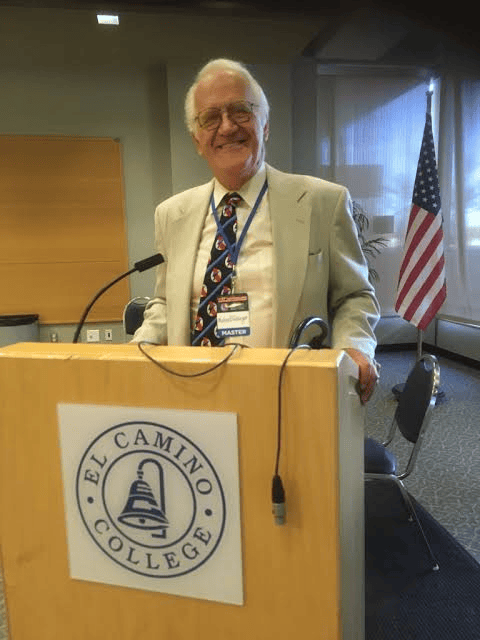
Professor Michael Kissinger is an owner and executive business coach, performance strategist, and former academic who operates the Reitenbach-Kissinger Success Institute and the MKS Master Key Coaching
Based out of California, he has spent over four decades working over 5,000+ business owners as a confidential business manager, analyst, and speaker focused on small business growth, leadership, and financial freedom.
Core Programs and Methodology
- The MKS Master Key Generational Wealth System: A structured, diagnostic framework built around six distinct core pillars: mindset, wealth, health, relationships, business, and leadership. The philosophy emphasizes that success is 80% psychology and 20% mechanics.
- MKS Master Key Generational Wealth Strategic Makeover Sessions: The institute offers targeted diagnostic sessions designed to audit business growth levers and outline scalability tracks for companies generally yielding between $400,000 and $3 Million in annual revenue.
- Contracted Engagements: Programs are heavily tailored to custom small business, corporate or personal timelines rather than flat-rate fees. Standard six-month operational contracts typically range from $4,500 to over $8,200 depending on the scope of the dynamic tracking involved.
Academic and Professional Background
- Teaching Career: He served over 17 years as an adjunct professor instructing courses in business and law at multiple California institutions, including San Francisco State University, Golden Gate University, and Cañada College where he coached and trained over 10,000 university students and small business owners. Author of over 14,000 LinkedIn Articles that have created 18,650 followers and contacts.
- Martial Arts and Other Accomplishments: He holds a 4th Degree Kukkiwon Certified Taekwondo Black Belt and has active ties spanning 40 years as an instructor at the Reitenbach Institute of Taekwondo. He is a former US Army Honorably Discharged Special Forces Vietnam Member. He also served over 20 years as a minister at Unity Church and St Stevens Church.
You can view his complete professional breakdown directly on his LinkedIn Profile.

Get Started on Your Goals, What You Want and Results Today
Are you looking results? Schedule a diagnostic session, or would you like a breakdown of a particular coaching to get rich? Contact us.
Professor Kissinger emphasizes the importance of continuous improvement as a key to personal, business, financial and professional growth. By constantly acquiring new knowledge and skills, individuals can adapt to changes, overcome challenges, and achieve their goals more effectively.
Continuous learning and improvement is a fundamental principle in Professor Kissinger’s coaching philosophy.
- Adaptability — Continuous improvement helps individuals adapt to changing circumstances and environments.
- Skill Development — Regularly updating and improving skills can lead to better performance in both personal and professional settings.
- Resilience — Learning and updating new strategies and perspectives fosters resilience, enabling individuals to navigate challenges more effectively.
- Goal Achievement — Lifelong learning and improvement is essential for achieving long-term goals, as it equips individuals with the tools needed for success
Contact to discuss how leverage, ownership, scalability, necessity, attention, and compounding can create completely different financial outcomes for you.
Reitenbach Kissinger Institute
Sydney Reitenbach
Professor Michael Kissinger
Text: 650-515-7545
Email: mjkkissinger@yahoo.com
Reach Your Peak Performance Results. Embrace Your Unlimited Potential. Valued Between from $2,350 to $5,500+


