
Consider a Proven Business Roadmap for Entrepreneurs
Mastermind Business Systems — Step-by-Step Guidance and Infrastructure An Unshakeable Business Approach — Goal Clarity — Confidence Boosting
Practical Growth Coaching — Incredible Sessions to Unlock Full Potential
Stop Feeling Drained: Start Finding Purpose and Happiness Today
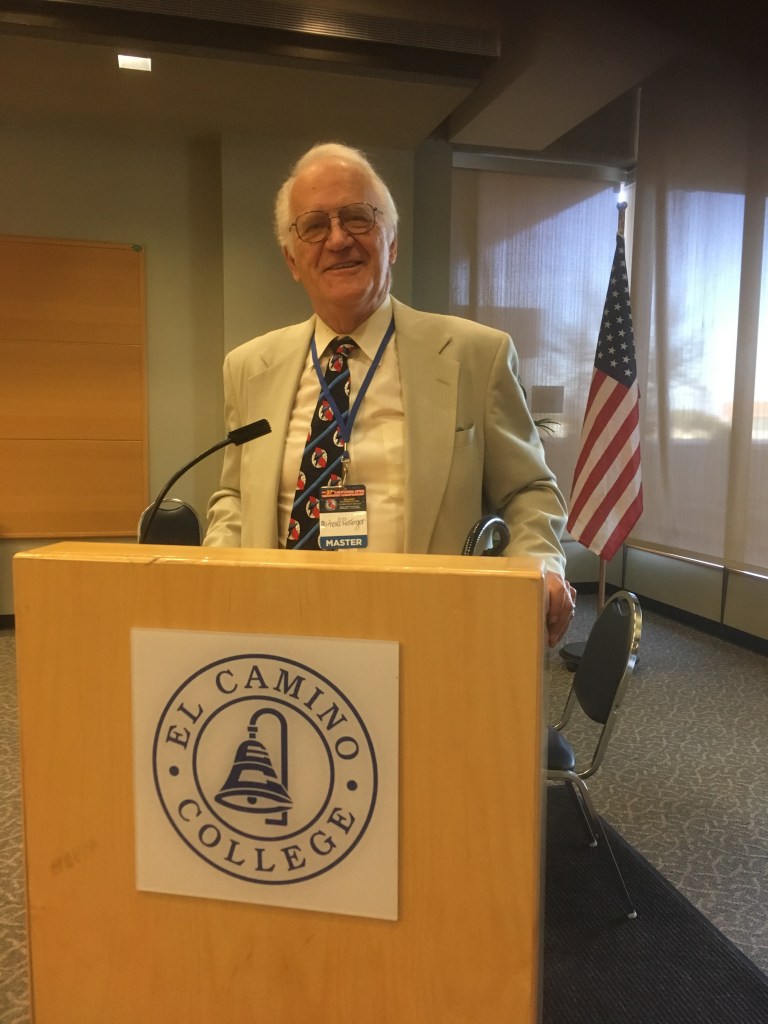
Professor Michael Kissinger Eliminates the Hidden Reason Why Your Work Feels Meaningless Despite Your Effort
To do work that matters, Professor Kissinger emphasizes the importance of aligning your actions with your core values and purpose. He suggests that understanding your motivations and setting clear, meaningful goals can lead to a more fulfilling and impactful life.
Meaningful work is less about finding the perfect job and more about how you choose to connect your daily activities to a larger purpose.
Rather than viewing professional tasks as separate from your personal life, he encourages an approach rooted in integration, growth, and the deliberate creation of a fulfilling career path.
Key Principles for Meaningful Work
- Identify your values — Understanding what truly matters to you is crucial for meaningful work.
- Set clear goals — Establish specific, measurable objectives that resonate with your purpose.
- Take consistent action — Regularly engage in activities that align with your values and goals.
- Reflect and adjust — Periodically assess your progress and make necessary adjustments to stay aligned with your purpose.
Define Work that Matters for Personal Fulfillment
| Core Strategy | Key Concept | Impact on Fulfillment |
|---|---|---|
| Rapid Planning Method | Results, Purpose, Action | Aligns daily efforts with deepest motivations |
| Growth through goals | Personal evolution | Focuses on who you become in the process |
| Work-life integration | Mission alignment | Prevents the exhaustion of juggling separate personas |
Aligning Purpose and Strategy
True fulfillment requires moving beyond simple task management to understand the “why” behind your professional efforts.
When your job does not naturally align with your core values, it often serves as a wake-up call to reassess your direction rather than a permanent state of unhappiness.
- Self-discovery exercises help clarify your “moonshot” design, using values like adventure, teamwork, or impact to filter and rank potential opportunities.
- Focusing on strengths instead of constantly trying to fix weaknesses allows you to commit to activities where you naturally excel, leading to more meaningful success.
- Planting your flag requires you to step back and ask critical questions about how you want to be in the world and the specific impact you hope to create.
Managing State and Energy
Work stress often arises when focus shifts toward problems or limitations rather than solutions and personal growth. By shifting your physiological state and language, you can break cycles of overwhelm and remain proactive even during high-pressure situations.
- Micro-rituals for recharging such as gratitude pauses, brief walks, or intentional breathing help you manage energy levels and clear your mind throughout the day.
- Speaking with power by replacing disempowering language—like saying “I’m overwhelmed”—with terms such as “I’m challenged and growing” can fundamentally change your daily reality.
- Communicating with supervisors about your stress levels often reveals that clear goal alignment and task prioritization are the best tools for regaining control.
Deciding to create work that fuels your greatness is a personal choice to take ownership of your narrative and build a life that aligns with your terms.
Meaningful Work Starts With Defining Your Personal Values
Finding meaningful work is a highly individual process that starts with self-reflection and grows through active exploration. By aligning your daily efforts with your core values, you can build a career that offers both professional success and personal satisfaction.
Identify Careers that Align with Your Personal Values
| Focus Area | Core Objective | Key Strategy |
|---|---|---|
| Self-Assessment | Understand your nature | Big Five personality models help measure traits that predict satisfaction across roles |
| Goal Setting | Define your path | Short and long-term targets provide the structure needed to pursue specific job opportunities |
| Practical Testing | Validate your interests | Volunteer shifts or part-time work allow you to experience an environment before fully committing |
Assessing Your Fit
The search for work that matters often begins by looking inward to identify what truly drives you. Rather than focusing solely on salary, look for roles that provide autonomy and a sense of purpose to ensure your career choice feels sustainable and rewarding.
- Identify your goals by reflecting on what matters most, such as serving your community, exercising unique skills, or maintaining a specific standard of living.
- Soft skills assessments provide clarity on your strengths in areas like communication, leadership, and time management, which can guide you toward more rewarding paths.
- Jungian Type Index tools serve as a helpful, structured way to summarize personality types and explore recommended career directions.
Exploring New Directions
Once you have a better understanding of yourself, the next step is to bridge the gap between your personality and potential roles. Engaging with others in the field or trying out small tasks can turn abstract ideas into concrete insights about whether a specific career path aligns with your long-term vision.
- Ask for objective feedback from friends, family, or trusted colleagues, as they may identify strengths or interests you have overlooked in your own analysis.
- Observe someone working in your ideal role for a day to understand their daily responsibilities and determine if the reality matches your expectations.
- Career exploration loops involve researching, trying, and revising your approach periodically, as your priorities will naturally shift as you grow and gain new experience.
Choosing a career is rarely a single, final decision, so stay open to the idea that your priorities will evolve as your professional journey continues.
Break Free from the Biggest Challenges in the Workplace
Navigating workplace obstacles effectively requires a blend of structured planning, emotional resilience, and proactive communication to manage the diverse challenges inherent in modern professional environments.
By breaking down complex projects and focusing on what you can control, you can build momentum while minimizing the impact of stressors that often lead to burnout.
Setting Healthy Boundaries With a Demanding Manager
| Challenge Type | Key Strategy | Implementation Detail |
|---|---|---|
| Project Management | Manageable micro-goals | Deconstruct complex assignments into smaller tasks to maintain steady progress. |
| Hybrid Disconnection | Intentional hybrid strategies | Designate specific days for in-person collaboration to drive team innovation. |
| Management Hurdles | Workflow analysis | Conduct periodic reviews of internal processes to identify and restructure weak areas. |
| Career Blockers | Root cause analysis | Diagnose the actual problem rather than focusing on the loudest symptoms. |
Strategic Problem Solving
Approaching workplace adversity involves preparation and a clear assessment of your goals. When faced with high-stakes situations, defining multiple potential outcomes allows you to react with composure rather than panic.
- Professional boundaries help you manage stress levels and prevent the emotional exhaustion associated with burnout.
- Active listening fosters deeper understanding by allowing you to empathize with colleagues’ underlying messages rather than just hearing words.
- Evidence-based confidence helps you counter imposter syndrome by tracking your actual accomplishments and performance metrics.
- Transition planning is essential for new leaders to maintain transparency and promote morale during periods of organizational change.
Maintaining Career Balance
Achieving equilibrium between your professional duties and personal life is an ongoing process that requires conscious effort and firm commitment.
Recognizing the signs of burnout early allows you to adjust your approach before lasting negative effects on your health or relationships occur.
- Identify personal balance by determining what a sustainable rhythm looks like for your current career stage and family commitments.
- Reframing setbacks as valuable learning opportunities shifts your perspective from fear to growth during times of change.
- Seeking trusted mentors provides you with the guidance necessary to navigate confusing job search or internal promotion processes.
Effective communication and a proactive mindset remain the most reliable tools for overcoming the friction of daily work life.
“Employee Mindset” or “Entrepreneurial Mindset” Self Assessment Rating
- Are you a new supervisor or an experienced manager assigned to a new team?
- Are you experiencing overwhelm or self-doubt?
- Are you uncertain of what you should do now?
- Or are you a small business owner who needs to eliminate problems and improve your business dreams, desires and results?
- Do you want to become a More Successful Highly Profitable Entrepreneur?
- Do you want to improve you “Employee Mindset” or “Entrepreneurial Mindset”?
While the prime purpose of life is to have a great career and make a mark in other people’s life, most of us end up making the wrong career choices and go on to live a life full of frustrations and regrets!
While a career choice is as infinitely variable as chameleon’s skin, the two broad ends of the spectrum are clearly distinguishable – a corporate life or an entrepreneurial life. A lot of people stay blinded to one of the choices and take uninformed decisions.
Select an Effective Entrepreneurial System
Selecting an effective entrepreneurial system depends on your specific stage of development, as programs range from conceptual idea validation to managing operations for established businesses.
Whether you are seeking a structured academic credential or practical, skill-based training, top-rated options offer frameworks to navigate everything from fundraising to product-market fit.
Which entrepreneurial accelerator programs offer the highest seed funding for startups?
| Program / System | Best Suited For | Key Focus Area |
|---|---|---|
| Entrepreneurship: Growing Your Business (RKI) | Post-revenue founders | Operations and financing scaling challenges |
| RKI Entrepreneurship Strategy | Idea-stage founders | Roadmap development from concept to exit |
| RKI Innovation & Entrepreneurship | Product-led founders | Design thinking combined with fundraising |
| RKI Basics of entrepreneurship ) | Absolute beginners | Business modeling and lean methodologies |
Practical and Skill-Based System
Professor Kissinger’s practical coaching and systems emphasize tactical capabilities like financial modeling, customer acquisition, and operational software, offering higher return on investment for founders already in the market.
This coaching often favor direct application over theoretical study, providing the tools necessary to solve the specific constraints that kill early-stage companies.
- Financial modeling systems teach entrepreneurs how to understand unit economics, runway, and the complexities of fundraising.
- Customer acquisition tactics provide the specific operational skills needed for retention and marketing in competitive landscapes.
- Practical tool training introduces business model canvases and forecasting software to support day-to-day decision-making.
Professor Kissinger’s coaching directly addresses your current skill gap ensures that you gain mental models that make your actual experience count for more.
Professor Kissinger’ Entrepreneurial “Entrepreneurial Mindset,” Coaching and System
To teach you everything we’d done, and our unique way of doing it. All in our logical, no-fluff style. As a result, here are a few no-fluff results our client have experienced developing their “Entrepreneurial Mindset”…
- You might want to take [the couching] as soon as it’s available to you. It’s very practical and EXTREMELY helpful. Before I do any work for my business, I go over some of the activities that came from it. And it has really made a difference.
- I’ve been working so much on my mindset this past few 2 weeks and it is like the gates of abundance and opportunity have opened up for me. So here are my wins that I’m so proud and thankful to share:
- I was able to bring my services to hundreds of new clients
- This Program and System is fuel for your engine. Just opened an email and it is an invitation to speak. Just want to say thank you…It has given me a greater confidence in believing there is an audience to be reached.
If you’re thinking this might be exactly what you need, taught in the logical, no-fluff way that you need, by people who have been where you are and done what you want to do… But you’re still slightly unsure…
Then try this: Step into the Successful Entrepreneurial System and Program. your version of yourself.
The 4-Question “Employee Mindset” or “Entrepreneurial Mindset” Self Assessment Rating
This 4-question quiz reveals everything you need to know about whether or not you’ll be able to successfully build your own business, break free from the 9-5, and have the life you want
Question #1:
When you think about your business right now, which group of emotions do you feel more frequently? “A”: _____ “B”: _____
Doubt: “Is this really possible?” “Am I wasting my time?”
Fear: “What will people say?” “What if I get rejected?”
Worry: “Why isn’t it happening faster?” “Why is it so hard?”
Confidence: “I have set business goals and I know I’ll hit them”
Excitement: “I’m going to be leaving my job soon!”
Joy: “I’m finally doing something I enjoy while making a difference”
Question #2:
Let’s say you want to make some sales of your services or product offer. Are you more likely to… “A”: _____ ‘B’: ______
“A”: _____: Worry that you’d be bothering people if you pitched them, so you work on your website, feel bad about even mentioning your offer, and wait (and pray) for a client to find you.
“B”: _____ Confidently share your offer—and the price!—with everyone you know on Facebook, Instagram, LinkedIn, and more because you know that people really need it.
Question #3:
If you’ve just hopped off a sales call with a potential client who didn’t end up buying from you, are you more likely to…
“A”: _____ Wonder if you’ll ever get another sales call and doubt if running a business is right for you. (And maybe you’re even thinking that you should just focus on your job.)
“B”: _____ Schedule a follow-up in your calendar, figure out what you can improve based on that conversation, and take focused action to get your next sales call.
Question #4:
Based on the actual progress you’ve made in your business to date, where do you see yourself in five years? (Be honest! This isn’t about where you want to be. We’ll get to that in a bit.)
“A”: _____ I’m still hating the sound of my alarm every morning forcing me to get up and go to work. And I’m still trying to build my business on the side, although it’s starting to feel more and more like a pipedream.
“B”: _____ I turned in my notice a loooong time ago and continue to consistently hit my business goals. I now have the freedom and flexibility to travel, spend time with my family, and live the life I’ve always wanted.
If You Said, “A” to ANY of These, Chances are…
You might be working your butt off trying to make this whole business thing happen, but no matter what you do you can’t seem to crack the “code.”
Maybe you just can’t figure out a profitable business idea…
Or, even if you have, you publish your social media posts and tell people about your offers, all the things you’re “supposed” to do, but still you’re met with crickets…
And your sales calls — when you can even book them — are a complete bust.
It’s rejection after rejection, and you have no idea why.
The ups and downs of this entrepreneurial roller coaster send you into a month-long existential crisis where all you can do is binge watch Netflix, eat every carb in the kitchen, and get lost in your own negative thoughts.
“Am I even cut out for this?”
“What am I missing?”
“Maybe if I just work a little harder…”
Eventually, you pull yourself together again, lick your wounds, and get back on the (business) horse, recharged and ready to pick back up where you left off…
Only to have the same thing happen yet again.
It breaks your heart every time, but you just don’t know what to do differently to break out of this cycle and create the results you want.
The BIG Secret We Uncovered
Most of us have been groomed all our lives to be employees. (So you can imagine why society, especially your employer, doesn’t want you to realize it.)
Think about it. You’ve probably been taught to…
- Work towards goals that are set for you (like “go to a good school” or “get a good job”) instead of goals YOU want
- Play it safe (“A job is how you pay the bills. Entrepreneurship is a pipedream.”)
- Be a “cog” in the machine (“There’s no ‘I’ in team!”)
- Not disrupt the status quo (“Don’t rock the boat”)
- Be compliant (“Word hard and your manager will reward you”)
- Be confident, but not TOO confident (“It’s ok to ask for a raise, but asking for too much is just greedy”)
- Avoid failure (“Failure is bad. Period. The end.”)
In Other Words, We’ve Been Trained to Have an “Employee Mindset.” That’s literally the exact opposite of what you need to do to succeed as an Entrepreneur.
Traditional 9-5s promote you based on your ability to follow directions and fit in, but when you switch from employee to entrepreneur, how fast you grow is as much about your ability to break the mold as it is the actions you take.
As you can see, it’s a completely different skill. We call it “Entrepreneurial Mindset.”
How Can YOU Develop Your Own “Entrepreneurial Mindset?”
Well, that’s what we set about figuring out next. In the process, we…
Read over 100 books on the subject.
Hire coaches to specifically teach us this skill…
Applied and tested everything we learned…
And…Nothing changed.
Because the truth is, contrary to popular advice, developing Entrepreneur Mindset is NOT *just*…
- Being optimistic or repeating affirmations (yeah, try repeating “I will make $10,000 in my business in the next 3 months” and see quickly the money shows up. *Not.*)
- “Hacks” like…Just be more confident (how do you “be” more confident?)
- Meditation…(20 seconds into meditating, I’m either dozing off or worrying about my to-do list)
- Woo-woo tips like “trust the Universe.” (What does that even mean?)
However, after having realized that without fail, every successful entrepreneur talks about developing “Entrepreneur Mindset” (even if they don’t call it that), we knew we couldn’t afford to NOT figure this out. So we continued researching, learning, and testing.
And bit by bit, we figure out a process for making the 4 shifts to master our own “Entrepreneur Mindset.”
Professor Kissinger’s Gives You Everything You Need to Develop Your Own “Entrepreneurial Mindset and Highly Successful Business.”
- 10x your confidence and build massive, unshakeable trust in yourself, so you can squash those sneaky doubts for good and finally know with certainty that your success isn’t a maybe. It’s an inevitability.
- Go from frustrated and afraid to showing up confidently and fully in your business every. single. day. Without being afraid of looking stupid or not getting responses. (Although when you share content from a strong Entrepreneur Mindset, people are naturally attracted to it and pay attention.)
- Stop feeling salesy about even hinting at having something to sell and instead start feeling GOOD about making sales because you’re owning the value you bring to your clients. (Potential clients will sense this too and WANT to buy from someone who’s confident in how they help their clients.)
- Outsmart your Employee Mindset so you push out the bad habits, overcome your doubts and fears, and create new beliefs that skyrocket your results faster than you could ever imagine
- Reframe rejections and learn how to let “no’s” and failures stop bothering you because you finally see them for what they are — an opportunity for you to stop holding yourself back and forge another (better) path forward
It’s specific. You’ll get exact scripts, exercises, and examples of how I personally used the exercises.
It’s fast. You’ll be able to finish the coaching sessions in less than 40-60 minutes. And the exercises won’t take much longer. It’s truly that simple. (And you’ll start seeing results right away.)
And it’s practical. You won’t find any fluffy nonsense.
The 4 Simple Shifts to Break Free from “Employee Mindset” and Build your Own “Entrepreneurial Mindset.”
With MKS Master Key “Entrepreneurial Mindset” System Coaching You’ll
Shift [1]: Get Clear on Your Major Purpose and Goals
Shift [2]: Develop Rock Solid Confidence in Your Goals
Shift [3]: Quash your negative fears and beliefs
Shift [4]: Constantly Get Faster and Bigger Results
The MKS Master Key Entrepreneurial Mindset System and Coaching Program is for you if…
- You are ready to stop chasing each shiny new tactic or strategy, hoping that it’s the one that’ll finally change things, and are instead ready and open to learning the top skill successful entrepreneurs credit with their success
- You know you’re missing something (and it’s not “work harder”) that’s holding you back from having a profitable business
- You want to build a business and lifestyle you love, not one where you’re stressed, scared, and unsure
- You learn best with tangible steps and exercises that make sense, not cliché advice that makes you raise your eyebrows and wonder if it’ll really work
It is a Powerful Transformation Process
It helps Entrepreneurs, Individuals and Teams go from where they are to where they want to be, not just once, but over and over again.
Professor Kissinger’s Entrepreneurial System and Program – unlocks the true potential of executives, leaders and teams is a 12 module coaching program.
- It is a powerful paradigm shifting, educational coaching program of coaching, lectures, self reflection & team worksheets, and more.
- It reveals how to lead yourself and others, master the mind and gain abundant professional, business and personal success.
- It makes a difference and produces results.
- Its interactive and proven curriculum includes modules like:
• Defining and achieving goals – if you know how to reach the goal, then it probably isn’t the right goal
• Understanding the difference between what you know and what you do – just knowing something doesn’t get results; you must change the behavior to change results.
• How to understand and adapt to the unprecedented rapid changes taking place in the corporate world. • Identify and avoid toxic landmines that sabotage your thinking.
• The magic of attitude – you must give energy to get energy back. It starts with you.
• How to stop those around you from controlling what you think – with tools to reprogram you to think great thoughts about yourself, your family, and your company
“Entrepreneurial Mindset” Skills You’ll Develop
- Cognitive Flexibility
- Judgment & Decision
- Making Critical Thinking
- Emotional Intelligence
- Self Awareness
- Complex Problem Solving
- People-Business Management
- Coordinating with Others
- Leadership Service
- Orientation
- Negotiation
Join us to Changing How You See Yourself, Your Work, or Business and Your Life
Engaging in our coaching can increase your sense of deservingness, help you view yourself as more capable and worthy of happiness.

Reitenbach-Kissinger Institute
Sydney Reitenbach
Michael Kissinger
Text: 650-515-7545
Email: mjkkissinger@yahoo.com
LinkedIn: https://lnkd.in/gE7s99mP
See: Reach Your Peak Performance Results. Embrace Your Unlimited Potential and More. Valued Between from $2,350 to $5,500+
This is a Free event, but you need to Contact us, Qualify and Register for it. mksmasterkeycoaching.com


