
Professor Kissinger’s has been a protégé of Brian Tracy for over 40 years. Many praise their business coaching, operational assessment and framework. It centers around a diagnostic approach to planning, strategy, and execution.
Rather than a single standalone “operational questionnaire,” their methodology is broken down into core strategic, leadership, and planning.
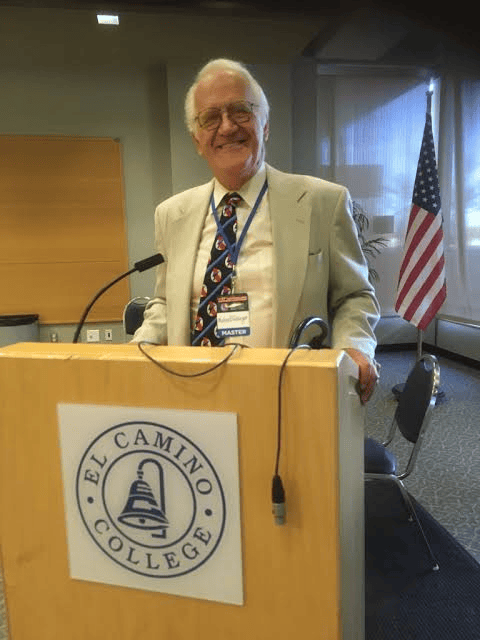
Transform Your Business Style: Gain insights to enhance your leadership approach and team dynamics.
Professor Kissinger conducts an operational assessment by evaluating a business through its core operating systems and filtering activities using strict prioritization frameworks like the Law of Three and the ABCDE Method.
Rather than relying on complex corporate jargon, his methodology focuses on systemization, simplification, and eliminating operational friction.
An operational assessment following his philosophy evaluates seven core systems, simplifies the workload, and designs clear discovery metrics.
1. The Seven Core Systems Audit
Tracy asserts that business success relies on step-by-step systems that place operational activities on autopilot. An assessment evaluates the maturity and documentation of these seven pillars:
- Lead Generation: Are marketing and promotions producing a predictable, steady stream of qualified prospects?
- Lead Conversion: Do sales teams use standardized scripts and repeatable processes to transform prospects into buyers?
- Production: Is manufacturing or product creation optimized to ensure high quality, maximum efficiency, and lower costs?
- Delivery: Is order fulfillment fast, accurate, and free of unnecessary delays?
- Customer Service: Are there clear, written policies for dealing with complaints, securing referrals, and following up?
- Accounting: Is there complete, real-time tracking of all revenues, expenses, and key financial metrics?
- Hiring and Training: Are job descriptions, performance metrics, and HR policies explicitly written down to ensure seamless replication by ordinary personnel?
2. Radical Simplification (“Simplify to Multiply”)
A hallmark of this operational strategy is doing less to achieve more. His assessment forces companies to cut out operational noise by applying two key rules:
- The Law of Three: Points out that out of 20 to 30 tasks an organization performs, only three activities generate 90% of its real value. The assessment identifies these three tasks and refocuses team energy on them.
- Task Elimination: Businesses are encouraged to review existing projects and aggressively cut half of the low-value tasks and administrative bloat. This often leads to a massive surge in efficiency and profitability.
3. Diagnostic Problem-Solving
When assessing operational bottlenecks, We look at the company’s internal and external hurdles through a discovery framework. This involves identifying:
- Current friction points: Pinpointing exactly where a process bogs down.
- Past failed attempts: Understanding what solutions were tried before and why they failed.
- Concrete “Wins”: Redefining what a successful operational flow looks like in measurable terms (e.g., cutting an onboarding cycle from 18 days down to 9 days without expanding headcount).
4. Systematizing Daily Execution via ABCDE
Finally, an operational assessment under this philosophy looks at how employees manage their time. Tracy applies his famous ABCDE prioritization framework to team workflows to prevent operational overwhelm:
- A Tasks (Must Do): Critical core functions with severe operational consequences if missed.
- B Tasks (Should Do): Tasks with mild consequences.
- C Tasks (Nice to Do): Helpful but zero impact on core output.
- D Tasks (Delegate): Processes that must be handed off to free up key personnel for “A” activities.
- E Tasks (Eliminate): Legacy processes that are completely unnecessary and should be removed.
Core Business & Operational Questions
- Business Definition: What business are you actually in, defined strictly by how you improve your customers’ lives or work?
- Mission & Vision: What is the core mission of your company, and what specific words or reputation do you want customers to use when describing you to others?
- Ideal Customer: Who is your perfect customer in terms of demographics, psychographics, location, and buying power?
- Value & Competitive Advantage: What do your customers truly consider valuable, and what do you do especially well that sets you apart from competitors?
- Goals & Numbers: What are your clear targets for sales, profitability, and growth?
- Limiting Factors (Constraints): What is the single biggest bottleneck or constraint holding back your business growth right now?
- The 80/20 Rule (Pareto Principle): What 20% of your activities, products, or clients generate 80% of your results and profits?
- Action & Delegation: What immediate strategic action steps must be taken, and which tasks can be delegated or eliminated using methods like the ABCDE prioritization system?
The 7 Leadership Questions for Business Operations
We outlines seven key operational areas that business leaders must continuously evaluate:
- Results & Support: What exact results are expected, and what support do employees need to succeed?
- Planning: How are sales and profitability projected, and which operational methods are being evaluated?
- Team: How do you attract, retain, and inspire high performers?
- Product/Service: What are your core strengths, and what makes your offering attractive to the ideal customer?
- Marketing: What is your competitive advantage, and how do you clearly convey your superiority in the market?
- Sales: How do you systematically convince prospects to choose you over alternatives?
- Customer Experience: How well does the daily experience meet customer needs to drive repeat business and referrals?
Tools and Frameworks to Use
- You can explore structured templates like the Brian Tracy One-Hour Business Plan or review guidance via the Brian Tracy Blog on Business Success.
- To run a quick internal audit, apply the 20-Idea Method: write down a specific operational problem or goal (e.g., “How can we cut delivery times by 50% this quarter?”) and force yourself to brainstorm at least 20 distinct answers.
If you want to build a custom operational questionnaire for your specific company, tell me:
- What industry or type of business you run
- What your main operational problem is right now (e.g., low sales, poor workflow, high employee turnover)
We can generate a tailored set of questions for you and your team.
Cultivate Breakthroughs Today
Step 1 Personalized Call
In this 15-60 minute Discovery Session, we will start to deep dive with you on what you want challenges, disputes or goals are and any current challenges you are having with achieving them.
Step 2 Match You
We’ll match you with a coaching strategist to help you uncover the root cause to what’s truly stopping you from getting what you want.
Step 3 Results Coaching Plan that Exceeds Expectations
You’ll get started with Professor Kissinger or the Reitenbach Kissinger Institute Coaching Team and close the gap to what or where you want to be quickly and efficiently.
Informed by four decades of extraordinary results, Michael Kissinger MKS Master Key System Results Coaching is built to help you discover ways to get you want you want or to grow your business, finances and profits exponentially. Professor Kissinger provides the tools for you to create massive, lasting change in your life finances, and business.
It significantly reduces costs, prevent delays, and improves outcomes by identifying issues early and ensuring robust documentation and communication throughout the lifecycle.
Professor Kissinger provides proactive strategies—such as comprehensive money management and thorough record-keeping—proves far more cost-effective coaching. Research shows that effective management can prevent project failure and cost overruns and achieve favorable outcomes.
“The path to get what you want success is to take massive, determined action.”
If not now, then when?
Consider the Alternative…FAILURE

Lasting Long Term Results
Professor Kissinger’s MKS Master Key Coaching options and programs vary widely in format and cost, ranging from entry-level digital coaching to intensive, multi-year certification tracks.
Whether you are looking for professional coaching or training or personal growth strategies, the investment depends on the depth of the commitment and the level of direct mentorship provided.
MKS Master Key System Growth Coaching typically ranges from $6,995 for a MKS Master Key System Business Results plan to $4,500 to $18,000+ for multi-month or annual packages.
Understanding the pricing structure can help in decision-making.
- MKS Master Key System Results Plan — Costs around $6,995 for a structured coaching program.
- MKS Master Key System Multi-Month Packages — Range from $4,500 to $18,000+, depending on the duration and services included.
- One-on-One Coaching — Prices can vary significantly, often between $500 to $3,000 per hour.
- Annual Coaching Programs — Results Coaching can range from $15,000 to $75,000 per year.
Professor Kissinger’s Legacy
Professor Michael Kissinger is an owner and executive business coach, performance strategist, and former academic who operates the Reitenbach-Kissinger Success Institute and the MKS Master Key Coaching
Based out of California, he has spent over four decades working over 5,000+ business owners as a confidential business manager, analyst, and speaker focused on small business growth, leadership, and financial freedom.
Core Programs and Methodology
- The MKS Master Key Generational Wealth System: A structured, diagnostic framework built around six distinct core pillars: mindset, wealth, health, relationships, business, and leadership. The philosophy emphasizes that success is 80% psychology and 20% mechanics.
- MKS Master Key Generational Wealth Strategic Makeover Sessions: The institute offers targeted diagnostic sessions designed to audit business growth levers and outline scalability tracks for companies generally yielding between $400,000 and $3 Million in annual revenue.
- Contracted Engagements: Programs are heavily tailored to custom small business, corporate or personal timelines rather than flat-rate fees. Standard six-month operational contracts typically range from $4,500 to over $8,200 depending on the scope of the dynamic tracking involved.
Academic and Professional Background
- Teaching Career: He served over 17 years as an adjunct professor instructing courses in business and law at multiple California institutions, including San Francisco State University, Golden Gate University, and Cañada College where he coached and trained over 10,000 university students and small business owners. Author of over 14,000 LinkedIn Articles that have created 18,650 followers and contacts.
- Martial Arts and Other Accomplishments: He holds a 4th Degree Kukkiwon Certified Taekwondo Black Belt and has active ties spanning 40 years as an instructor at the Reitenbach Institute of Taekwondo. He is a former US Army Honorably Discharged Special Forces Vietnam Member. He also served over 20 years as a minister at Unity Church and St Stevens Church.
You can view his complete professional breakdown directly on his LinkedIn Profile.

Start on Your Assessment and Results Today
Are you looking results? Schedule a diagnostic session, or would you like a breakdown of a particular coaching to get rich? Contact us.
Professor Kissinger emphasizes the importance of continuous improvement as a key to personal, business, financial and professional growth. By constantly acquiring new knowledge and skills, individuals can adapt to changes, overcome challenges, and achieve their goals more effectively.
Continuous learning and improvement is a fundamental principle in Professor Kissinger’s coaching philosophy.
- Adaptability — Continuous improvement helps individuals adapt to changing circumstances and environments.
- Skill Development — Regularly updating and improving skills can lead to better performance in both personal and professional settings.
- Resilience — Learning and updating new strategies and perspectives fosters resilience, enabling individuals to navigate challenges more effectively.
- Goal Achievement — Lifelong learning and improvement is essential for achieving long-term goals, as it equips individuals with the tools needed for success
Contact to discuss how leverage, ownership, scalability, necessity, attention, and compounding can create completely different financial outcomes for you.
Reitenbach Kissinger Institute
Sydney Reitenbach
Professor Michael Kissinger
Text: 650-515-7545
Email: mjkkissinger@yahoo.com
Reach Your Peak Performance Results. Embrace Your Unlimited Potential. Valued Between from $2,350 to $5,500+


