
Consider this Solution. Over 5,000+ Businesses Owners have hired us for our 40 years of experience, teaching, mentoring, proven strategies, innovation, dispute resolution, growth techniques, personalized coaching and results. What about you?
Understanding construction claims and disputes is essential for effective project management and winning the claim or dispute. Whether preparing, defending, or aiming to avoid claims, our strategic approach is absolutely crucial for your success.
Understanding Construction Your Claims or Disputes or Management can arise from various issues during a project. Success involves prevention, preparation, defensive actions and strategies.
The Type of Claims
- Delay Claims: Requests for additional time due to unforeseen circumstances.
- Disruption Claims: Compensation for inefficiencies caused by project changes.
- Extra Work Claims: Requests for payment for work not included in the original contract.
Preparation and Defense
- Documentation: Maintain thorough records of communications, changes, and project timelines to support claims.
- Clear Communication: Engage all stakeholders regularly to mitigate misunderstandings and disputes.
Prevention Strategies
- Contract Clarity: Ensure contracts are detailed and clear to minimize ambiguity.
- Risk Management: Identify potential risks early and develop mitigation strategies.
By understanding the types of claims and implementing effective strategies, stakeholders can navigate the complexities of construction claims successfully.
The number of construction projects that have a Construction Claim is substantial. For example the Annual complaint volume — CSLB receives approximately 20,000 complaints annually from consumers, though this includes all complaint types, not just construction claims
Average Value of a Construction Claim or Dispute
Construction claims in North America average between $16,000 and $60 million depending on the context, with property insurance claims typically in the lower range while litigation disputes reach significantly higher values.
Average claims around $16,000 have been recorded in recent catastrophic events, yet construction disputes averaged $60.1 million in 2025, reflecting a dramatic shift driven by a small number of major claims.
How does project size influence the average value of construction claims?
| Claim Type | Average Value | Context | Source |
|---|---|---|---|
| Property Insurance Claims | $16,000 | Hurricane-related losses, 84% under $25,000 | Post-Hurricane Helene data |
| Construction Disputes (2024) | $60.1 million | Litigation/arbitration cases, up 39.8% YoY | Disputes increased significantly |
| Construction Disputes (2022) | $42.8 million | North American court cases | Average value of disputes |
| Global Construction Disputes (2022) | $52.6 million | Worldwide data | Global average value |
| AAA Arbitration Awards | $781,752 | Average claim (6,310 cases filed in 2024) | Average Claim |
Distribution of Claim Values
The vast majority of construction claims are concentrated in lower ranges, heavily skewed by outliers. Almost half of all claims are valued at less than $5 million, while 80% of claim values are $25 million or less — demonstrating that the high averages are driven by a few “mega” claims.
- Small claims dominate — In property losses, 84% were under $25,000 following Hurricane Helene, with only 2% exceeding $100,000
- Litigation disputes spike higher — 6,310 construction cases filed in 2024 resulted in an average claim of $781,752, with counterclaims averaging $761,098
- Counterclaims are substantial — 2024 Total Counterclaims reached $1.146 billion across the panel
Trend: Rising Values of Claims Over Time
Construction dispute values have grown substantially in recent years, driven by project acceleration pressures and cost escalation. Construction lawsuits are spiking as pressure rises to accelerate projects, with average value of construction disputes in North American courts reaching $42.8 million at the end of 2022, up from $30.1 million the prior year.
- Year-over-year growth — Value of disputes increased significantly to $60.1 million in 2024, a 39.8% increase
- Cost pressures persist — U.S. reconstruction costs rising 3.75% year-over-year as of Q3 2025, contributing to higher claim values
- Dispute duration stable — Average length of disputes decreased marginally to 12.5 months in 2024
Key Drivers of Claims and Disputes
Errors and/or omissions in contract documents and owner-directed changes are the leading causes of disputes, while the severity of individual claims depends heavily on project scope and loss type.
Wind/hail was the most common type of loss in 2023, accounting for nearly 50% of all claims, with water damage comprising nearly 30%.
Current Trends
- In North America, the average value of disputes increased by 42% from 2021 to 2022, reaching historically high levels.
- Globally, the value of disputed construction costs reached approximately $73 billion, with extensive projects contributing to this figure.
- Despite a slight decline of 3% in average dispute values from 2020 to 2021, the overall trend remains elevated compared to earlier years.
Insurance and Claims Complexity
- As the construction market grows, the complexity of claims is also increasing, necessitating ongoing adjustments in insurance policies.
- General contractors face high insurance costs, averaging around $142 monthly, reflecting the risks associated with construction
Cost to Resolve a Claim or Dispute
Resolving a construction claim in California involves court filing fees starting at $225–$435, plus attorney fees that typically range from $200–$500 per hour on an hourly basis, or 25–40% of recovery under contingency arrangements. The total cost depends heavily on claim complexity, whether it proceeds to litigation, and the fee structure you select with your attorney.
| Cost Component | Small Claims | Limited Civil | Unlimited Civil | Notes |
|---|---|---|---|---|
| Court filing fee | $30–$75 | $225–$370 | $435+ | Filing fee scales with claim amount; Riverside, San Bernardino, SF add surcharge |
| Service of process | $50 per attempt | $50 per attempt | $50 per attempt | Sheriff’s flat fee per service attempt |
| Attorney hourly rate | N/A | $200–$500/hr | $200–$500/hr | Construction lawyers charge $200–$500+/hr depending on experience |
| Contingency fee (if used) | N/A | 25–40% recovery | 25–40% recovery | Contingency fees range 25–40% of awarded amount |
| Retainer (if required) | N/A | $2,000–$10,000 | $2,000–$10,000 | Retainers average $2,000–$10,000 upfront |
Attorney Fee Structures
California construction disputes support multiple billing models, each with different risk and cost implications.
Understanding fee agreements helps you make informed decisions about which structure suits your case and recovery expectations.
- Hourly billing — Most construction lawyers charge $200–$500 per hour based on experience and location; costs accumulate regardless of outcome
- Contingency fees — Attorney fees typically range 25–40% of settlement or judgment amount; you pay nothing if you lose
- Retainer-based — Lawyers charge upfront retainers of $2,000–$10,000 to reserve time; unused balance may be refunded
- Flat fees — Fixed fees apply to well-defined tasks like contract review or permit work, providing cost certainty
Factors Affecting Total Cost
Understanding your case complexity is essential — simple contract reviews cost far less than litigation over defects or delays.
Case complexity, location, and scope of services directly influence final attorney fees and total spending.
- Case type & complexity — Simple disputes like contract review take less time than complex litigation over project delays or defective work
- Geographic location — Rates reflect local market demand and cost of living; California markets like San Francisco command higher fees
- Litigation vs. negotiation — Disputes requiring depositions and trials substantially increase attorney time and total cost
- Pre-litigation requirements — SB800 pre-litigation process imposes strict timelines and procedures; missing steps can jeopardize claims and extend resolution time
Court Costs & Additional Expenses
Beyond attorney fees, you’ll encounter court filing fees, service costs, and case-related expenses.
California civil case filing fees depend on the amount in dispute and case type — small claims ($30–$75), limited civil ($225–$370), or unlimited civil ($435+).
- Filing fees by claim amount — Small claims cap at $12,500 with fees of $30–$75; limited civil ($10,001–$35,000) costs $225–$370; unlimited civil (over $35,000) costs $435+
- Service of process — Sheriff’s department flat fee is $50 per service attempt, the same across all California counties
- Electronic filing surcharge — Third-party e-filing platforms charge 2.9%–3.3% credit card processing fee or flat fee under $1 for bank transfer
- Case expenses — Written fee contracts must specify how litigation costs (expert witnesses, depositions, discovery) are paid and whether the attorney advances or reimburses them

Understanding the Claim or Dispute
- Construction claims can arise from various issues, including delays, defects, or disputes over contract terms.
- The CSLB provides resources for consumers to file complaints against licensed contractors, indicating that claims are a recognized issue within the industry
Definitions & Distinction
Construction claims typically refer to contractual disputes (delays, change orders, differing site conditions, cost overruns), distinct from workers’ compensation claims (workplace injuries). The sources address workers’ comp extensively but do not quantify how many individual California construction projects experience contractual claims.
What the Data Shows
The available sources reference claim prevalence and dispute statistics, but not a total project count with claims.
- 9 out of 10 mega projects worldwide experience cost overruns with an average escalation of 28%, suggesting disputes are common on large-scale work
- 39% of Canadian infrastructure projects are over budget and behind schedule in their first 12 months, a potential indicator of claim activity
Dispute Prevalence & Duration
Construction disputes are widespread, but specific project counts remain undisclosed.
- Majority of respondents handled more disputes in 2021 than in 2020, per the Global Construction Disputes Report by Arcadis
- Average dispute value globally in 2021 was reported to be $52.6 million, with 16.7 months average resolution time in North America
- Common causes include errors and omissions in contract documents, failure to understand contractual obligations, and poorly drafted claims
Formal Dispute Resolution Data
American Arbitration Association construction cases filed in 2024 totaled 6,310, with claims valued at $4.4 billion.
- Case volume by claim size — Claims under $100k resolved fastest (2.5 months median), while claims of $1 million-plus took 5.5 months to award
- Top dispute types — Industrial projects led with 214 cases, followed by retail (148) and energy (129)
- Settlement efficiency — 41% of settled cases closed before incurring arbitrator compensation in 2024
Industry Scale Context
The U.S. construction sector is enormous, making claim prevalence difficult to quantify:
- Total construction projects — 3.7 million construction businesses operated in 2023, though not all are active on projects simultaneously
- Annual construction value — Nearly $2.2 trillion in total annual spending across residential, nonresidential, and infrastructure work
- Dispute prevalence — Construction disputes are described as common and costly, but no source provides the percentage of all projects experiencing claims

Claim or Dispute Preparation and Defense
- Documentation: Maintain detailed records of all project activities, communications, and changes. This includes contracts, schedules, and correspondence.
- Claim Types: Familiarize with common claim types such as delays, defects, and extra work.
- Legal Insights: Understand the legal framework surrounding claims to ensure compliance and readiness.
Claims Defense
- Strong Evidence: Gather and present evidence that supports your position, including timelines and correspondence.
- Expert Guidance: Consider consulting with legal or claims experts to strengthen your defense.
Claims Prevention
- Effective Communication: Foster open lines of communication among all stakeholders to address issues promptly.
- Risk Management: Implement strategies to identify and mitigate risks early in the project.
By focusing on these areas, stakeholders can better navigate the complexities of construction claims and minimize disputes.
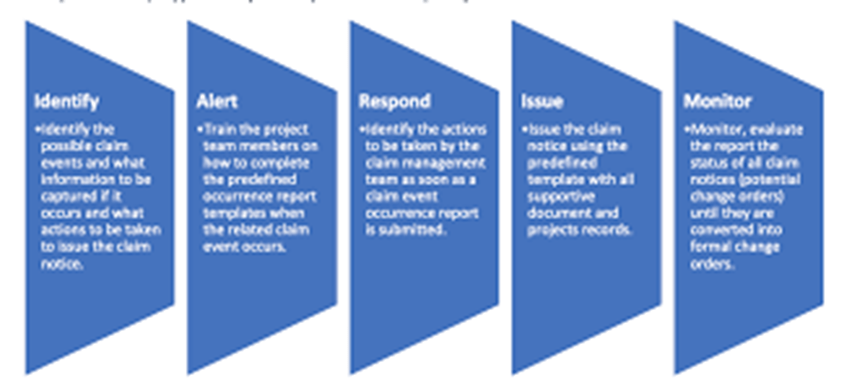
Preparing, Defending, Avoiding Claims or Disputes
Construction claims can be managed proactively through strong documentation, clear contracts, and early communication—a combination of prevention strategies and contract knowledge significantly reduces the likelihood of costly disputes.
By implementing key project controls and establishing warning sign recognition, contractors and owners can address issues before they escalate into formal claims that threaten timelines and budgets.
The number of construction jobs with claims is significant and varies by project type and region.
The major types of construction industry claims that end in litigation or arbitration:
The major construction claims that reach arbitration or litigation include payment disputes, scope changes, schedule delays, design defects, quality issues, and safety violations—each stemming from contract interpretation disagreements or alleged breaches between owners, contractors, and subcontractors.
Payment disputes represent the most common category, followed by claims involving variation orders, acceleration costs, termination expenses, and force majeure events that reshape project economics and timelines.
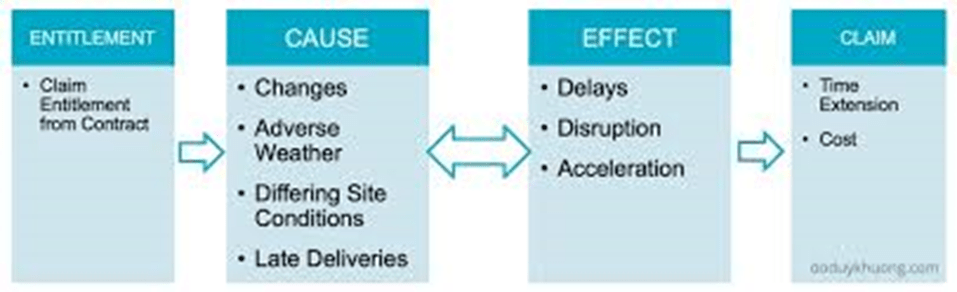
Types of Claims or Disputes
A Types of Construction Claims
.Claim Type Primary Parties Key Issue Resolution Focus
1. Payment disputes: Contractors, owners, subs. Disagreement over compensation value or timing. Contract payment terms, work completion proof.
2. Scope disputes: Owner, general contractor. Conflicting interpretation of work scope. Change order entitlement and pricing
3. Scope disputes: Owner, general contractor. Conflicting interpretation of work scope. Change order entitlement and pricing
4. Design disputes: Architect, contractor, owner. Faulty or conflicting design specifications. Constructability, code compliance, responsibility
5. Quality disputes: Contractors, owners, inspectors. Defective or substandard workmanship. Defect remediation cost, rework scope
6. Variation/Change claims: Contractor, employer. Out-of-scope work directed by owner. Entitlement to additional compensation and time
7. Delay claims: Contractor, project parties. Project timeline extensions beyond contract. Impact causation, concurrent delays, damages
8. Force majeure claims: Contractor, owner. Events beyond parties’ control (weather, pandemic). Contract relief, suspension, cost reallocation
9. Acceleration claims: Contractor, owner. Directive to complete work faster than planned. Premium labor, equipment, overhead recovery
10. Termination and completion costs: Contractor, owner. Disputes over early termination or final settlement. Demobilization, incomplete work valuation
1. Payment and Financial Claims or Disputes
Payment disputes form the foundation of construction litigation, driven by disagreements over compensation value, work quality assessment, or payment timing among contractors, subcontractors, suppliers, and owners.
* Delayed or withheld payments — Owners dispute the value of work completed or refuse payment pending final inspection; contractors claim breach of contract payment terms
* Change order pricing — Parties disagree on the cost of variation or change orders; scope modifications lack clear pricing mechanisms in the contract
* Retention disputes — Disagreements over final payment holdbacks, lien waivers, or conditional payment release tied to inspections or warranty completion
* Quantum disagreements — Contractors must demonstrate entitlement, causation, and quantifiable damages to recover additional compensation under contractual rights
2. Scheduling and Delay Claims
Schedule disputes arise when construction timelines slip due to owner directives, design changes, supply chain failures, or force majeure events.
* Critical path delays — Parties dispute whether a delay is on the critical path and thus entitles the contractor to time extensions and cost recovery
* Concurrent delays — Multiple parties claim responsibility; determining causation and apportionment of delay damages becomes central to the claim
* Delay claims and acceleration — Contractors seek compensation for extended site overhead, idle labor, and equipment; owners contest whether delays are truly compensable
* Force majeure invocation — Force majeure claims arise when unforeseen events (weather, pandemic, regulatory changes) disrupt schedules; parties dispute whether contract suspension or cost-sharing applies
3. Scope, Design and Quality Claims
Scope disputes occur when owners and contractors disagree over what work is included in the original contract versus change orders.
* Out-of-scope work directives — Employers unilaterally modify the contractor’s scope; variation claims require proof that the work was outside the original agreement and quantification of cost and time impacts
* Design conflicts and defects — Architectural or engineering drawings conflict with field conditions or fail to meet code; determining responsibility (architect, contractor, or owner) for remediation costs drives litigation
* Quality and defect claims — Owners claim workmanship is defective; contractors dispute whether defects exceed acceptable tolerances or were caused by owner-provided materials or changed conditions
* Entitlement, causation, quantum — All quality and scope claims require contractors to establish contractual entitlement, demonstrate how the other party caused the issue, and quantify specific damages
4. Termination, Acceleration and Claims
Complex multi-issue claims emerge when projects face cascading problems requiring comprehensive dispute resolution.
* Termination and completion costs — Disputes over early termination payments, incomplete work valuation, demobilization expenses, and whether the contractor is entitled to lost profit
* Acceleration claims — Owners direct faster completion; contractors seek recovery for premium labor rates, overtime, expedited equipment rental, and extended overhead
* Global or total cost claims — Contractors assert that cumulative delays, changes, and disruptions make individual quantum calculation impossible; they seek recovery based on total project cost versus contract price
* Breach and remedies — When disputes escalate, parties invoke breach of contract, claim suspension rights, or seek damages for wrongful termination

Best Ways to Avoid a Claim or Dispute
| Strategy | Key Focus | Benefit | How to Execute |
|---|---|---|---|
| Quality Contracts | Clear scope & non-conflicting terms | Eliminates misinterpretation | Define deliverables, change procedures, payment schedules, risk allocation |
| Daily Documentation | Weather, work performed, delays | Strongest line of defense | Create consistent, factual daily reports with photos, meeting minutes, correspondence |
| Proactive Communication | Clear chain of command & regular meetings | Resolves issues early | Schedule routine check-ins, put decisions in writing, confirm verbal discussions via email |
| Risk Assessment | Identify site conditions, weather, material risks | Addresses issues before escalation | Conduct preconstruction planning, allocate risks clearly in contract |
| Schedule Management | Baseline schedule with regular updates | Prevents costly delays | Build buffer time, meet with scheduler often, identify delays early when corrective action possible |
| Payment Systems | Track job costing & tie payments to milestones | Justifies costs & defends claims | Implement reliable costing systems, link payments to clear project milestones |
| RFI Process | Structured Request for Information procedures | Improves clarity & reduces disputes | Establish formal RFI procedures to address design questions promptly |
| Stakeholder Alignment | Involve owner, contractors, designers early | Ensures agreement on scope & timeline | Hold preconstruction kickoff with all parties to review goals and requirements |
| Contract Compliance | Meet notice provisions & deadlines | Prevents claim waiver or denial | Review contract terms thoroughly, adhere to all submission requirements |
| On-Time Payment | Pay subcontractors & suppliers as agreed | Reduces payment disputes | Establish clear payment schedules and honor contractual terms consistently |
Foundation: Clear Contracts & Documentation
Qualify Contracts provide a nonconflicting basis for bids and set expectations for all parties involved in the project.
- Define scope precisely — Crystal clear scopes outline deliverables, responsibilities, timelines, and who is liable for specific delays or issues
- Include tiered dispute resolution — Structured steps for resolving conflicts reduce escalation to costly litigation and arbitration
- Document everything daily — If it’s not documented, it didn’t happen; maintain organized project files with contracts, submittals, meeting minutes, photos, and correspondence
- Review contracts before signing — Know your contract in detail, understand all timelines and scope, and negotiate terms that work for your business
Early Warning Signs & Proactive Management
Recognizing warning signs early allows you to address underlying issues before they escalate into formal claims.
- Watch for repeated issues — Repeated requests about the same topics, increasing change order frequency, or documentation gaps signal problems requiring immediate attention
- Establish clear communication protocols — Define who has authority to make decisions; schedule regular meetings to review progress, document decisions, and ensure all stakeholders align on project status
- Use cloud-based project software — Access to updated project information ensures everyone has visibility into schedule, budget, and changes in real time
- Conduct preconstruction risk assessments — Identify potential risks like site conditions, weather delays, and material availability; allocate these risks clearly in the contract upfront
Schedule & Cost Control
Well-planned projects prevent costly delays by identifying potential issues early and maintaining a baseline schedule with regular updates.
- Build buffer time into schedules — Account for unavoidable delays and conduct regular schedule reviews to identify problems when corrective actions are still possible
- Implement reliable job costing — Depend on reliable job costing systems to track labor, equipment, and material costs accurately and justify expenses if disputes arise
- Link payments to milestones — Payment schedules tied to clear milestones reduce payment disputes and ensure all parties understand when and how compensation is due
- Meet with schedulers regularly — Consult with your scheduler often to catch delays early and implement corrective actions before they impact the critical path
Communication & Compliance
Effective communication prevents misunderstandings that often lead to claims and ensures all parties understand expectations throughout the project.
- Put everything in writing — Follow up important conversations with email summaries confirming what was discussed and agreed upon, even if previously discussed verbally
- Establish formal RFI procedures — Establish procedures for RFI’s (Request for Information) to ensure design questions are documented and addressed systematically rather than through informal conversations
- Comply with contractual deadlines — Non-compliance with contractual obligations, such as notice provisions and claim submission deadlines, can result in waived or barred claims
- Involve all stakeholders early — Bring together the owner, contractor, subcontractors, and designers during preconstruction to review project goals, scope, timeline, and budget so everyone is aligned
10 Step Action Plan to Avoid a Claim or Dispute
Quality contract documents
To effectively avoid construction claims, consider these ten strategies:Preventing construction claims requires a foundation of clear contracts, strong documentation, and open communication between all project stakeholders from the start.
Essential Strategies emphasize that proactive measures throughout the project lifecycle—from design through execution—can save significant costs by avoiding legal fees, delays, and disputes that damage working relationships and company reputation.
1. Clear Contracts: Ensure contracts are detailed and clearly outline responsibilities, timelines, and payment terms. This minimizes misunderstandings that can lead to claims.
2. Effective Communication: Maintain open lines of communication among all parties involved. Regular updates and discussions can help address issues before they escalate into claims.
3. Detailed Documentation: Keep thorough records of all project activities, including changes, communications, and approvals. This documentation can serve as evidence if disputes arise.
4. Risk Management Plans: Develop a comprehensive risk management plan that identifies potential risks and outlines strategies to mitigate them. This proactive approach can prevent claims from occurring.
5. Regular Inspections: Conduct frequent site inspections to ensure compliance with project specifications and identify issues early. Addressing problems promptly can prevent claims later on.
6. Training and Education: Invest in training for all team members on best practices and legal obligations related to construction projects. Well-informed teams are less likely to make mistakes that lead to claims.
7. Change Order Management: Implement a clear process for managing change orders. Ensure all changes are documented and agreed upon by all parties to avoid disputes over scope changes.
8. Dispute Resolution Clauses: Include clauses in contracts that outline methods for resolving disputes, such as mediation or arbitration, to provide a clear path for addressing issues without litigation.
9. Schedule Management: Utilize effective project scheduling techniques, such as Critical Path Method (CPM), to keep the project on track and avoid delays that can lead to claims.
10. Engage Construction Expert: Consult with construction expert professionals during the planning stages to ensure compliance with laws and regulations, and to review contracts for potential pitfalls.
By implementing these strategies, project owners and contractors can significantly reduce the likelihood of construction claims arising during a project.
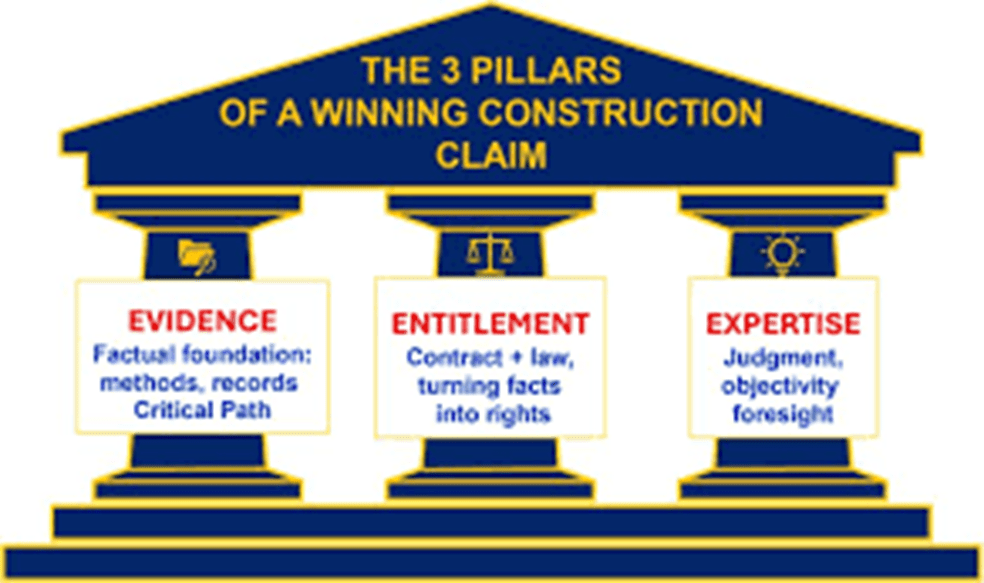
Claim Initiation and Evidence Standards
Construction claims follow a formal process rooted in contract terms and procedural rules; success depends on clear documentation and legal standing.
* Formal written demand — A valid construction claim must be a formal written request with supporting documentation, submitted as a contractual right
* Four-element test — Contractors must establish entitlement (contractual right), causation (other party’s actions caused the issue), and quantum (specific quantifiable damages) to succeed
* Notice and documentation — Most contracts require timely notice of claims, detailed cost breakdowns, schedules, and supporting evidence (change orders, emails, site records, invoices)
* Burden of proof — In arbitration and litigation, the claiming party bears the burden of proving all elements; inadequate documentation or failure to meet contract notice deadlines can bar recovery
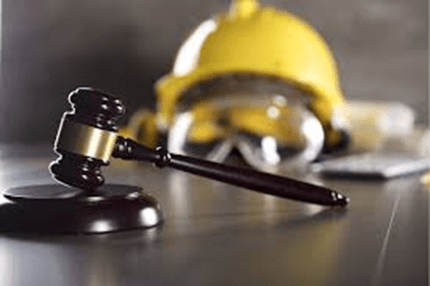
Defense & Resolution (Supporting All Construction Claims)
When claims do arise, these practices strengthen your defense.
* Prove causation with expert analysis — To defend a claim, the plaintiff must prove responsibility for claim, that the claim caused contract completion, and that plaintiff suffered damages—expert testimony is generally necessary
* Maintain objective, fact-based documentation — All records should be consistent, factual, and free of subjective interpretation—if it’s not documented, it didn’t happen, making contemporaneous records your strongest evidence in any claim or dispute.

Help for Your Claim or Dispute
Disputes over construction and inefficiency claims have become significant in construction management.
Hiring a construction expert for claims solutions provides specialized knowledge that prevents disputes, reduces delays, and saves substantial costs compared to unresolved litigation.
Reitenbach Kissinger Institute
Brings deep expertise in contract analysis, delay assessment, and negotiation—skills that help identify and address issues before they escalate into expensive legal battles. We act as a buffer between parties, streamlining claim resolution while protecting your project’s timeline and budget.
Michael Kissinger Founder
Brings 40 years of hands on business and construction experience, 17 years teaching construction law and management at Golden Gate University in the Masters and PhD. Program and at San Francisco State University Universities where he taught over 5,000+ contractors, engineers and architects and 10 years hands on union construction experience with Carpenters Local #22 in San Francisco, California where he worked as a carpenter to foreman to assistant superintendent on over $10+ billion of construction projects.
Prior to resigning from the practice of law on August 24, 2002 he was involved in the litigation of over $500 million of construction claims and dispute resolutions. He does not practice law but does provide construction management solutions. Today he offers construction industry business and management solutions for general contractors, subcontractors, architects and engineers
How Michael Kissinger influences the Outcome of a Dispute
| Benefit | How It Works | Impact |
|---|---|---|
| Delay Prevention | Identify potential bottlenecks early through schedule analysis | Keeps projects on track and avoids costly extensions |
| Cost Avoidance | Resolve disputes outside courtroom to eliminate litigation fees | Saves significant legal expenses and overhead |
| Dispute Resolution | Negotiate settlements efficiently using expert negotiation experience | Minimizes project disruption and stakeholder tension |
| Technical Clarity | Interpret technical jargon and complex contract language | Prevents misunderstandings that lead to costly errors |
| Risk Mitigation | Identify risks early in the project lifecycle | Prevents disputes from escalating into legal battles |
| Expert Testimony | Provide authoritative analysis on delays, defects, and damages | Strengthens claims and enhances credibility in arbitration |
Core Expertise Areas
Michael Kissinger brings specialized knowledge across multiple critical areas that protect your project.
- Contract Analysis & Compliance — Analyze construction contracts to identify potential areas of dispute and ensure contractual obligations are met
- Delay & Disruption Analysis — Conduct forensic schedule analysis to identify the critical path, determine which delays were excusable or compensable, and quantify lost productivity
- Claims Preparation — Gather documentation, formulate arguments, and ensure all contractual and legal requirements are satisfied before submission
- Negotiation & Settlement — Engage in negotiations with opposing parties to reach acceptable settlements and avoid costly litigation
Financial & Timeline Benefits
Michael Kissinger delivers measurable cost and schedule improvements by acting early in the project lifecycle.
- Reduces Project Delays — Identify potential issues early and take proactive steps to address them, keeping projects on track
- Avoids Costly Litigation — Resolve disputes outside the courtroom to eliminate expensive legal fees and court proceedings
- Cost Management — Evaluate financial impact of claims, develop strategies to minimize expenses, and ensure compliance with budget constraints
- Streamlined Resolution — Claims consultants streamline the claims process, ensuring issues are resolved quickly and efficiently with accurate documentation
When to Engage an Expert
Timing is critical—engaging Michael Kissinger early maximizes preventive benefits and improves outcomes across all dispute types.
- Project Start — Step in to assess risks and review contracts from the beginning to ensure long-term success and sustainability
- Defect Claims — Expert witnesses assess quality, determine causes of defects, and quantify financial impact of poor workmanship or materials
- Delay Disputes — Evaluate schedules, highlight deviations, and attribute responsibility for timeline overruns
- Contract Ambiguities — Interpret technical clauses and assess compliance when disagreements arise over contractual obligations
- Insurance & Payment Conflicts — Clarify liability and repair costs when assessing property damage or payment disputes related to construction work

Don’t Compete in a Construction Claim or Dispute or Business Without a Proven 40 Year Construction Coach Who Has Helped over 5,000+ Business Owners
Go from a Troubled Contractor to a Highly Successful CEO
Running a contracting business without claims or disputes or proven management is tough. Long hours, constant stress, and endless jobsite problems make it feel like you’re stuck working in the business instead of on itMany contractors hit the same wall: reaching six-figure months but struggling to break through to seven figures.
The truth is, what got you here won’t get you there. Most contractors try to scale by spending more on ads and chasing projects — but without the right systems, this only creates more chaos: unhappy clients, bad reviews, and lost profit.
That’s where Michael Kissinger’s construction dispute resolution and business coaching program comes in. Since 1980, he has helped hundreds of contractors, architects or engineers step out of the chaos and become true CEOs of their businesses.
- Create a business that provides freedom, stability, and long-term financial security
- Eliminate claims or disputes
- Build a reliable, high-performing team
- Put systems in place to run jobs smoothly and profitably
- Free up your time and focus on growth
If you’re ready to stop fighting fires and start building a business that works for you, without claims or disputes Michael Kissinger’s contractor coaching is the next step.
Michael Kissinger Construction Resolution Results Coaching is a personalized coaching program designed to help you achieve breakthroughs in all aspects of your construction business .
You’ll get crystal clear on your goals, create an action plan to achieve them, and have the accountability and momentum you need to ensure results. Whether it’s business or or construction claim, this is how you’ll gain the edge you need for truly incredible result.
If you want access to the same proven techniques and methodologies Michael used for over 5,000+ construction industry business owners a Reitenbach Kissinger Institute Results Coach is your answer.
Reaching Peak Performance Results with this Three Step Process
Step 1 Personalized Call
In this 15-60 minute session, we will start to deep dive with you on what your biggest challenges, disputes or goals are and any current challenges you are having with achieving them.
Step 2 Match You
We’ll match you with a coaching strategist to help you uncover the root cause to what’s truly stopping you from getting what you want on your project.
Step 3 Results Coaching Plan that Exceeds Expectations
You’ll get started with the Reitenbach Kissinger Institute Coaching Team and close the gap to where you want to be quickly and efficiently.
Informed by four decades of extraordinary results, Michael Kissinger‘s Construction Results Coaching is built to help you discover ways to stop or resolve construction disputes. He provides the tools for you to create massive, lasting change in your life.
It significantly reduces dispute costs, prevent delays, and improve project outcomes by identifying issues early and ensuring robust documentation and communication throughout the lifecycle.
It provides claims prevention through proactive strategies—such as comprehensive contract management and thorough record-keeping—proves far more cost-effective than adversarial resolution processes. Research shows that effective claim management can prevent project termination and cost overruns, while experts specializing in dispute resolution help stakeholders achieve favorable outcomes whether pursuing compensation or defending against claims.
How Michael Kissinger Impacts Disputes Success Rates in Contract Disputes
| Outcome | Key Result | Source |
|---|---|---|
| Prevention Impact | Proactive identification of issues before escalation into disputes | Construction claim prevention strategies |
| Cost Efficiency | Collaborative resolutions are more cost-efficient and less labor-intensive than lengthy adversarial processes | Precision expertise |
| Documentation Value | Clear documentation and well-defined roles reduce disputes drastically | Best practices in claim prevention |
| Expert Support | Expert testimony and detailed schedule/cost impact assessments support claim resolution | Consulting capabilities |
| Dispute Resolution | Experts help clarify responsibility and quantify damages through forensic analysis | Consultants approach |
Prevention Outcomes
Proactive strategies dramatically reduce the likelihood of claims by establishing clear communication channels and comprehensive documentation systems from project inception.
- Early issue identification — Establishes methodologies to identify potential issues before they escalate into disputes, reducing likelihood of claims and enhancing project efficiency
- Risk assessment — Conducts thorough project risk assessments to identify potential claim triggers early, preventing disputes before they grow
- Documentation systems — Implements robust documentation systems to memorialize detailed records of project events, decisions, and communications that support both prevention and resolution
- Communication standards — Maintains clear communication and robust contract management which is identified as critical factors in mitigating claims across construction projects
Resolution Outcomes
When disputes arise, Michael Kissinger provides specialized support to achieve timely, cost-effective settlements that preserve business relationships while protecting client interests.
- Schedule and cost analysis — Helps performs comprehensive analysis of delays and claims, including detailed schedule and cost impact assessments supported by expert testimony
- Liability clarification — Analyzing contracts and parties’ performance, helps identify liability, quantify damages, and assist in resolving disputes in timely fashion
- Negotiation support — Provides strategic negotiation support to achieve optimal outcomes while maintaining business relationships and protecting client interest
Common Prevention Gaps
Ineffective claim management often stems from operational failures that construction experts address through systematic oversight and training.
- Documentation failures — Poor recordkeeping and notice delays cause claims to fail early—before mediation or hearings—when site supervisors and foremen lack proper training in evidence preservation
- Communication breakdowns — Poor negotiation skills, adversarial relationships, and inadequate documentation are identified as major obstacles to effective claim resolution
- Coordination issues — Specialized and siloed work creates poor coordination when pieces come together, leading to disputes from miscommunication or unclear roles across disciplines
- Contract gaps — Thorough contract reviews identify and mitigate potential issues early, reducing the likelihood that ambiguous terms lead to disputes later
Industry Evidence
Research demonstrates that Michael Kissinger delivers measurable results by preventing the costliest outcomes and supporting equitable resolutions.
Comprehensive support — Provides ongoing support in assessing or validating entitlement and quantifying damages to promote resolution, helping clients achieve favorable outcomes repeatedly
Proactive advantage — Effective claim management systems should be proactive rather than reactive, identifying potential claims early and taking steps to prevent them from becoming full-blown disputes
Claims and Dispute Resolution Fees
Michael Kissinger is highly-paid professional construction coach and is known for their significant impact and earnings in the industry.
- Well-known figure: in construction coaching, he has helped over 5,000+ contractors grow their businesses significantly and resolve construction disputes. His experience includes working on and overseeing projects valued over $10+ billion.
- Contractor Coaching: He specializes in dispute resolution and business management solutions for contractors, architects and engineers empowering them to achieve success.
Kissinger Business Coaching Benefits
- He helps contractors transition from six-figure to seven-figure revenues, focusing on efficiency and business management results.
- His coaching business for contractors, architects and engineers is growing, with many seeking guidance to enhance not only claims resolution but their business strategies and profitability
5,000+ Happy Clients Who Resolved Their Claims or Dispute and Doubled Their Revenue within 12-18 Months
Change Your Life or Business Destiny with These Confidential Testimonials…
Here are real-life confidential testimonials of successful contractors who he helped who have broken through barriers who can provide inspiration and motivation.
mksmasterkeycoaching.comhttps://mksmasterkeycoaching.com › testimonials
“The path to success is to take massive, determined action.”
Join Us so You Build an Extraordinary Business?
If not now, then when?
Consider the Alternative…
Construction Failure Rates (General)
Construction businesses fail at alarming rates, but coaching absence isn’t tracked as a distinct cause.
- Five-year survival: Only 44% survive to the five-year mark according to the Bureau of Labor Statistics
- Ten-year survival: Barely 43% last 10 years in the construction industry
- Specialty trades crisis: 70% failure rates within the first year for HVAC, plumbing, and specialty trades have been reported by industry groups
- 20-year outlook: Only 17.2% remained in operation 20 years after starting in 2001, meaning an 83% failure rate
Why Your Construction Businesses May Actually Fail
The documented failure causes center on business management, not coaching availability.
- Cash flow mismanagement: 82% of business failures are due to poor cash flow management or lack of understanding of cash flow, per the U.S. Bank Study
- The “converted technician” problem: Many contractors are skilled tradespeople but never trained in business management, finance, or customer relations before starting their company
- Operational gaps: Inadequate business planning and lack of proper implementation of policies and procedures contribute significantly to contractor failure
- Financial overextension: Inadequate cash reserves occur when contractors undertake too many projects, have cash tied up in multiple projects, or underbill clients
The Biggest Mistakes Most Contractors Make that Cause Failure
Once the business hits 6 figures a month, most contractors will spend a ton of money on ads, trying to close project after project.”
- Neglecting systems and processes, leading to burnout.
- Relying on word-of-mouth only, with no scalable marketing plan.
- Focusing on short-term wins instead of building long-term client relationships.
This Could Be You…Your Business Could Resolve All Claims or Disputes and Experience a Shift like this After 1 to 12 Months
- Transform Your Construction Business into a Thriving Success with Proven Business Growth and Dispute Resolution Strategies and Guidance
- Become One of 5,000+ Construction Business Owners We Have Helped Resolve Claims or Disputes or Grow their Business
- Have a 69% Net Profit Increase
- Have 25-50% Revenue Increase
- Have 10 Decrease in HRS Worked PER WEEK
- Implement systems using industry best practices to create high profit margins
- Use a proprietary process to recruit and train a team of A-players
- Develop a business that can operate independently of the owners
- Build a reliable, high-performing team
- Put systems in place to run jobs smoothly and profitably
- Free up your time and focus on growth
- Create a business that provides freedom, stability, and long-term financial security
- General coaching ROI: For every $1 spent on our executive coaching, companies typically make $5–$7 back, though this data is not construction-specific
- Construction consulting value: We serve as a catalyst for your success, empowering your businesses to craft visionary business plans and scale operations sustainably
- Addressing root causes of failure, claims or disputes: We could theoretically address poor cash flow management and lack of business acumen, and prevent many of the causes of failure
Bottom line: The data confirms construction has one of the highest failure rates in any U.S. industry. So, Book your complimentary strategy session now!
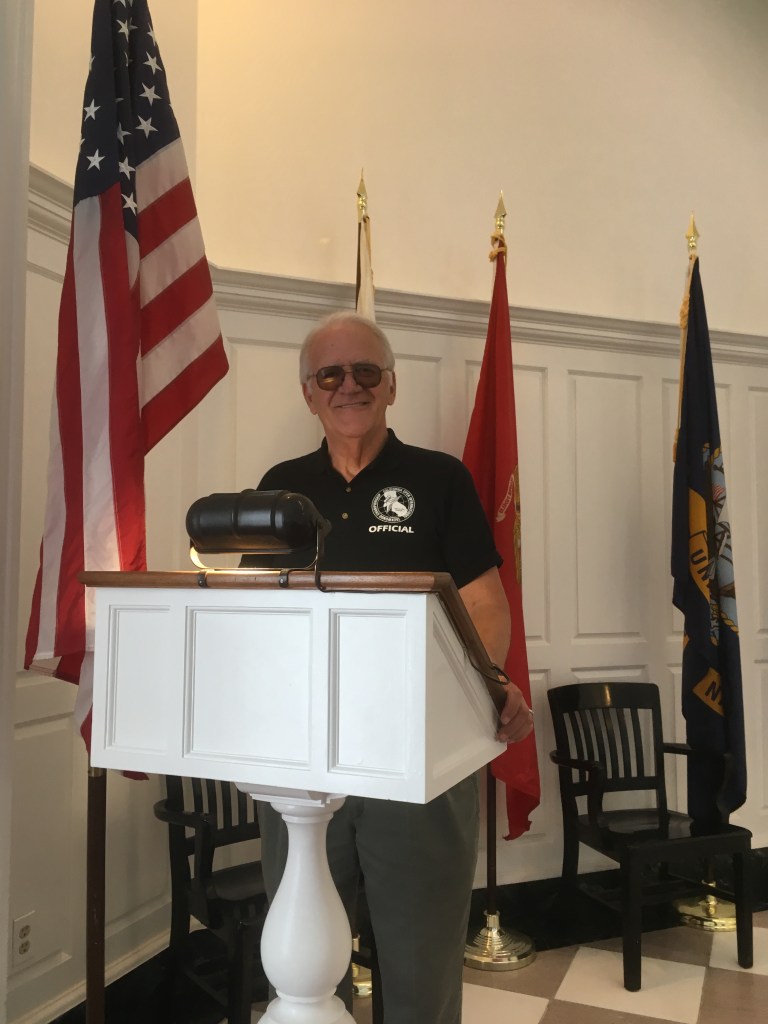
Let’s cultivate a 100% Breakthrough for you!
Reitenbach-Kissinger Institute
Sydney Reitenbach
Michael Kissinger
Text: 650-515-7545
Email: mjkkissinger@yahoo.com
LinkedIn: https://lnkd.in/gE7s99mP
See: Winning the Money Game mksmasterkeycoaching.com
See: Solving Construction Claims:


