
Whether a construction business is making a delay claim or defending against one, it’s important to know these factors might affect the viability of a delay claim.

- Construction delay claims are formal requests for extra time or compensation when a project is held up by unforeseen events, changes, or disruptions.
- Preparing a strong delay claim means documenting the cause, impact, and cost of each delay—using clear evidence and contract terms.
- Using systems makes tracking project progress and gathering claim evidence fast and simple, so you can protect your rights and keep projects moving.
A Construction Delay Claim
It is a formal assertion made by a party involved in a construction project, typically the contractor or subcontractor, seeking compensation or an extension of time due to delays that have impacted the project schedule.
These claims arise when unforeseen events or circumstances cause delays, resulting in increased costs or time extensions beyond what was initially agreed upon in the contract.
Construction Delay Claims are crucial because they address the financial and scheduling impacts of unforeseen events on a construction project. These claims allow contractors to seek compensation for additional costs incurred due to delays that are beyond their control, such as unexpected site conditions, severe weather, or changes in project scope by the owner.
By formally documenting and asserting these claims, contractors can recover expenses related to extended overhead, labor, and equipment costs, thus mitigating the financial risks associated with project delays.
Additionally, delay claims often provide the basis for requesting extensions to project deadlines, helping to protect contractors from penalties or liquidated damages for late project completion.
Construction delay claims are a critical aspect of managing construction projects, helping to address the financial and scheduling impacts of unforeseen events.
Differentiating between excusable and inexcusable delays, as well as compensable and non-compensable delays, is essential for both contractors and owners to understand their rights and obligations. Effective strategies to mitigate construction delays include implementing Critical Path Method (CPM) scheduling, fostering effective communication and coordination, and employing robust risk management techniques.
Additionally, leveraging advanced tools can provide significant advantages in planning, scheduling, and proactive delay management.
Future trends in construction delay management are likely to be shaped by advancements in technology and data analytics. The increasing adoption of AI and machine learning tools will enhance predictive capabilities and allow for more precise scheduling and resource allocation.
The use of Building Information Modeling (BIM) will improve project visualization and coordination, reducing the risk of delays caused by design and construction conflicts.
Additionally, the integration of IoT devices on construction sites will provide real-time data, enabling more responsive and dynamic project management. These technological advancements, combined with a continued focus on collaborative approaches and comprehensive risk management, will transform how construction delays are managed, leading to more efficient and timely project completions.

Damages and Cost for a Construction Delay Claim, the Hourly Attorney Fees, Billing Rates
Delay claims can add substantial costs to construction projects through extended labor, equipment, overhead, and contractual penalties, though the precise amount varies significantly based on project scope, delay duration, and contract terms.
Construction delay claims seek compensation for unforeseen disruptions, and financial consequences typically include increased labor costs, material expenses, liquidated damages, and legal fees that compound over time.
How are delay damages calculated in standard construction contracts?
| Cost Category | Type | Financial Impact | Example |
|---|---|---|---|
| Labor & Equipment | Direct | Extended overtime, idle staffing, prolonged rentals | Additional labor costs due to extended timelines |
| Material Costs | Direct | Price escalation, prolonged storage | Higher material expenses from fluctuating prices |
| Overhead & General Conditions | Indirect | Field office, bonds, insurance | Extended field office overhead or general conditions costs |
| Liquidated Damages | Contractual | Daily penalty fees | Fixed amount per day beyond agreed completion date |
| Loss of Revenue | Indirect | Delayed project income | Owners cannot utilize completed project as scheduled |
| Legal Expenses | Secondary | Dispute resolution costs | Legal expenses incurred in disputes over responsibility |
1. Direct Delay Costs
Direct delay damages include out-of-pocket expenses directly attributable to project extensions and are typically the easiest to calculate and prove.
- Extended labor — Overtime pay, additional staffing, or extended shifts required to maintain project continuity on prolonged timelines
- Equipment rentals — Additional equipment rentals required because of prolonged project timelines, including machinery, tools, and temporary site facilities
- Material escalation — Material inflation costs when prices rise during extended construction periods or prolonged storage expenses accumulate
- Extended bonds and insurance — Additional premiums for project bonds, liability insurance, and performance guarantees that remain active longer than originally planned
2. Indirect Delay Costs
Indirect costs represent secondary financial consequences and are more complex to quantify, often requiring expert analysis for accurate assessment.
- Extended overhead — Field office overhead costs including supervision, site administration, and temporary facilities that continue throughout project delays
- Loss of efficiency — Disrupted work sequences, stacking of trades, and reduced productivity when workers cannot proceed with planned activities in original order
- Lost business opportunities — Revenue contractors cannot earn on other projects while remaining committed to delayed work, reducing overall profitability
- Home office overhead — Unabsorbed home office overhead costs allocated to the extended project duration rather than absorbed across other concurrent projects
3. Contractual & Legal Impacts
Liquidated damages clauses impose predetermined daily penalties for missing deadlines, and dispute costs can escalate significantly when parties contest claim validity and responsibility.
- Liquidated damages — Fixed amount paid for every day the project is delayed beyond the agreed completion date, typically ranging from hundreds to thousands per day
- Cost reduction potential — Studies indicate effective risk management practices and digital monitoring tools can minimize delay-induced financial impacts with potential cost reductions ranging between 15% and 20%
- Dispute resolution expenses — Attorney fees, expert witness testimony, mediation, and arbitration costs accumulate when parties cannot agree on delay responsibility or damage calculations
- Financing costs — Increased interest on loans, higher financing needs, and potential credit rating impacts when projects extend beyond initial funding timelines
4. Attorney Hourly Billing Rates by Experience & Location
Hourly rates depend heavily on attorney experience and geographic market, with substantial variation across states and practice areas.
Attorney fees for delay claims vary widely depending on the fee structure, case complexity, and your location, but most lawyers charge between $200 and $400 per hour, with total costs ranging from a few thousand to tens of thousands of dollars.
Lawyer costs vary based on whether you hire hourly, flat-fee, or contingency representation, and delay claims typically fall into civil litigation categories where multiple fee models apply.
Do construction delay attorneys typically work on a contingency fee basis?
| Fee Structure | Typical Cost | Best For | Details |
|---|---|---|---|
| Hourly Billing | $200–$400/hour (national avg $339) | Complex litigation | Billable in increments, total cost unpredictable |
| Flat Fee | $2,500–$7,500 | Predictable scope | Covers entire service, scope changes may void agreement |
| Contingency | 30–40% of recovery | Personal injury claims | Win only model, costs may apply separately |
| Retainer | $1,973–$4,015 | Ongoing representation | Deposit held, hourly work deducted from balance |
5. Hourly Billing Rates by Experience & Location
Hourly rates depend heavily on attorney experience and geographic market, with substantial variation across states and practice areas.
- By experience level — Junior attorneys (under 4 years) average around $200/hour, while 20–30 year veterans charge $500–$600/hour
- Geographic variation — District of Columbia leads at $490/hour; West Virginia averages $196/hour; California $420/hour
- Practice area impact — Construction law averages $345/hour, criminal defense around $215/hour, corporate litigation over $450/hour
6. Flat Fee & Alternative Models
Many attorneys offer flat fees for predictable legal work, though scope changes may alter cost
- Flat fee range — Case prep only runs $500–$1,500, full representation $1,000–$5,000 for small claims or simple matters
- Contingency (rare for delay claims) — If applicable, lawyers collect 25–40% of recovered amount; this is uncommon for lower-value disputes
- Retainer accounts — Advance payment held in a trust account, with hourly work deducted as services are rendered; common for ongoing representation
7. What Affects Your Total Damages and Cost
The final bill depends on case duration, complexity, and location, with contested matters costing significantly more than uncontested ones.
- Case length — A straightforward matter might run a few thousand dollars, while complex litigation reaches tens of thousands; delay claims involving discovery or appeals escalate costs
- Location premium — Major cities like New York, San Francisco, Chicago charge higher rates across all practice areas
- Expert witnesses & court costs — Financial experts, mediation, and filing fees add to attorney costs and are typically billed separately
Strategies to Mitigate Construction Delay Claims
Implementing Critical Path Method (CPM) Scheduling
Implementing Critical Path Method (CPM) scheduling is a crucial strategy for mitigating construction delays. CPM involves mapping out all project activities, identifying the longest sequence of critical tasks that must be completed on time for the project to finish by its deadline.
By focusing on these critical tasks, project managers can allocate resources more effectively, monitor progress closely, and identify potential bottlenecks early. CPM helps in predicting delays and allows for proactive adjustments to keep the project on track.
Effective Communication and Coordination
Effective communication and coordination among all stakeholders are vital to prevent construction delays. Establishing clear lines of communication ensures that all parties are aware of project updates, changes, and potential issues. Regular meetings, progress reports, and collaborative tools facilitate transparency and timely information sharing. When all team members, from contractors to subcontractors to owners, are well-informed and working together seamlessly, it reduces misunderstandings and delays caused by miscommunication.
Risk Management Techniques
Risk management techniques are essential in identifying, assessing, and mitigating potential risks that could lead to construction delays. This involves conducting thorough risk assessments at the project’s outset to anticipate challenges and develop contingency plans. Regular monitoring and updating of the risk management plan allow for quick responses to emerging issues. Techniques such as risk transfer, avoidance, and mitigation strategies help minimize the impact of unforeseen events, ensuring that delays are managed effectively.
How We Can Help
Reitenbach Kissinger Institute can significantly aid in mitigating construction delays using the software leverages advanced algorithms and machine learning to optimize project schedules, predict potential delays, and recommend corrective actions.
With features like real-time data analysis, automated schedule updates, and intelligent resource allocation. We enhance project efficiency and accuracy. By providing detailed insights and proactive solutions. We helps project managers stay ahead of potential issues and maintain project timelines.
Legal Implications of Delay Claims
Contractor’s Legal Rights
Contractors have the legal right to seek compensation and time extensions for delays that impact their ability to complete a project as initially agreed. These rights are often detailed in the construction contract, specifying the conditions under which delay claims can be made. Contractors can file claims for compensable delays caused by the owner’s actions or inactions, such as changes to project scope, late delivery of materials, or site access issues. Proper documentation and timely notification are essential for contractors to exercise these rights effectively and protect their interests.
Owner’s Legal Rights
Owners also have legal rights concerning construction delay claims, primarily focusing on ensuring the project is completed on time and within budget. They have the right to reject delay claims that lack sufficient documentation or are due to the contractor’s negligence or poor project management. Owners can also impose penalties or liquidated damages for non-excusable delays caused by the contractor. Moreover, owners may require detailed schedules and progress reports to monitor the project’s timeline and address potential delays proactively.
Common Legal Disputes and Resolutions
Common legal disputes in construction delay claims often revolve around the determination of responsibility for the delays, the adequacy of documentation, and the calculation of damages. Disputes may arise over whether a delay is excusable or compensable, the extent of the impact on the project schedule, and the resulting financial costs. These disputes can be resolved through various means such as negotiation, mediation, arbitration, or litigation. Effective communication, thorough documentation, and clear contract terms are crucial in minimizing disputes and facilitating fair resolutions.
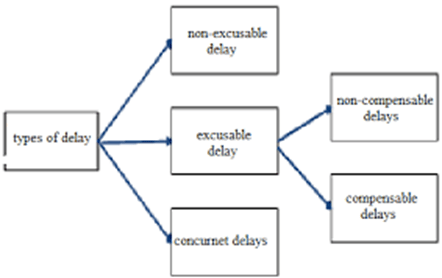
Types of Construction Delays Claims
Excusable vs. Inexcusable Delays
Excusable delays are those that occur due to unforeseeable and uncontrollable events, entitling the contractor to a time extension and, in some cases, additional compensation. Here are some examples:
- Adverse Weather Conditions: Severe weather events such as hurricanes, tornadoes, heavy snowfall, or flooding that make it impossible to continue work on the project.
- Natural Disasters: Earthquakes, landslides, or other catastrophic events that disrupt the project site and halt construction activities.
- Unforeseen Site Conditions: Unexpected discovery of hazardous materials, underground utilities, or archaeological finds that require special handling and delay progress.
- Government Actions: New regulations, permit delays, or changes in zoning laws that impact the construction schedule.
- Owner-Initiated Changes: Significant alterations to the project scope or design by the project owner that necessitate additional time for completion.
- Strikes or Labor Disputes: Work stoppages due to strikes or labor disputes that are beyond the contractor’s control.
On the other hand, inexcusable delays are caused by factors within the contractor’s control and do not entitle them to any relief or compensation. Here are some examples:
- Poor Project Management: Inefficient scheduling, inadequate planning, or lack of coordination that results in project delays.
- Insufficient Manpower: Failure to allocate enough workers to the project, leading to slower progress and missed deadlines.
- Delayed Material Deliveries: Late ordering or poor logistics management causing delays in the arrival of necessary materials and equipment.
- Subcontractor Failures: Issues arising from the contractor’s chosen subcontractors, such as lack of performance, which were preventable through better vetting and management.
- Equipment Breakdown: Failure to maintain or adequately prepare construction equipment, resulting in breakdowns and delays.
- Financial Mismanagement: Inadequate budgeting or financial planning leading to cash flow issues that stall the project.
Compensable vs. Non-compensable Delays
Compensable delays are those for which the contractor is entitled to both a time extension and additional compensation. These delays typically occur due to actions or inactions by the project owner or other parties that affect the project’s timeline and cost. Examples of compensable delays include:
- Owner-Initiated Changes: Significant alterations to the project scope or design by the owner that require additional work and time.
- Owner Interference: Delays caused by the owner’s late delivery of materials or equipment necessary for the project.
- Site Access Issues: Delays resulting from the owner’s failure to provide timely access to the construction site.
- Payment Delays: Delays in payments from the owner, which affect the contractor’s cash flow and ability to continue work.
- Design Errors: Errors or omissions in the project design provided by the owner or their representatives that require corrections and additional time.
- Permitting Issues: Delays due to the owner’s failure to secure necessary permits on time.
Non-compensable delays are those for which the contractor is not entitled to additional compensation. These delays may still warrant a time extension but do not result in financial reimbursement. Examples of non-compensable delays include:
- Force Majeure Events: Severe weather events, natural disasters, and other uncontrollable events that disrupt the project but are beyond anyone’s control.
- Unforeseen Site Conditions: Unexpected discovery of hazardous materials, underground utilities, or other site conditions that require special handling.
- Labor Strikes: Work stoppages due to strikes or labor disputes that are beyond the contractor’s control.
- Contractor Management Issues: Delays caused by the contractor’s inefficient scheduling, poor project management, or inadequate resource allocation.
- Subcontractor Failures: Problems arising from subcontractors chosen by the contractor, such as poor performance, which could have been prevented with better vetting or management.
- Equipment Problems: Delays due to the contractor’s failure to maintain or adequately prepare construction equipment, leading to breakdowns.
- Financial Issues: Inadequate budgeting or financial planning by the contractor that leads to cash flow problems and project delays.

Preparing, Defending and Avoiding Construction Delay Claims
Construction delays can be managed proactively through strong documentation, clear contracts, and early communication—a combination of prevention strategies and contract knowledge significantly reduces the likelihood of costly disputes.
By implementing key project controls and establishing warning sign recognition, contractors and owners can address issues before they escalate into formal claims that threaten timelines and budgets.
The number of construction jobs with delay claims is significant and varies by project type and region.
What the Sources Reveal About Construction Delays
Construction delays are widespread across the industry, though exact claim counts vary by measurement type.
- 98% of projects face delays — North America specifically, the average project extends 37% longer than originally projected
- Large project overruns — Large construction projects typically run 20% behind schedule with budget overruns reaching as high as 80%
- Weather as a factor — Approximately 21% of construction delays globally are attributed to adverse weather, making it the single largest external cause of schedule disruption
Delay Claims and Disputes
Legal disputes over delays and inefficiency claims have become significant in construction management.
- Contractor accountability — Recent rulings have established that general contractors must responsibly manage project schedules and coordinate subcontractors to prevent inefficiencies and delays
- Subcontractor defaults — Nearly 50% of AGC risk managers surveyed have experienced project cancellations or delays due to subcontractor defaults, with 70% reporting increased subcontractor distress compared to one year prior
Key Factors Influencing Delay Claims and Disputes
1. Key Factors Influencing Delay Claims
Types of Delays: Common types include excusable delays (due to unforeseen circumstances) and non-excusable delays (due to contractor fault).
2. Understanding these can help quantify claims.
Workforce Impact: The U.S. construction workforce is projected to face challenges, which may increase the likelihood of delays.
Economic Conditions: Economic fluctuations can lead to more delays as projects may be halted or slowed due to funding issues.
3. Statistics and Trends
Recent reports indicate that a notable percentage of construction projects experience delays, with claims often arising from various causes. The construction industry is adapting to these challenges by implementing better project management strategies to mitigate delays
4. What the Data Shows About Delays
Project delays remain widespread across the construction industry, though specific job-level claim counts aren’t quantified in available research.
* Industry-wide delay prevalence — 98% of construction projects face delays, with average project duration extending 37% longer than originally projected
* Financial impact of delay claims — Delay claims increase project timelines by 20% and costs by 15%, according to machine learning analysis of claim data
* Weather-related delays — Approximately 21% of construction delays globally are attributed to adverse weather, the single largest external cause of schedule disruption
5. Types of Delay Claims Tracked
Construction delay claims are formally documented and tracked, but aggregate job counts vary by region and project type.
Excusable delays — Claims arise from unforeseeable events like severe weather, natural disasters, unforeseen site conditions, and owner-initiated changes
Claims process scope — Contractors file claims seeking compensation or extensions of time due to delays impacting schedule and costs beyond initial contract terms
Labor and productivity impacts — Loss of productivity affects all trades when project schedules are delayed, accelerated, or disrupted by substantial changes
Actions to Defend a Delay Claim and Disputes
To effectively prepare for, defend against, and avoid construction delay claims, consider the following strategies:
Strategy Category Key Actions Benefit
1. Documentation: Daily reports, photos, meeting minutes, correspondence. best protection against potential claims
2. Communication: Clear chain of command, regular meetings, written confirmations. Prevents misunderstandings that lead to claims
3. Contract Knowledge: Understand delay clauses, scope, and responsibilities. Clarifies liability and compensability upfront
4. Scheduling: Baseline schedule, regular updates, critical path analysis. Early identification of delays when corrective action is possible
5. Risk Management: Pre-construction review, alternative resources, mitigation planning. Reduces claim likelihood and financial exposure
Preparation & Prevention (Ways 1–7)
Strong preparation before construction begins sets the foundation for avoiding claims.
* Know your contract thoroughly — Review all contract provisions, delay clauses, and scope definitions upfront so all parties understand roles and responsibilities
* Create quality contract documents — Ensure clear and nonconflicting basis for bids with aligned specifications and design packages to minimize ambiguity
* Conduct pre-construction planning meetings — Schedule review meetings with project managers and schedulers to establish realistic baselines and identify potential risks
* Prepare a detailed baseline schedule — Develop and stick with a baseline schedule that accounts for resource availability, sequencing, and buffer time for unavoidable delays
* Establish clear communication protocols — Define who has authority to make decisions and create a documented chain of command from the project’s start
* Align all project documentation — Eliminate root causes by aligning documents before starting—design, specifications, and scope should be consistent across all contract packages
* Identify and plan for high-risk activities — Conduct detailed risk analysis to pinpoint scheduling and resource management weaknesses before work begins
Early Warning & Documentation (Ways 8–12)
Recognizing problems early and documenting them thoroughly is your strongest defense against delay claims.
* Watch for warning signs — Monitor for repeated requests for information, increasing change orders, schedule delays without clear explanation, and rising tension in meetings as signals to take immediate action
* Maintain detailed daily reports — Create consistent and factual daily reports that include weather conditions, work performed, equipment on site, and any disruptions—avoiding subjective comments
* Organize project files systematically — Keep all contract documents, submittals, approvals, meeting minutes, dated photos, and correspondence in accessible files for easy retrieval during disputes
* Document every delay with evidence — Record photos, daily logs, and written notifications to clients whenever delays occur to establish a clear chronology
* Capture meeting decisions in writing — Follow up important conversations with email summaries confirming what was discussed and agreed upon, even if previously discussed verbally
* Use progress photos and timestamps — Maintain dated and labeled progress photos showing work performed and conditions to support your timeline narrative
Communication & Coordination (Ways 13–15)
Clear, proactive communication prevents misunderstandings that escalate into claims.
* Schedule regular project meetings — Hold meetings to review progress, address potential issues early, and document decisions so all stakeholders remain aligned
* Increase coordination between stakeholders — Enhance communication and coordination to ensure timely decision-making and reduce friction during delays
* Establish Request for Information (RFI) procedures — Establish procedures for RFIs and improve the RFI process to clarify ambiguous contract documents and design issues before they impact the schedule
Mitigation & Active Management (Ways 16–20)
When delays do occur, contractors must actively demonstrate mitigation efforts to strengthen their position in delay claims.
Notify early and in writing — Notify the client immediately once delay is identified rather than waiting for the contract’s notice period, allowing quicker resolution and demonstrating proactive management
* Reallocate resources strategically — Reallocate labor, equipment, and materials from less critical areas to delayed activities and document these efforts in reports and communications
* Re-sequence work activities — Modify the sequence of planned work so delayed activities run in parallel with unaffected tasks, and document this recovery plan to show mitigation feasibility
* Expedite procurement and materials — Expedite the procurement process to get materials and equipment delivered faster, compensating for lost time due to excusable delays
* Engage additional subcontractors when necessary — Bring in extra subcontractors to handle specific activities and speed up delayed work—but ensure costs align with contract terms before proceeding
* Update schedules regularly and share findings — Conduct regular schedule updates and reviews to identify potential delays early and communicate revised projections to stakeholders, allowing time to implement corrective actions before claims arise
Defense & Resolution (Supporting All 20)
When claims do arise, these practices strengthen your defense.
* Prove causation with expert analysis — To defend a delay claim, the defendant must prove responsibility for delay, that delays caused contract completion delay, and that plaintiff suffered damages—expert testimony is generally necessary
* Distinguish excusable from compensable delays — Understand that delays compensable depends on the nature of the delay and contract terms; weather and unforeseen conditions may be excusable but non-compensable under your contract, limiting liability
* Maintain objective, fact-based documentation — All records should be consistent, factual, and free of subjective interpretation—if it’s not documented, it didn’t happen, making contemporaneous records your strongest evidence in any dispute

Help for Delay Claims and Disputes
Legal disputes over delays and inefficiency claims have become significant in construction management. So if you Need To Get Your Delay Claim Approved or Collect Money or Contract Extensions Roadmap contact us.
Change Your Life or Business Destiny with These Confidential Testimonials…
Here are real-life testimonials of successful entrepreneurs who helped who have broken through barriers can provide inspiration and motivation. By following the results outlined in this post, mksmasterkeycoaching.comhttps://mksmasterkeycoaching.com › testimonials
Join Us so You Build an Extraordinary Business?

Let’s cultivate a 100% Breakthrough for you!
Reitenbach-Kissinger Institute
Sydney Reitenbach
Michael Kissinger
Text: 650-515-7545
Email: mjkkissinger@yahoo.com
LinkedIn: https://lnkd.in/gE7s99mP
See: Winning the Money Game mksmasterkeycoaching.com
See: Solving Construction Claims:


