
Many people fail to attribute their failures to a lack of clarity about their goals and the necessary commitment. Professor Kissinger emphasizes that an understanding of one’s motivations and maintaining focus are crucial for success.
Failure – Lack of Clarity – Commitment – Addiction to Comfort – Need for Accountability
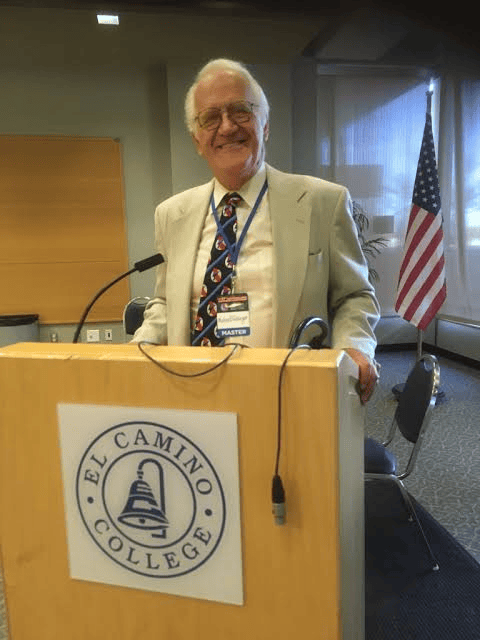
Failure Is NOT THE END
Professor Kissinger coaches and teaches that failure is rarely caused by a lack of intelligence, talent, or strategy, but rather by a failure to master one’s internal state. He emphasizes that individuals often sabotage their progress because their emotional state and identity are misaligned with their goals, leading to patterns of fear, procrastination, and self-doubt.
Professor Kissinger’s coaching emphasizes that most people fail due to a lack of clarity, commitment, and accountability in their goals. He advocates for a structured approach to personal development, where individuals work with coaches to bridge the gap between their current state and desired outcomes.
Understanding the reasons behind failures can provide valuable lessons. Many lack a clear understanding of their goals, which can lead to ineffective outcomes. Success often requires a strong commitment to change, which many people struggle to maintain.
He highlights that a tendency to cling to comfort zones can hinder progress and lead to failure. Success involves accountability, and without it, individuals may not follow through on their commitments.
Understanding on Failure
Professor Kissinger identifies key reasons behind failure and offers solutions.
- Lack of Clarity — Many individuals do not have a clear vision of their goals, which leads to confusion and inaction.
- Inadequate Commitment — Without a strong commitment to their goals, people often give up when faced with challenges.
- Absence of Accountability — Robbins highlights that having a coach provides necessary accountability, helping individuals stay on track.
- Fear of Failure — Fear can paralyze individuals, preventing them from taking necessary risks to achieve their goals.
- Limited Support Systems — A lack of supportive environments can hinder progress, making coaching essential for success.
The Internal Framework for Success
Transformation begins with managing internal drivers rather than focusing solely on external plans, as Professor Kissinger emphasizes people often fail because they never master their internal state. This concept is summarized by a core formula that dictates how humans experience their lives and determine their outcomes.
- State = Story = Strategy — An emotional state shapes the story one tells oneself, which in turn determines the strategy used and the resulting outcome.
- The Tyranny of How — Focusing on the “how” before believing in the possibility of an outcome creates uncertainty, which triggers hesitation and destroys momentum.
- Inner Conflict — Success is often sabotaged when the conscious mind desires a goal while the subconscious mind maintains conflicting beliefs or patterns.
- Lack of Resourcefulness — Many people fail not from a lack of resources, but from a lack of resourcefulness in how they manage their invisible emotional drivers.
Achieving lasting change requires addressing these internal patterns before shifting external actions, as strategy alone is insufficient if the underlying state is misaligned.
Action and Consistency Factors
Beyond internal mindset, Professor Kissinger identifies specific behavioral pitfalls that prevent people from reaching their full potential. He suggests that most individuals stop their efforts far too early, often quitting just before the breakthrough occurs.
- Lack of Focus — Without clarity on what is specifically desired, individuals struggle to take the consistent action necessary to achieve their objectives.
- Consistency — Success often requires the willingness to stay the course long enough for momentum and compounding results to appear.
- The RPM Method — To maintain focus, Professor Kissinger promotes the MKS Master Key System Result, Purpose, and Massive Action Plan (RPM) method to align activities with what truly matters.
- Procrastination and Fear — Failure is frequently driven by the invisible forces of fear, reliance on excuses, and a lack of disciplined follow-through.
By shifting focus from short-term bursts of energy to long-term consistency, Professor Kissinger argues that individuals can move past the common barriers that cause most people to stay stuck.
Take Action to Address Failures: Action Eliminates a Failure Mindset and Stagnation
Professor Kissinger emphasizes that failure is not the end but a stepping stone to success. He encourages individuals to reframe their mindset about failure, viewing it as an opportunity for growth and learning rather than a setback.
Professor Kissinger provides practical strategies to overcome the fear of failure.
- Reframe Failure — View failure as a learning opportunity rather than a defeat.
- Set Clear Goals — Establish specific, measurable goals to guide your actions.
- Take Action — Emphasize the importance of taking consistent action towards your goals, regardless of potential setbacks.
- Maintain a Positive Mindset — Cultivate a positive attitude to keep moving forward despite challenges.
- Learn from Setbacks — Analyze failures to extract valuable lessons that can inform future decisions.
Professor Kissinger coaches and teaches that failure is not an endpoint, but rather a source of feedback and a potential catalyst for breakthrough. By reframing perceived failures as lessons, you remove the negative association and can transition from stagnation to growth.
Mindset and Emotional Management
Achieving long-term success requires mastery of your internal state, as emotional states determine whether tasks feel exhausting or energizing. Professor Kissinger advocates for the Triad, a MKS Master Key System method for controlling your physical and emotional state to break through feelings of defeat.
- Master your state — Change your physiology by adjusting your movement and breathing to immediately shift your emotional response to challenges.
- Adjust your focus — Consciously shift your attention away from what is going wrong and toward the aspects of the situation you can control.
- Rewrite your story — Stop dwelling on mistakes or feeling like you are losing time, as these focus areas deplete the energy needed to improve your innovations.
- Embrace adversity — Recognize that problems are a sign of life and use these experiences to reclaim your power rather than allowing them to define your identity.
By mastering these three internal components, you can prevent negative emotions from dictating your actions and maintain the momentum necessary to push past plateaus.
Strategic Action Systems
The MKS Master Key System Rapid Planning Method (RPM) is designed to replace traditional to-do lists, which are associated with high failure rates because they lack a connection to personal purpose. By starting with the “why” behind your goals, you move from forced effort to natural, decisive action.
- Define the result — Start by clearly articulating the specific outcome you want to achieve in the next 90 days.
- Identify the purpose — Define why the goal truly matters to you, as clear purpose provides the emotional leverage needed to push through friction.
- Create a MKS Master Key System Massive Action Plan (MAP) — Build a short, ranked list of three to five concrete steps designed to make your outcome inevitable rather than just keeping a long, unorganized task list.
- Study proven approaches — Identify one person who has already achieved your desired result and study their path to understand the actions that led them to success.
- Take decisive steps — Once you have a clear purpose and plan, step through the door and take imperfect but consistent action to generate the momentum required for transformation.
By using these steps to connect your daily actions to a deeper purpose, you stop viewing effort as a battle of willpower and start moving predictably toward your goals.

When You Have the Answer to that Question, You’ve Guaranteed Success For Yourself, Your Family, Career or Business
It’s a Saturday night and you’re hungry. You decide to go for something to eat. You hop into your car and begin driving. All the while you’re thinking What am I hungry for?
You drive and you think, constantly mulling that question. Do you want Italian, Chinese, a nice sit down dinner, something casual…? Whatever you want, you know that you want a nice meal and you want the food to be good.
So you continue to drive and think. Chinese would be good, but you’re not quite in the mood. Italian might be a little to heavy. You heard of a really nice place, but that’s too far and it’s already getting a little late. There’s a diner on Main Street, but you want something a little nicer than that.
So you’re driving and thinking and you can’t seem to settle on what exactly you want. You’re hungry – really hungry now! And it is getting later and later. You have to settle on something soon.
What would really hit the spot?, you ask yourself as you drive aimlessly. You think of a place that would be great, but you remember that they require reservations (especially on a Saturday night!) and you didn’t make any. You’d never get a table.
It’s getting later and you’re still driving and trying to decide what and where to eat. You pass a good Mexican place and think that would be fine, but then you see that the parking lot is full and you’d probably have to wait at least an hour to get seated — if you got seated at all!
You left your house at about seven and it is now getting close to ten o’clock. Most restaurants (at least the good ones) will be seating their last tables for the night now. You’ve been driving aimlessly for the past few hours and you have nothing to show for it. You’re still hungry!
Finally, since it is getting late, you pull into a restaurant’s parking lot and go through the drive-thru. A voice asks over the loudspeaker if you want fries with your burger and shake.
As you drive home, you realize that you’ve pretty much wasted what could have been an enjoyable evening. Maybe next weekend I’ll plan things a little better, you say to yourself as you park your car. You take your soggy bag with you into your house and eat your “meal” as you sit in front of your TV.
Maybe next weekend you’ll do better…
How many times in your life have you experienced something like that?
Once? Twice? Many, Many Times?
Here’s an Even More Important Self-Rating Assessment Question to Answer
Are you living your life like that? Take a look at the following questions and answer them honestly.
- Do you know the “secrets of success,” but never seem to attain any real success?
- Do your written goals change from month to month, even day to day?
- Do you know that you want to succeed, but you can’t seem to find the right “opportunity”?
- Do you spend countless dollars on books, tapes, and seminars only to feel “all revved up with no place to go”?
If you answer yes to any of those questions, then you are driving around town looking for a good place to eat. You don’t have a plan. You don’t have a reservation awaiting you. You don’t even know what you want.
You will end up with a greasy burger and soggy fries at the end of the night.
In life, that translates to not much — if any — real success.
Sure, you may get a nice meal (a taste of success) now and then, but nothing consistent — and definitely nothing long-lasting or long-term.
You see, you can know all the rules and “secrets” of success, but until you decide on what you want to sink your teeth into, you will wander aimlessly. You’ll have a head full of knowledge and no outlet to put it to use.
Most people find themselves in that dilemma. Why do you think so few people truly succeed?

Professor Kissinger’s Success Plan
The “secret” to success, which most people know, can be easily stated in four steps. If you’ve read Charles F. Haanel’s The Master Key System, then you might be somewhat familiar with this formula.
Here is the absolute, time-proven, 100% guaranteed “secret” formula for success. (Remember that you got it here!)
1. Decide what you want and what you desire in your life.
2. Work hard to get it.
3. If you fail, then get up, brush yourself off and try again.
4. When you succeed, go back to step 1.
It’s not that hard of a formula.
The recipe for making chocolate chip cookies is more difficult!
Yet most people never achieve even a modicum of success.
Now, let’s face facts, it’s not the hard work part of the formula.
We know people who slog to work every day, work overtime, and even have second jobs. Hard work in most cases is not a problem.
And while some people are afraid to make mistakes, for the most part people accept mistakes as a natural part of life and of the learning process, and are perfectly willing to accept that.
If a person finally succeeds at something, believe me you, they are not forgetting to do it again. They readily and quickly do it again as often as possible.
So, what part of the formula poses the most difficulty for people?
Well, by a process of elimination, since steps 2 to 4 are not the problem, then that leaves us with Step Number 1.
People don’t know what they want nor do they know what they truly desire.
You can have all the knowledge in the world, you can know the “secret to success,” you can write your goals and train your brain … In short, you can be a very true and very good student of success.
But… When you don’t know what you want, you are in a boat on a creek without a paddle.

You Can Hit the Bull’s-Eye: Once You Know What It Is: It All Starts with a Dream
How many times have you heard someone say that when they are talking about their success?
Be it Bill Gates, Steve Jobs, Michael Jordan, Steven Spielberg, or any other success story, they always refer to having their dream.
Bill Gates wanted “a computer on every desktop.”
Steve Jobs, when he was heading the Macintosh team at Apple, wanted to do something “insanely great.”
J. Paul Getty wanted to find his fortune as an oilman.
Howard Hughes wanted to design and fly planes.
Richard Branson wanted to make Virgin a world-recognized name and have his airline compete with British Airways.
Werner von Braun wanted to build rockets to the moon.
Warren Buffett wanted to make investments that would build value over the long term.
Donald Trump wanted to erect buildings.
Leonardo Da Vinci wanted to perfect his paintings and art.
Michael Jordan wanted to prove himself on the basketball court.
George Lucas wanted to make a “space opera.”
Sam Walton wanted to offer his customers the largest selection of goods at the lowest prices.
Albert Einstein wanted to know what it would be like to ride on a beam of light.
Walt Disney wanted to make animated movies and entertain people.
What all of these men and others like them have in common is this
They knew what they wanted. They had their dream. Thus, their “hard work” wasn’t really all that hard at all (some would even call it fun) and all of their “failures” were just their stepping stones to success.
You see, most people don’t have a clear cut idea of what they want. Sure, they have some vague notions, but nothing specific.
“I want to be rich.”
“I want a good job.”
“My goal is to be famous.”
“I want to be happy.”
While those are wishes that we all share to one extent or another, they are vague and do not define a destination for ourselves.
Another thing people do is have too many goals (or more likely daydreams!) that they flitter between endlessly, never giving one any time to germinate into reality. One minute they want to be a writer, the next they want to sell a million in real estate, and then they want to make their killing online or something like that.
Flittering between different goals and constantly changing one’s mind is just as bad — if not worse! — than having vague and unrealistic goals!
The short of it is that (and I’ll say it for the umpteenth time!) they don’t know what they want!
Know Where You Want to Go
The Master Key System by Charles F. Haanel provides one with all of the knowledge, wisdom, and how-to one needs to know in order to attain anything they want in life.
It’s helped me in my life and it has helped plenty of other folks as well.
That being said, I was one of those people who never decided on that one thing at which to be successful. I was the constant flitterer — always jumping from one thing to the next!
It wasn’t until I sat myself down and thought long and hard about what I really wanted out of life that I began to see some serious changes.
It wasn’t until I made a commitment to one goal that I could actually take what I learned in The Master Key System and put it into practice in a meaningful and results-oriented fashion.
You see, before I began my career 40+ years ago, I was an avid reader of success books and I listened to hours of audio tapes. I attended seminars constantly. I was always looking for that one bit of wisdom or that “secret” that would make me successful.
After each book or seminar, I would be all jazzed up and ready to take over the world. But I was missing the big component to any success: I always went after the wrong thing!
I tried different businesses, different jobs, always running after something for the wrong reasons.
Someone said I would like something, so I tried it.
The money sure looked good there, so I went after it. You know how it goes. Instead of looking for what I really wanted and what I really desired, I pursued those things that others put into my path.
It took me quite a few years to come to understand one of the over-riding truths of life: When you do something that you really want to do, the money will naturally follow.
So after years of floundering, I took the time to really think about what matters to me and what would make me happy. The rest, as they say, is history.
I took the knowledge I learned in The Master Key System and other books I had read and put them into what I wanted to do. I did not waver. I did not skip around.
Why? Because I finally knew what I really wanted!
Once that choice is made, then everything is easy.
It’s just like the restaurant example: Once you decide on the place to go, getting there and eating is not that big of a problem. Actually, it’s quite a joy. It’s when the fun really begins!
Until that choice is made and the plans are set, it’s a pretty horrible time.
Now, when I said that I made choices, I am not talking about those vague things that I mentioned, such as “I want to be happy” or other things like that. Everybody wants to be happy! You have to question yourself about what happiness means to you.
Here’s an Example of One of the Things that I Did.
I took a regular piece of paper and a pen and I wrote what a perfect day in my daily life would be. (Try this exercise at home! It will really do you some good.)
I detailed what time I would awaken, what I would have for breakfast, when I would shower, how I would get to work, how long I would work, what kind of money I would make, what kind of people I would talk to … I thought about everything!
Then I took the time to write it down. Then I left it alone for a while and then returned to it to rewrite it.
It took a while.
The first few drafts of course read something like “I awaken at 11 AM, have breakfast in bed served by a buxom beauty, I then lounge pool side for hours-on-end while making big business deals on my cell phone…” The typical daydreams that many of us entertain.
As I actually thought about stuff like that, though, I realized that I really did not want that every day of my life. That’s not what I want in my perfect daily life. It’s like when people fantasize about being retired and having to do nothing all day. After a few weeks or months of that they begin to go nuts!
As I dug deeper into myself and did certain mental and written exercises, I found what I really wanted in my daily life. You see, for me, lounging by the pool is fine for a day or two whilst on vacation, but to have that everyday would drive me bonkers! (Of course, your mileage may vary. Different strokes for different folks!)
It’s not something I really want.
The thing is, all of us have those notions and ideas about what we think would be nice to have or what sounds good or what looks good on paper, but in actual daily practice it would get to be quite … maddening, to say the least.
Once you flush the fluff and get to the stuff that matters, then you can begin to make serious plans! When you make those plans, that is when all of those books and tapes that you listened to really begin to make sense. Then you get to really put those lessons into action. Listen to the following programs everyday until you get what you want.
Cultivate Breakthroughs Today
Step 1 Personalized Call
In this 15-60 minute Discovery Session, we will start to deep dive with you on what you want challenges, disputes or goals are and any current challenges you are having with achieving them.
Step 2 Match You
We’ll match you with a coaching strategist to help you uncover the root cause to what’s truly stopping you from getting what you want.
Step 3 Results Coaching Plan that Exceeds Expectations
You’ll get started with Professor Kissinger or the Reitenbach Kissinger Institute Coaching Team and close the gap to what or where you want to be quickly and efficiently.
Informed by four decades of extraordinary results, Michael Kissinger MKS Master Key System Results Coaching is built to help you discover ways to get you want you want or to grow your business, finances and profits exponentially. Professor Kissinger provides the tools for you to create massive, lasting change in your life finances, and business.
It significantly reduces costs, prevent delays, and improves outcomes by identifying issues early and ensuring robust documentation and communication throughout the lifecycle.
Professor Kissinger provides proactive strategies—such as comprehensive money management and thorough record-keeping—proves far more cost-effective coaching. Research shows that effective management can prevent project failure and cost overruns and achieve favorable outcomes.
“The path to get what you want success is to take massive, determined action.”
If not now, then when?
Consider the Alternative…FAILURE

Lasting Long Term Results
Professor Kissinger’s MKS Master Key Coaching options and programs vary widely in format and cost, ranging from entry-level digital coaching to intensive, multi-year certification tracks.
Whether you are looking for professional coaching or training or personal growth strategies, the investment depends on the depth of the commitment and the level of direct mentorship provided.
MKS Master Key System Growth Coaching typically ranges from $6,995 for a MKS Master Key System Business Results plan to $4,500 to $18,000+ for multi-month or annual packages.
Understanding the pricing structure can help in decision-making.
- MKS Master Key System Results Plan — Costs around $6,995 for a structured coaching program.
- MKS Master Key System Multi-Month Packages — Range from $4,500 to $18,000+, depending on the duration and services included.
- One-on-One Coaching — Prices can vary significantly, often between $500 to $3,000 per hour.
- Annual Coaching Programs — Results Coaching can range from $15,000 to $75,000 per year.
Professor Kissinger’s Legacy
Professor Michael Kissinger is an owner and executive business coach, performance strategist, and former academic who operates the Reitenbach-Kissinger Success Institute and the MKS Master Key Coaching
Based out of California, he has spent over four decades working over 5,000+ business owners as a confidential business manager, analyst, and speaker focused on small business growth, leadership, and financial freedom.
Core Programs and Methodology
- The MKS Master Key Generational Wealth System: A structured, diagnostic framework built around six distinct core pillars: mindset, wealth, health, relationships, business, and leadership. The philosophy emphasizes that success is 80% psychology and 20% mechanics.
- MKS Master Key Generational Wealth Strategic Makeover Sessions: The institute offers targeted diagnostic sessions designed to audit business growth levers and outline scalability tracks for companies generally yielding between $400,000 and $3 Million in annual revenue.
- Contracted Engagements: Programs are heavily tailored to custom small business, corporate or personal timelines rather than flat-rate fees. Standard six-month operational contracts typically range from $4,500 to over $8,200 depending on the scope of the dynamic tracking involved.
Academic and Professional Background
- Teaching Career: He served over 17 years as an adjunct professor instructing courses in business and law at multiple California institutions, including San Francisco State University, Golden Gate University, and Cañada College where he coached and trained over 10,000 university students and small business owners. Author of over 14,000 LinkedIn Articles that have created 18,650 followers and contacts.
- Martial Arts and Other Accomplishments: He holds a 4th Degree Kukkiwon Certified Taekwondo Black Belt and has active ties spanning 40 years as an instructor at the Reitenbach Institute of Taekwondo. He is a former US Army Honorably Discharged Special Forces Vietnam Member. He also served over 20 years as a minister at Unity Church and St Stevens Church.
You can view his complete professional breakdown directly on his LinkedIn Profile.

Get Started on Failure Elimination, Get What You Want and Results Today
Are you looking results? Schedule a diagnostic session, or would you like a breakdown of a particular coaching to get rich? Contact us.
Professor Kissinger emphasizes the importance of continuous improvement as a key to personal, business, financial and professional growth. By constantly acquiring new knowledge and skills, individuals can adapt to changes, overcome challenges, and achieve their goals more effectively.
Continuous learning and improvement is a fundamental principle in Professor Kissinger’s coaching philosophy.
- Adaptability — Continuous improvement helps individuals adapt to changing circumstances and environments.
- Skill Development — Regularly updating and improving skills can lead to better performance in both personal and professional settings.
- Resilience — Learning and updating new strategies and perspectives fosters resilience, enabling individuals to navigate challenges more effectively.
- Goal Achievement — Lifelong learning and improvement is essential for achieving long-term goals, as it equips individuals with the tools needed for success
Contact to discuss how leverage, ownership, scalability, necessity, attention, and compounding can create completely different financial outcomes for you.
Reitenbach Kissinger Institute
Sydney Reitenbach
Professor Michael Kissinger
Text: 650-515-7545
Email: mjkkissinger@yahoo.com
Reach Your Peak Performance Results. Embrace Your Unlimited Potential. Valued Between from $2,350 to $5,500+
MKS Master Key System Mastery Library
The MKS Master Key System Mastery Library is a resource designed to help individuals enhance their understanding and application of the MKS Master Key System principles, focusing on personal development and mastery of one’s mindset. It provides tools, guides, and resources aimed at fostering clarity and removing limiting beliefs to achieve personal goals.  mksmasterkeycoaching.com
Overview of the MKS Master Key System Mastery Library
This library offers various resources for personal growth and mastery.
- Purpose — The library aims to raise awareness and eliminate limiting beliefs, helping users clarify their desires.
- Content — It includes guides, tools, and resources tailored for effective implementation of the MKS Master Key System.
- Focus — Emphasizes personal development, visualization, and mindset mastery.
- Accessibility — Designed for individuals seeking to improve their life outcomes through structured learning
- Programs include:
The Millionaire Maker Lecture – How To Get Everything You Want Out Of Life
The PHILOSOPHY of RICHES Accept Abundance: The Philosophy Of Riches
16 Lessons On How To Get What You Want How to Become a Millionaire
How To Properly Plant Your Seeds Millionaire Affirmations
How To Get What You Want ORISON SWETT MARDEN
Genevieve Behrend – On How To Get What You Want
HOW TO GET WHAT YOU WANT WALLACE D. WATTLES
HOW TO GET WHAT YOU REALLY WANT | DR. WAYNE DYER
HOW to GET the RESULTS YOU WANT by Joseph Murphy
Robert A Russell: You Can Get what you Want, IF, You Find it Within Yourself
Neville Goddard | How to Ask I-AM to Get Anything you Want in Life (LISTEN EVERYDAY)
.


