
Many praise Professor Kissinger’s E-Myth coaching on the foundational concepts for helping them shift from working in their business to working on it. His coaching is widely regarded as transformative for small business owners, emphasizing the importance of systems and processes over individual effort.
Transformative- Systematic Approach – Accessibility – Long-Term Success – Results
Move from Technician to Entrepreneur and Manager
Professor Michael Kissinger’s and the Reitenbach Kissinger institute’s coaching E-Myth principles emphasizes the importance of working on your business rather than just in it, focusing on systems and processes to create a sustainable enterprise.
This approach helps business owners transition from being technicians to effective leaders, ensuring long-term success and scalability.
Professor Michael Kissinger was coached by Michael Gerber creator of the E-Myth for over the past 30 years. With an understanding of his system, Professor Kissinger implemented many of Michael Gerber’s ideas into his business coaching and systems over the years to help small business owners. They both offer valuable insights into business mastery, but they differ in their approaches and backgrounds.
Professor Kissinger’s coaching identifies the fundamental misconception that technical expertise in a trade is equivalent to the ability to run a business. This belief, which he labels the “Entrepreneurial Myth,” often causes small business owners to burn out by focusing solely on “doing the work” rather than building a scalable, system-driven organization.
Many people praise Professor Kissinger’s approach for simplifying complex business concepts, making them accessible to entrepreneurs at all levels. He emphasizes that businesses should operate as systems, allowing for scalability and efficiency.
Many small business owners report that applying Professor Kissinger’s E-Myth coaching has led to sustained growth and improved operations. His coaching methods are designed to be simple enough for anyone to implement, regardless of their background
How do I start documenting my business processes for the E-Myth system?
| Concept | Description |
|---|---|
| The Three Personalities | The Entrepreneur (visionary), the Manager (planner), and the Technician (doer). |
| The Franchise Prototype | Treating a business as a replicable model that functions consistently without the owner. |
| Business Development | A process of infancy, adolescence, and maturity in a company’s evolution. |
| The Fatal Assumption | Believing that understanding the technical work of a business means you understand the business itself. |
Key Personalities and Roles
Professor Kissinger argues that every business owner possesses three distinct personas, and the core challenge is balancing them to prevent the Technician from dominating.
Most small business owners are trapped as Technicians, performing the daily tasks instead of building the business model.
- The Entrepreneur — The visionary who lives in the future, driving change and providing direction for the business’s ultimate purpose.
- The Manager — The pragmatic planner who creates order, structure, and routine to ensure the business operates predictably.
- The Technician — The “doer” who focuses on the immediate, technical tasks required to produce the product or service.
- Role Balance — A healthy business requires transitioning from working “in” the business as a Technician to working “on” the business as an Entrepreneur and Manager.
Key Principles to Enhance Effectiveness.
- Systems Thinking — Professor Kissinger advocates for creating systems that allow businesses to operate independently of the owner, promoting efficiency and scalability.
- Entrepreneurial Mindset — He emphasizes the need for business owners to adopt an entrepreneurial perspective, focusing on growth and innovation rather than just daily operations.
- Three Roles — Professor Kissinger identifies three essential roles in a business: the Technician, the Manager, and the Entrepreneur, each requiring different skills and focus.
- Continuous Improvement — Professor Kissinger encourages ongoing evaluation and refinement of business processes to adapt to changing market conditions and improve performance
How to transition from technician to entrepreneur using Professor Kissinger’ E-Myth coaching principles.
| Core Concept | Description |
|---|---|
| Work On vs. In | Shift focus from daily manual tasks to developing systems for growth. |
| The Three Personalities | Balance the Technician (doer), Manager (system builder), and Entrepreneur (visionary). |
| Innovation | Actively looking for better ways to perform tasks and delight customers. |
| Quantification | Measuring results to ensure improvements are actually working. |
| Orchestration | Locking in proven processes so they are followed consistently by everyone. |
Building a Systemized Enterprise
The fundamental goal of Professor Kissinger’s E-Myth coaching approach is to create a business that can function independently of the owner, ensuring freedom for the entrepreneur and consistency for the customer.
Owners are encouraged to view their entire business as a prototype that should be designed to be replicated.
- Process Codification — Document step-by-step operational checklists for every routine task in the company rather than relying on individual heroics.
- Team Involvement — Instead of documenting everything personally, identify knowledgeable workers already doing the work well and involve them in writing the systems.
- Operational Mindset — Create a clear, entrepreneurial blueprint that describes how the business should look, act, and perform to achieve long-term survival.
- Predictable Results — Shift from personal effort to systems that produce consistent outcomes through people trained in the company’s specific way of doing things.
- Standing Weekly Blocks — Treat time spent working on the business as a non-negotiable, protected appointment, rather than waiting for leftover time that never arrives.
Growth and Continuous Improvement
Professor Kissinger emphasizes that systems are never finished; they are living engines for improvement that should evolve based on real-world feedback. By fostering a culture that embraces change, the business can grow beyond the reach of the owner’s personal daily involvement.
- New Co Transition — Distinguish between “Old Co,” which is the current business with its inefficiencies and habits, and “New Co,” the streamlined, system-driven model being built.
- Delegation Strategy — Develop a people strategy that allows others to run the business by following documented, transferable processes.
- Continuous Refinement — Empower the team to update and optimize operational systems based on feedback, treating every iteration as a chance to improve.
- Fatal Assumption — Avoid the trap of thinking that because you understand the technical work, you automatically understand how to build a business that does that work.
- Take the First Step — Stop trying to understand everything before beginning; document the first process and build the first system to allow understanding to follow the doing.
The Systems Strategy
Professor Kissinger’s E-Myth coaching centers on the idea that a successful business is a cohesive system rather than a collection of heroic individual efforts. By documenting processes and creating a “Critical Client Flow,” owners can replace unpredictable human performance with repeatable mechanisms.
- Primary Aim — Defining the owner’s personal goals and the kind of life the business is intended to support.
- Strategic Objective — Establishing a clear vision and financial targets for what the business must become to achieve that aim.
- Organizational Strategy — Creating an organization chart based on positions and functions rather than the people currently filling them.
- Systems Development — Standardizing tasks through documentation, such as operations manuals and SOPs, to ensure consistency regardless of who performs the work.
- Enterprise Matrix — Designing the company around four core preferences: visual, emotional, functional, and financial.
By evolving the business through these structured strategies, owners build a prototype that can operate effectively without their constant physical presence.
Treat Your Business as a Product to Measure and Improve through Key Action Steps
Professor Kissinger’s E-Myth coaching emphasizes actionable steps to systematize and improve small businesses. The approach focuses on creating a structured framework that allows business owners to work on their business rather than just in it, ensuring sustainable growth and efficiency.
Professor Kissinger focuses on transitioning business owners from “Technicians”—who perform hands-on work—to entrepreneurs who build scalable, repeatable business systems.
Coaching in this framework involves a structured, seven-step development program that prioritizes documentation, strategic goal setting, and organizational design to move away from reliance on individuals and toward reliance on standardized operations.
How to document daily tasks to identify technician traps?
| Business Development Phase | Focus Goal |
|---|---|
| Primary Aim | Define the life the business should support |
| Strategic Objective | Determine what the business must deliver (e.g., income, freedom) |
| Organizational Chart | Map every needed role, regardless of current staffing |
| Management System | Replace person-dependency with functional systems |
| People Strategy | Document systems first, then train personnel |
| Marketing System | Create a repeatable process for customer acquisition |
| Systems Strategy | View the entire business as a system for growth or exit |
Practical Documentation Actions
The core of Professor Kissinger’s E-Myth coaching involves turning daily operations into standard operating procedures (SOPs) that anyone can execute consistently. Business owners are encouraged to document tasks as they are performed to ensure accuracy, rather than trying to theorize how work should be done.
- Narrate while working — Perform a task while recording yourself or writing down every step in real-time, including minor admin or email duties, to ensure no detail is filtered out.
- Draft standard procedures — Organize recorded steps into three to five major phases with simple, visual language using screenshots or diagrams.
- Test with others — Hand the documentation to an employee or contractor and have them perform the task using only those instructions; the resulting gaps will identify where the system needs revision.
- Iterate and refine — Use the system as the standard for quality; when a question arises, review the system together and update it so the answer is available for future reference.
Strategic Implementation Steps
Beyond individual tasks, Professor Kissinger’s E-Myth coaching mandates carving out dedicated time to work “on” the business rather than just “in” it. His coaching focuses on structural changes that enable the owner to eventually step back from daily operations.
- Block strategic time — Schedule recurring hours on your calendar specifically for planning, systems review, and analysis, treating these blocks as non-negotiable client appointments.
- Create an organizational chart — Define every position the business requires to operate successfully over the next one to three years, listing your name in every box until roles can be delegated.
- Delegate via systems — Hand off tasks only after a clear system and standard have been established, ensuring the output remains consistent regardless of who performs the work.
- Track key metrics — Monitor revenue, costs, and profit per job to inform decisions and ensure the business remains predictable and profitable as it scales.
A Comprehensive Roadmap to Document and Automate Repetitive Tasks
Professor Kissinger’s E-Myth coaching provides a comprehensive roadmap for business owners.
- Systemization — He advocates for creating systems that allow businesses to operate independently of the owner, enhancing efficiency.
- Business Development — The program includes a 7-step business development process designed to help owners identify and implement necessary changes.
- Coaching Support — Professor Kissinger works with clients to prioritize actionable steps tailored to their specific business needs.
- Focus on Roles — He emphasizes the importance of defining roles within the business to streamline operations and improve accountability
Professor Kissinger’s E-Myth coaching work centers on the premise that businesses fail when owners confuse technical skill with business management, proposing a shift toward franchise-style replicability.
Standardize Processes so they Produce the Same Result with Systems-Based Profitability
Professor Kissinger’s E-Myth coaching identifies the primary cause of small business failure as the “entrepreneurial seizure,” where a skilled technician erroneously assumes that knowing how to perform a job is sufficient to run a profitable enterprise.
To overcome this, Professor Kissinger emphasizes working “on” the business rather than “in” it, treating the company as a prototype for potential replication.
- Turn-Key Revolution — The business should be built as a franchise-style model where consistent, predictable results are delivered by systems rather than reliance on extraordinary individual talent.
- Strategic Objective — Profitability is driven by defining a clear financial and operational blueprint, measuring impact through quantification, and standardizing successful methods via orchestration.
- Labor Substitution — Growth requires shifting from owner-dependent production to role-based processes, ensuring that standard operating procedures (SOPs) and checklists drive consistent customer experiences.
- Operational Design — Professor Kissinger’s insights are explicitly aimed at helping small business owners move away from daily task management toward creating scalable, efficient organizational models.
- Core Methodology — His strategy remains focused on the practical application of business development processes to ensure business durability and long-term profitability.
Cultivate Breakthroughs Today
Step 1 Personalized Call
In this 15-60 minute Wheel of Business Discovery Session, we will start to deep dive with you on what you want challenges, disputes or goals are and any current challenges you are having with achieving them.
Step 2 Match You
We’ll match you with a coaching strategist to help you uncover the root cause to what’s truly stopping you from getting what you want.
Step 3 Results Coaching Plan that Exceeds Expectations
You’ll get started with Professor Kissinger or the Reitenbach Kissinger Institute Coaching Team and close the gap to what or where you want to be quickly and efficiently.
Informed by four decades of extraordinary results, Michael Kissinger MKS Master Key System Results Coaching is built to help you discover ways to get you want you want or to grow your business, finances and profits exponentially. Professor Kissinger provides the tools for you to create massive, lasting change in your life finances, and business.
It significantly reduces costs, prevent delays, and improves outcomes by identifying issues early and ensuring robust documentation and communication throughout the lifecycle.
Professor Kissinger provides proactive strategies—such as comprehensive money management and thorough record-keeping—proves far more cost-effective coaching. Research shows that effective management can prevent project failure and cost overruns and achieve favorable outcomes.
“The path to get what you want success is to take massive, determined action.”
If not now, then when?
Consider the Alternative…FAILURE

Lasting Long Term Results
Professor Kissinger’s MKS Master Key Coaching options and programs vary widely in format and cost, ranging from entry-level digital coaching to intensive, multi-year certification tracks.
Whether you are looking for professional coaching or training or personal growth strategies, the investment depends on the depth of the commitment and the level of direct mentorship provided.
MKS Master Key System Wealth Coaching typically ranges from $6,995 for a MKS Master Key System Wealth Results plan to $4,500 to $18,000+ for multi-month or annual packages.
Understanding the pricing structure can help in decision-making.
- MKS Master Key System Wealth Results Plan — Costs around $6,995 for a structured coaching program.
- MKS Master Key System Multi-Month Packages — Range from $4,500 to $18,000+, depending on the duration and services included.
- One-on-One Coaching — Prices can vary significantly, often between $500 to $3,000 per hour.
- Annual Coaching Programs — Results Coaching can range from $15,000 to $75,000 per year.
Professor Kissinger’s Legacy
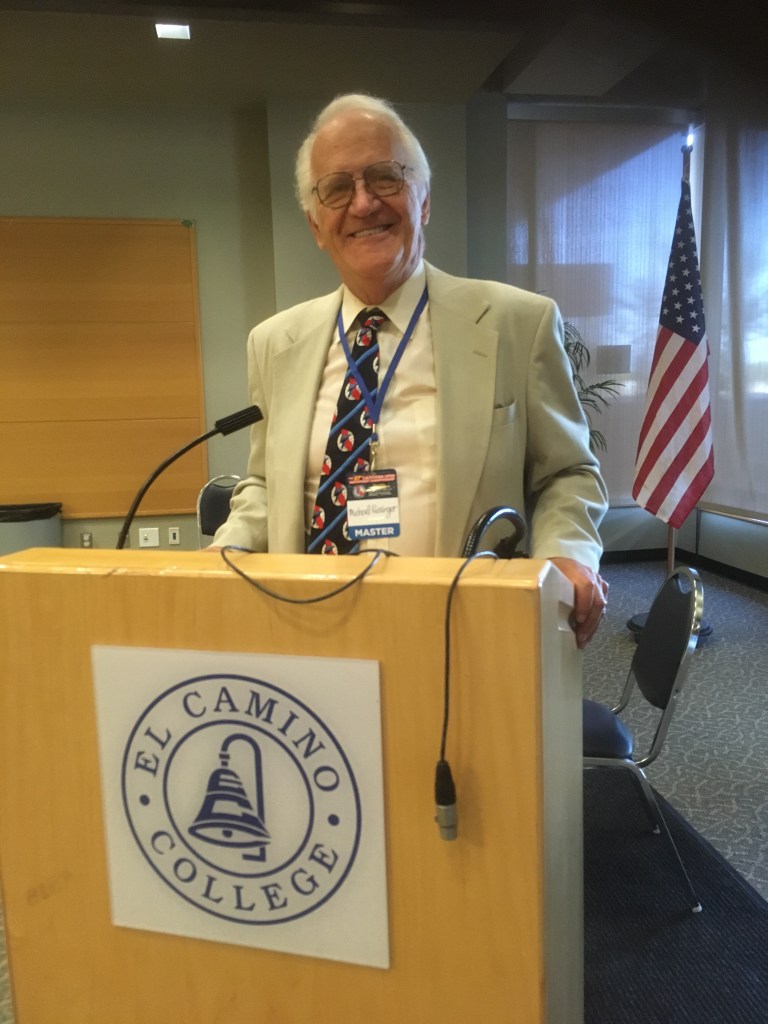
Professor Michael Kissinger is an owner and executive business coach, performance strategist, and former academic who operates the Reitenbach-Kissinger Success Institute and the MKS Master Key Coaching
Based out of California, he has spent over four decades working over 5,000+ business owners as a confidential business manager, analyst, and speaker focused on small business growth, leadership, and financial freedom.
Core Programs and Methodology
- The MKS Master Key Generational Wealth System: A structured, diagnostic framework built around six distinct core pillars: mindset, wealth, health, relationships, business, and leadership. The philosophy emphasizes that success is 80% psychology and 20% mechanics.
- MKS Master Key Generational Wealth Strategic Makeover Sessions: The institute offers targeted diagnostic sessions designed to audit business growth levers and outline scalability tracks for companies generally yielding between $400,000 and $3 Million in annual revenue.
- Contracted Engagements: Programs are heavily tailored to custom small business, corporate or personal timelines rather than flat-rate fees. Standard six-month operational contracts typically range from $4,500 to over $8,200 depending on the scope of the dynamic tracking involved.
Academic and Professional Background
- Teaching Career: He served over 17 years as an adjunct professor instructing courses in business and law at multiple California institutions, including San Francisco State University, Golden Gate University, and Cañada College where he coached and trained over 10,000 university students and small business owners. Author of over 14,000 LinkedIn Articles that have created 18,650 followers and contacts.
- Martial Arts and Other Accomplishments: He holds a 4th Degree Kukkiwon Certified Taekwondo Black Belt and has active ties spanning 40 years as an instructor at the Reitenbach Institute of Taekwondo. He is a former US Army Honorably Discharged Special Forces Vietnam Member. He also served over 20 years as a minister at Unity Church and St Stevens Church.
You can view his complete professional breakdown directly on his LinkedIn Profile.

Get Started on Business Success Today
Are you looking results? Schedule a diagnostic session, or would you like a breakdown of a particular coaching? Contact us.
Professor Kissinger emphasizes the importance of continuous improvement as a key to personal, business, financial and professional growth. By constantly acquiring new knowledge and skills, individuals can adapt to changes, overcome challenges, and achieve their goals more effectively.
Continuous learning and improvement is a fundamental principle in Professor Kissinger’s coaching philosophy.
- Adaptability — Continuous improvement helps individuals adapt to changing circumstances and environments.
- Skill Development — Regularly updating and improving skills can lead to better performance in both personal and professional settings.
- Resilience — Learning and updating new strategies and perspectives fosters resilience, enabling individuals to navigate challenges more effectively.
- Goal Achievement — Lifelong learning and improvement is essential for achieving long-term goals, as it equips individuals with the tools needed for success
Contact to discuss how leverage, ownership, scalability, necessity, attention, and compounding can create completely different financial outcomes for you.
Reitenbach Kissinger Institute
Sydney Reitenbach
Professor Michael Kissinger
Text: 650-515-7545
Email: mjkkissinger@yahoo.com
Reach Your Peak Performance Results. Embrace Your Unlimited Potential. Valued Between from $2,350 to $5,500+


