
Many praise Professor Kissinger’s views about saving money in a bank.. They appreciate his insights on financial management. He does not classify saving money in a bank as a scam; rather, he characterizes it as a fundamental habit for building security while advocating for a shift from a consumer mindset to an investor mindset.
He emphasizes that true financial freedom is not represented by a specific balance in a bank account, but by the state where investments generate enough income to sustain one’s life without trading time for money.
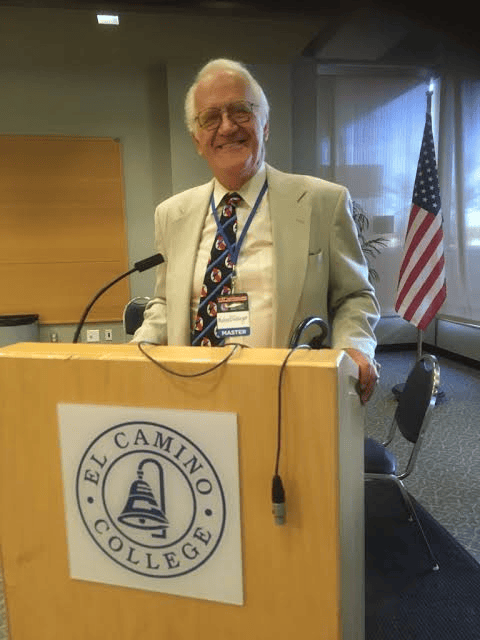
Insights on Saving Money in Banks
Professor Michael Kissinger and the Reitenbach Kissinger institute does not classify saving money in a bank as a scam, but he draws a fundamental distinction between being a consumer and an investor. He emphasizes that while saving is a necessary first step, relying solely on a savings account will not generate the wealth required for financial freedom because your money must grow through compounding to outpace inflation and build long-term assets.
Professor Kissinger emphasizes that traditional savings in banks may not be the best strategy for wealth accumulation, as they often yield low returns compared to other investment options. He advocates for a mindset shift towards investing rather than merely saving, suggesting that consumers should focus on ownership and asset-building instead of relying solely on bank savings accounts.
Insights on Saving Money in Banks
Professor Kissinger offers valuable perspectives on the effectiveness of saving money in banks.
- Low Returns — Savings accounts typically offer minimal interest rates, often below inflation, leading to a loss of purchasing power over time.
- Consumer Mindset — He argues that society is conditioned to be consumers rather than owners, which hinders financial growth.
- Investment Focus — He encourages individuals to invest their money in assets that appreciate, rather than keeping it stagnant in banks.
- Financial Literacy — He aims to improve financial literacy, helping people understand the importance of making their money work for them
.Does Professor Kissinger believe keeping cash in a savings account is a mistake?
| Concept | Perspective |
|---|---|
| Consumer | Exchanges money for goods and experiences that do not build long-term assets. |
| Investor | Builds systems where money works harder and generates more money over time. |
| Saving | An essential automatic habit for building a “Freedom Fund” before spending. |
| Investing | The primary vehicle for reaching financial independence through compounding. |
The Transition to Wealth
Professor Kissinger coaches and teaches that the shift from saving to investing is a matter of mindset and identity rather than just financial transactions. He encourages individuals to treat a set percentage of their income—such as 10% to 25%—as a non-negotiable expense that is saved automatically before any other bills are paid.
- Automatic Savings — Establishing a “Freedom Fund” is the first step in moving from a consumer mindset to an investor identity.
- Psychological Barriers — Many people avoid saving because they view it as a painful loss of present-day spending power, rather than a gain for their future.
- Financial Literacy — Professor Kissinger aims to help individuals transition from simply earning a paycheck to owning assets that generate income while they sleep.
- Long-term Growth — He argues that you cannot earn your way into a fortune solely through labor; you must leverage diversification and compound interest to build wealth consistently.
Principles of Smart Management
Professor Kissinger emphasizes that financial success is largely determined by psychology, suggesting that how one manages money is often more significant than the size of the paycheck. His approach focuses on minimizing fees and avoiding avoidable losses, which he identifies as major factors that silently erode retirement savings.
- Avoiding Loss — One of his “golden rules” is to avoid losing money, echoing the cautious investment strategies of top hedge fund managers.
- Fee Awareness — He warns that hidden fees, rather than just market crashes, are a significant reason retirement savings fail to grow as expected.
- Mindset Over Strategy — He posits that financial success is 80% psychology and 20% strategy, requiring a shift from feelings of scarcity to an abundance mindset.
- Taking Action — He encourages individuals to take advantage of market corrections rather than fearing them, using them as opportunities to grow their investment portfolio.
The core of his philosophy is that while a bank account provides a place to park your initial savings, true financial freedom requires the transition to becoming an active investor.
.Does Professor Kissinger recommend keeping money in a traditional savings account?
| Concept | Robbins’ Perspective | Actionable Strategy |
|---|---|---|
| Savings Approach | Pay yourself first | Automate transfers to savings or investments |
| Financial Goal | Move beyond survival | Transition from consumer to investor |
| Wealth Building | Compound small adjustments | Use the 2-“Baby Step” rule for steady growth |
| Financial Freedom | Income-generating assets | Aim to cover life costs without trading time |
The “Pay Yourself First” Principle
Professor Kissinger consistently argues that leaving savings until the end of the month often results in having little to nothing left to put away. He suggests that this reactive approach keeps individuals trapped in a paycheck-to-paycheck cycle, which leaves them vulnerable to unexpected emergencies or life setbacks.
- Automation — He advises setting aside money before you have the chance to touch it, making saving a non-negotiable expense in your financial routine.
- Consistency — Real wealth is built through sustainable habits rather than trying to overhaul your finances overnight, which can lead to burnout.
- Compounding — By applying the 2-Baby Step rule, small, consistent adjustments in your daily financial habits eventually produce dramatic results over time.
Mindset and Systemic Awareness
Professor Kissinger encourages individuals to educate themselves on the rules of the financial system, noting that many people participate in the economy without realizing the system is often structured to work against them. His philosophy moves beyond mere number-crunching to focus on the psychological architecture of money management.
- Accountability — He advocates for creating feedback mechanisms to ensure that your routine actions are producing measurable progress toward your financial targets.
- Standards — Defining the minimum behaviors you decide to maintain consistently helps influence which financial options you perceive as possible or within reach.
- Strategic Planning — He emphasizes the importance of gaining a detailed understanding of your financial situation by tracking income and recording every expense to gain clarity on your path to prosperity.
These strategies are designed to help you shift your relationship with money from one of frustration to one of abundance and long-term security.
Action Strategies for Saving Money in a Bank
Professor Kissinger emphasizes a structured approach to saving money effectively, focusing on automating savings, reviewing spending habits, and setting clear financial goals. His strategies aim to create a disciplined savings plan that can adapt to various financial situations.
Professor Kissinger advocates for a mindset shift from being a consumer to becoming an investor, emphasizing that financial freedom requires disciplined, automated habits rather than just earning more. His core strategy centers on paying yourself first, which involves setting aside a fixed percentage of every payment you receive before spending any money on other expenses.
How do I automate the pay yourself first strategy effectively?
| Action Step | Objective | Implementation Detail |
|---|---|---|
| Pay Yourself First | Prioritize future wealth | Automate a fixed percentage of all income |
| Mindful Saving | Eliminate non-joyful expenses | Audit spending to align with core values |
| Set Financial Targets | Define clear progress | Target specific levels like security and freedom |
| Automate Finances | Remove temptation | Utilize 401(k)s or IRAs for tax efficiency |
| Reframe Beliefs | Overcome limiting patterns | Change the story that wealth is unavailable |
Core Principles for Wealth Building
Professor Kissinger coaches and teaches that the most significant obstacle to financial success is the psychological tendency to choose short-term gratification over long-term security. He suggests that saving should not be viewed as losing something today, but as an act of securing your future.
- Become an investor — Shift your identity from a consumer who spends everything to an investor who systematically builds assets.
- Identify your goals — Determine exactly what you want and create an achievable, realistic plan to reach those specific financial targets.
- Audit your spending — Review your expenses to identify and eliminate costs that do not bring you genuine joy or contribute to your core values.
- Condition your behavior — Use pain and pleasure associations to break bad spending habits and anchor yourself to the pleasure of saving and investing.
- Start small — Do not wait for the perfect time to begin; start immediately with consistent steps to leverage the power of compounding.
Execution Strategies
To make the financial game winnable, Robbins Professor Kissinger argues that you cannot out-earn poor habits, so the systems you put in place must be strong enough to withstand the temptation to spend.
- Automate your savings — Use employer-sponsored retirement accounts like 401(k)s or IRAs to ensure your savings are removed before you can spend them.
- Adopt a financial detox — Treat your finances like a health detox by identifying and breaking the habits that are quietly sabotaging your financial progress.
- Focus your energy — Recognize that where focus goes, energy flows, and keep your attention on building your future rather than on current limitations.
- Master your state — Understand that your emotional state drives your financial story, which in turn dictates your strategy and ability to remain disciplined.
- Maintain consistency — Build your wealth by remaining committed to the process over the long term, regardless of external economic conditions.
Building lasting wealth is a result of consistent, automated actions that align with your deepest values and long-term vision.
Actionable Strategies to Enhance Savings Habits Strategies
Professor Kissinger provides actionable steps to enhance savings habits.
- Automating Savings — Set up automatic transfers to savings accounts to ensure consistent saving without manual effort.
- Reviewing Spending — Regularly analyze expenses to identify areas for potential savings and adjust budgets accordingly.
- Setting Goals — Establish specific, measurable savings goals to motivate and track progress effectively.
- Mindful Spending — Adopt a mindset that prioritizes long-term financial health over immediate gratification, fostering better spending habits.

Here’s Why Savings Accounts at Big Banks Aren’t as Safe as You Think for Your Wealth Creation.
* Big banks keep your savings secure, but they pay extremely low interest rates, so you’ll lose money to inflation.
* You can get much better rates, and the same FDIC insurance as big banks, with high-yield savings accounts.
* With money you don’t need in the near future, the best way to beat inflation is by investing.
Security is pretty important in a bank account. In fact, it’s a top factor Americans look for when choosing a bank, according to recent banking research by The Motley Fool Ascent.
A whopping 91% of respondents consider it an important feature, tied for No. 1 with quality customer service and mobile and online access.
If it’s safety you’re after, big banks may seem like the clear choice.
Banks like Chase, Bank of America, and Wells Fargo are massive financial institutions, so it’s reasonable to expect your money to be safe with them.
You’re at almost zero risk of losing money you deposit with these banks. They’re all FDIC insured, and that covers up to $250,000 per eligible account. But there is a different type of risk with accounts at big banks.
Rock-bottom rates that don’t keep up with inflation
The largest banks pay the lowest interest rates. The average savings account rate is 0.47%, according to the FDIC. That’s already not great — some online banks pay over 10 times that.
But at big banks, it’s even worse. Savings account rates at Chase, Bank of America, and Wells Fargo all start at a pitiful 0.01%. Have $10,000 in savings? Well, after a whole year using one of those banks, you’ll have earned another $1.
The problem isn’t just that you could earn much more interest with a different bank account. Your savings also won’t even come close to keeping up with inflation. The long-term U.S. inflation rate is 3.28%. If your savings account only pays you 0.01%, then you’re losing a lot more to inflation than you’re earning in interest.
High-yield savings accounts offer more interest and the same level of protection
If you have your savings at a big bank right now, check out high-yield savings accounts. These are still savings accounts, but they’re usually offered by online banks. As the name suggests, they offer significantly higher rates than what you’ll find at most banks.
At the time of this writing, you can find rates as high as 5.36%. On a $10,000 balance, you could earn $536 in interest — $535 more than what you’d earn at a bank offering 0.01%.
Even though some people see big banks as more secure, online banks are just as safe. They’re typically FDIC insured, as well, so they offer the same coverage of up to $250,000 per eligible account. You can confirm that an online bank is FDIC insured on its website or through the FDIC.
Another good option is a certificate of deposit (CD). This type of account has a fixed interest rate and term, so you can lock in a rate for a set amount of time. With savings accounts, rates can fluctuate. The best CDs also pay rates similar to, and sometimes surpassing the best savings accounts.
For long-term growth, investing is the best option
A high-yield savings account is perfect for savings you might need in the near future. It’s the right place for your emergency fund and any upcoming savings goals, such as a down payment on a home.
But for long-term financial goals, you’re better off investing your money. Historically, the stock market has returned an average of about 10% per year. That’s a much greater return than you could get through a savings account or CD.
As a general rule, if you’re saving for a goal that’s more than five years away, you should probably invest your money. If it’s 10 years or more in the future, you should definitely invest your money. Two of the most common examples are saving for retirement and for children’s college education.
Because of inflation, our savings gradually gets less valuable. The best way to protect against that is by putting your money in places where it can grow. There are lots of savings accounts that are beating inflation right now, but you won’t find them at the big banks.
Conclusion:
Join MKS Master Key System Financial Coaching. We’ll help you eliminate some of the Biggest Financial Mistakes Young Adults Make and how to manage your money better while utilizing and practicing your other skills so You Achieve Financial Freedom and Success.
If you’re ready to take control of your financial future and unlock the secrets to building wealth, you’ve come to the right place! We’ll teach you practical strategies on how to get rich, whether you’re just starting out or looking to accelerate your earnings. From creating multiple income streams to leveraging the power of the internet, we’ll explore proven methods to make money online and achieve financial freedom.
Forget get-rich-quick schemes; we’re focused on long-term wealth building here. Learn how to invest wisely, whether it’s in stocks, real estate, or your own education and skills. Discover the importance of a conscious spending plan and how it can help you prioritize what truly matters while still enjoying the journey to riches.
Tune in as we dive into the wisdom of financial experts like Michael Kissinger, whose insights have helped countless individuals transform their financial lives.
Whether you’re a teen, in your 20s, or starting from scratch, I’ll show you actionable steps to pave your way to becoming a millionaire.
It’s time to shift your mindset from just making money to building wealth
Cultivate Breakthroughs Today
Step 1 Personalized Call
In this 15-60 minute Wheel of Goals Discovery Session, we will start to deep dive with you on what you want challenges, disputes or goals are and any current challenges you are having with achieving them.
Step 2 Match You
We’ll match you with a coaching strategist to help you uncover the root cause to what’s truly stopping you from getting what you want.
Step 3 Results Coaching Plan that Exceeds Expectations
You’ll get started with Professor Kissinger or the Reitenbach Kissinger Institute Coaching Team and close the gap to what or where you want to be quickly and efficiently.
Informed by four decades of extraordinary results, Michael Kissinger MKS Master Key System Results Coaching is built to help you discover ways to get you want you want or to grow your business, finances and profits exponentially. Professor Kissinger provides the tools for you to create massive, lasting change in your life finances, and business.
It significantly reduces costs, prevent delays, and improves outcomes by identifying issues early and ensuring robust documentation and communication throughout the lifecycle.
Professor Kissinger provides proactive strategies—such as comprehensive money management and thorough record-keeping—proves far more cost-effective coaching. Research shows that effective management can prevent project failure and cost overruns and achieve favorable outcomes.
“The path to get what you want success is to take massive, determined action.”
If not now, then when?
Consider the Alternative…FAILURE

Lasting Long Term Results
Professor Kissinger’s MKS Master Key Coaching options and programs vary widely in format and cost, ranging from entry-level digital coaching to intensive, multi-year certification tracks.
Whether you are looking for professional coaching or training or personal growth strategies, the investment depends on the depth of the commitment and the level of direct mentorship provided.
MKS Master Key System Wealth Coaching typically ranges from $6,995 for a MKS Master Key System Wealth Results plan to $4,500 to $18,000+ for multi-month or annual packages.
Understanding the pricing structure can help in decision-making.
- MKS Master Key System Wealth Results Plan — Costs around $6,995 for a structured coaching program.
- MKS Master Key System Multi-Month Packages — Range from $4,500 to $18,000+, depending on the duration and services included.
- One-on-One Coaching — Prices can vary significantly, often between $500 to $3,000 per hour.
- Annual Coaching Programs — Results Coaching can range from $15,000 to $75,000 per year.
Professor Kissinger’s Legacy
Professor Michael Kissinger is an owner and executive business coach, performance strategist, and former academic who operates the Reitenbach-Kissinger Success Institute and the MKS Master Key Coaching
Based out of California, he has spent over four decades working over 5,000+ business owners as a confidential business manager, analyst, and speaker focused on small business growth, leadership, and financial freedom.
Core Programs and Methodology
- The MKS Master Key Generational Wealth System: A structured, diagnostic framework built around six distinct core pillars: mindset, wealth, health, relationships, business, and leadership. The philosophy emphasizes that success is 80% psychology and 20% mechanics.
- MKS Master Key Generational Wealth Strategic Makeover Sessions: The institute offers targeted diagnostic sessions designed to audit business growth levers and outline scalability tracks for companies generally yielding between $400,000 and $3 Million in annual revenue.
- Contracted Engagements: Programs are heavily tailored to custom small business, corporate or personal timelines rather than flat-rate fees. Standard six-month operational contracts typically range from $4,500 to over $8,200 depending on the scope of the dynamic tracking involved.
Academic and Professional Background
- Teaching Career: He served over 17 years as an adjunct professor instructing courses in business and law at multiple California institutions, including San Francisco State University, Golden Gate University, and Cañada College where he coached and trained over 10,000 university students and small business owners. Author of over 14,000 LinkedIn Articles that have created 18,650 followers and contacts.
- Martial Arts and Other Accomplishments: He holds a 4th Degree Kukkiwon Certified Taekwondo Black Belt and has active ties spanning 40 years as an instructor at the Reitenbach Institute of Taekwondo. He is a former US Army Honorably Discharged Special Forces Vietnam Member. He also served over 20 years as a minister at Unity Church and St Stevens Church.
You can view his complete professional breakdown directly on his LinkedIn Profile.

Get Started on Your Wealth Goals Today
Are you looking results? Schedule a diagnostic session, or would you like a breakdown of a particular coaching? Contact us.
Professor Kissinger emphasizes the importance of continuous improvement as a key to personal, business, financial and professional growth. By constantly acquiring new knowledge and skills, individuals can adapt to changes, overcome challenges, and achieve their goals more effectively.
Continuous learning and improvement is a fundamental principle in Professor Kissinger’s coaching philosophy.
- Adaptability — Continuous improvement helps individuals adapt to changing circumstances and environments.
- Skill Development — Regularly updating and improving skills can lead to better performance in both personal and professional settings.
- Resilience — Learning and updating new strategies and perspectives fosters resilience, enabling individuals to navigate challenges more effectively.
- Goal Achievement — Lifelong learning and improvement is essential for achieving long-term goals, as it equips individuals with the tools needed for success
Contact to discuss how leverage, ownership, scalability, necessity, attention, and compounding can create completely different financial outcomes for you.
Reitenbach Kissinger Institute
Sydney Reitenbach
Professor Michael Kissinger
Text: 650-515-7545
Email: mjkkissinger@yahoo.com
Reach Your Peak Performance Results. Embrace Your Unlimited Potential. Valued Between from $2,350 to $5,500+


