
When you get a weekly bonus check deposited in your account, what are some of the first things you will spend it on?
What is a side gig? It’s a second income stream, apart from your full-time job.
Side gigs have always been appealing (because who couldn’t use some extra money?) but they are especially popular now.

Here’s a Few Reasons Why You Might Want a Side Gig
1. Multiple Income Streams
While you might love your day job and think it will never end, the reality is that it could. Layoffs happen, the economy crashes, or who knows what. And while you might get unemployment checks, those only last so long and aren’t as much as your old salary.
Starting a side gig now means you’ve got multiple income streams later to help support you should times get tough.
2. Create an Emergency Fund
Do you have enough saved to cover three or more months of expenses? More than half of Americans couldn’t cover three months of expenses with an emergency fund Fewer than half of Americans do.
Unforeseen events, like an unexpected illness or car repairs, can be costly. Putting your side gig money into an emergency fund can help you weather a financial storm.
3. Putting More Toward Retirement
Retirement is not as far away as you may think, and the sooner you save for it, the more time your money has to grow. Deposit your side gig money directly to your retirement account or take more out of your regular paycheck to ensure you get the match for your employer.
Either way, the more you stash away now, the more you’ll have later. And who knows? With all the extra money you’re saving, you might be able to retire early!
4. Pay Off Debt
Student loans, a mortgage, or a new car all mean you’ve got debts. And while these are “good” debts, you still have to pay them back.
A side gig can help you put more money toward paying them down. And the sooner you get your debts paid off, the sooner you can start putting the money toward something else.
5. Prepare for a Big Event
What life-changing event might be on the horizon? New situations will undoubtedly mean new expenses. But with a side gig, you can manage those expenses.
For example, the average cost of childcare for one child is about $226 per week in a daycare center or $694 per week if you hire a nanny, while the average cost of a wedding is $22,500.
You may have saved enough for a down payment on a house and can manage the mortgage, but you still have to pay for insurance, maintenance, utilities, and more. These costs can really add up and may be far more than you anticipated.
6. Living Your Best Life
While your day job may pay the bills, it may not be enough to provide the “extras” that could bring added joy. With the additional money from a side gig, you can afford to travel to your cousin’s destination wedding or go on that safari you’ve dreamed about since studying Africa in fourth grade. Just as side gigs are flexible, so are the choices of what to do with that higher balance in your bank account!
7. Might Lead to New Things
Your side gig might take your career to places you never thought of.
Side hustles are a great way to grow your network. These new connections may be able to help you in your day job or side job sometime in the future.
And when you work on your side hustle, you’re learning skills (like time management and conflict resolution) you may not get to in your day job. Adding new skills to your career toolkit can help you move up the career ladder, or even into a whole new career.
8. Diversifying Your Income
It’s risky to put control of 100% of your income in the hands of one employer and one manager.
If you have a side business, even a small one, you have more security than someone who relies on one full-time job to take them through to retirement.
People start side businesses every day. They may keep their business small and keep their full-time job, too. Or they may grow their consulting business to become their full-time thing.
9. There’s Room for Everyone
Some independent consultants have decades of experience and some of them only have a few years of experience.
A great thing about independent consulting is that there are clients to match every consultant’s experience and price level. Some clients want to hire a consultant with many years of experience and training. They need that expertise and they have the budget to pay for it.
Some clients want to hire a less experienced consultant at a lower hourly rate.
10. My Big “A-ha!” about Business and Consulting
I was a construction person. When I started I was at the University of San Francisco, a former US Army Special Forces Member, terrified of starting a business. I thought it would be hard and scary. I was afraid a client would ask me a question I didn’t know the answer to.
One day that happened. I graduated from Law School was build a Firemen’s Fund Building in Marin and a client asked me, “What do you know about [some obscure construction law thing].” I said, “I don’t know a thing about that area of law. Why do you ask?”
“No reason,” the client said. “I just heard that term for the first time and I was curious what it meant.”
“I’m going to a construction law event next week,” I said. “I’ll ask around and let you know.”
I provided a huge value to my client by getting the answer to his question. I learned something new myself, too.
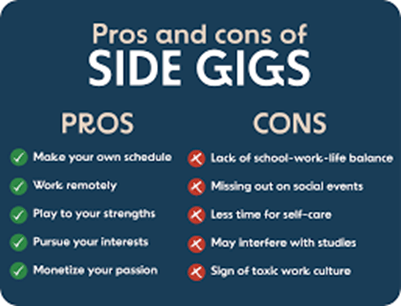
Watch for Signs!
You may get a sign that tells you, “It’s time to look into having your own business on the side.”
The signs could be subtle, or loud.
Here are ten signs that you should have a side gig:
1. You know exactly what you’d do with an extra $1K-$10K per month.
2. You want to keep your current job.
3. You’re willing to devote a few hours a week to a second-income project.
4. You are already pretty good at time management, or you’re ready to get better at it.
5. You see the benefits of a side business for your credibility, marketability, confidence, business knowledge, network and income.
6. People have told you, “You’d be a good consultant.”
7. You like the idea of having your own business and working with clients directly.
8. You may have thought about growing your side business to become your full-time job.
9. Or your plan may be to launch your side business now and run it after retirement.
10. You want to explore life outside the corporate and institutional walls.
If this list describes you, someone is trying to tell you something: it’s time to launch your own business!
What to Consider Before You Get a Side Gig
1. Determine if You Can Do It
Juggling two jobs can be rough. After all, having two jobs means twice as many schedules to keep track of, twice as many meetings, and twice as many responsibilities. So before you apply for a second job thinking it sounds fun, really consider if your current career will allow for it.
On the flip side, if your current work schedule differs vastly from day to day, you’re constantly required to stay late at the office, or you’re on call 24/7, fully committing to a second gig may be significantly harder.
2. Even if You Can Do it, Should You?
It’s also important to consider how your physical, emotional, and social well-being would stand up to a second job. Are you completely exhausted when you get home, or do you have energy to spare (enough energy to work another 4-8 hours)? If you had a terrible day at the office, would you be able to put it behind you in order to put forth your best effort in your side gig? Are you OK with sacrificing a few social events to fulfill your new responsibilities?
As intimidating as these questions seem, it’s important to answer them honestly. After all, these factors will significantly impact your motivation and overall performance—and if you can’t get (and stay) motivated, you two-job stint won’t last long. But if you’re committed, it’ll work.
3. Find a Position That Suits You
If you’ve determined a second gig is the right decision for you, the next piece of the puzzle is to actually find one that fits your needs.
As you’re evaluating potential positions, it’s important to determine if and how it will fit into your current role. Are shifts strictly scheduled? Will you need to be on call (and will that affect your current position)? Neither job should have to suffer for you to make time for the other.
Also consider the type of work will you’ll be doing. If you spend all day at your first job at a desk, do you want to spend your evenings doing the same thing? Even if you’re taking on a side gig just to earn some extra cash, it’s a big commitment—so you should enjoy whatever job you choose.
4. Tell Your Current Employer—Or Not
One of the toughest parts about landing a new job was figuring out if I needed to broach the situation with my current employer.
When you reach the point where you have a second job offer on the table, take a look at your current company handbook. Often, employers will outline specific guidelines for employees looking to gain outside employment, and may require anything from written permission from a direct supervisor to approval from the CEO. If this is the case, stick to the rules—you don’t want to risk the consequences of sneaking a second job under the radar.
However, if your company doesn’t have such a policy, the decision is completely up to you. In my case, since my hours at my side job were so flexible, and I knew it wouldn’t conflict with my current gig, I chose to keep my new position to myself.
5. Find Balance
At first, while you’re busy making a good impression on your new employer, you’ll be tempted to skip working out, bail on every social event, and abandon your kitchen in favor of takeout. But if you let your double duty take precedence over everything else in your life, your happiness (and physical well-being) will plummet—fast.
So, it’s important to figure out how to prioritize your life outside of your second job. Maybe you commit to waking up an hour earlier to work out, or dedicate Sunday afternoons to cooking and freezing meals for the week so you can whip up something other than ramen noodles between jobs.
Yes, your side gig is important—but the rest of your life is important, too. So before you dive into the world of dual responsibility, do a little planning, a lot of reflection, and wait for that perfect fit.

Get Your Hustle On
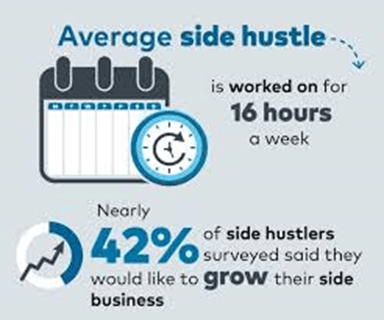
You don’t need a lot of time to start a side gig. A few hours a week may be all it takes. What’s more, lots of side jobs can be done remotely.
May I ask, Do You Know What You Are Truly Worth?
Are you being paid for that? Will it pay off all your bills?
If not, Will an extra 30k-75k, on top of what you currently earn change your life a little bit?
May I also ask, do you want something better?
“For $250,000+/- Annually Will You Build a Proven, High Profit, Low Overhead-Low Start Up, Risk Free, Guaranteed, Unlimited Income, Side Business?” If yes, contact me now. What will your life look like then? Who will you be in six months? https://mksmasterkeycoaching.com/

Conclusion
Making seemingly impossible things happen in any area of your life or business is our specialty. Over 25,000 achievers have now used MKS Master Key Coaching and Systems, the world’s #1 systems, for self or business improvement. We’re grateful for this year and opportunity to serve you.
We hope you’ll deepen your practices of journaling, tracking your habits, setting your goals, and watching inspirational classes with us this year and beyond.
Let’s make the year extraordinary, together.
Cheering you on, always!
Join a “Year of MKS Master Key Mastery Coaching Programs and Systems”. We’ll spend the first Mondays of the Week with you taking you through advanced personal growth, business growth, profitability optimization and productivity so you can win this year and every years you are in business.
These are just a few tips to look out for when considering Breaking Through Your Upper Limits.
We personally believe this is the best way forward if you are looking for a Breaking Through Your Upper Limits. This is for people who have a dream or desire to be financially independent and are willing to put in the hard work to do so.
Have a wonderful, safe, and fun week.
So, if you’re ready to get your hustle on, join us at the Reitenbach-Kissinger Institute today.
Thanks for joining me. Hope you are having an excellent day.
Wishing you prosperity and success. Remember You Were Born To Win!!

Michael Kissinger and Sydney Reitenbach
Phone: 650-515-7545
LinkedIn Profile: https://www.linkedin.com/in/michael-kissinger-a66b214/
E-mail: mjkkissinger@yahoo.com
Facebook: https://www.facebook.com/michael.kissinger.35
CONTACT US: [LIFE SUCCESS ASSESSMENT] [READINESS ASSESSMENT] [SERVICES] [ABOUT COACHES] [FAQs] [FEE RANGE] [COACHING AGREEMENT] [SURVEY] [PRESS RELEASE] Home
Web: https://mksmasterkeycoaching.com
Terms of Use | Testimonials and Results Disclosure | Privacy Policy
© Copyright 2023 –Reitenbach-Kissinger Success Institute – All Rights
Disclaimer
The Reitenbach-Kissinger Success Institute makes no guarantee, makes no promises regarding the outcome of using any of the information on this site or its product or service. The Reitenbach-Kissinger Success Institute is not liable for any damages arising in contract, tort or other wise from the use of or inability to use this site or any material contained in it, or from any action or decision taken as a result of using this site or the information hereon. The information on this site is informational only
The materials on this site comprise the The Reitenbach-Kissinger Success Institute views; they do not constitute legal or other professional advise or guarantee of any kind. You should consult your professional advisor for legal or other advice.
This site offers links to other sites thereby enabling you to leave this site and go directly to the linked site. The The Reitenbach-Kissinger Success Institute is not responsible for their content of any linked site or any link in a linked site. The The Reitenbach-Kissinger Success Institute is not responsible for any transmission received from any linked site. the links are provided to assist visitors to the Reitenbach-Kissinger Success Institute site and the inclusion of a link does not imply that the The Reitenbach-Kissinger Success Institute endorses or has approved the linked site

 REACH YOUR PEAK PERFORMANCE TODAY with the World's #1 Consulting Firm. The Reitenbach-Kissinger Institute and the MKS Master Key Consulting-Law-Engineering Systems. You are committed to achieving your goals. Do not compete without proven consultants. FREE 30-Minute Win the Game of Life or Business Consulting Session Call: 650-515-7545