How Executive Consulting Works Step 1: Personalized Call: In this 15-minute session, we will start to deep dive with you on what your biggest goals are and current challenges you are having with achieving them. Step 2: Match You: We will match you with a consulting strategist to help you uncover the root cause of what is truly stopping you from getting what you want. Step 3: Results Consulting: You will get started with a Results Consulting team and close the gap to where you want to be quickly and efficiently. Step 4: Results that Exceed Expectations Confirmation Step 5. Payment for Performance and Results Only Step 6. Reitenbach-Kissinger Institute’s Executive Consulting Purpose and Mission: To Solve Your Problems with Guaranteed Results, Common Sense-Proven-No BS-High Performance Systems that Help You Transform Your Life, Business, Career or Financial Challenges into Your Desired Vision and Results! Step 7. If Not Now, Then When? Call 650-515-7545- Email: mjkkissinger@yahoo.com WEB: mksmasterkeycoaching.com
Have You Found Your Passion and Your Dream Job in Your 40’s, 50’s or 60’s Yet? Now You can Find and Easily Laid your Ultimate Dream Job, Follow this Easy-Proven System!
If you’re feeling unfulfilled or unmotivated at work, getting your dream job might sound far-fetched, but with the right preparation your dream can become your reality.
Trying to find any job can be stressful and overwhelming, let alone your dream job. Especially if you’re graduating or early in your career, how are you supposed to answer “What is my dream job” without much experience?
Luckily, you don’t need to have tons of (or any!) professional experience to figure out how to find your dream job.
Considerations forYour Dream Job
Your interests: things you like to do and responsibilities you enjoy
Your skills: work you’re good at and excel in
Your preferred work environment: whether you want a remote job, hybrid work, or in-office work, as well as who you work with daily
The company culture: the values, beliefs, and practices of the company you work for
Your goals: what you want out of work, whether that’s to fulfill a purpose, achieve a mission, or support a specific lifestyle
Your preferred benefits: this includes your salary, paid time off, retirement benefits, and other benefits (like mentorship or even a gym membership) that matter to you
8 Steps and Secrets to Finding Your Dream Job
1. Take a How to Find Your Dream Job Quiz
If you have no idea what your dream job might be, taking a fun, low-stress career quiz can give you a great place to start.
When we were trying to take career quizzes, we were frustrated by how many quizzes asked us questions we didn’t know how to answer — how could we pick between marketing and coding if we hadn’t tried either?
That’s why we’ve written a career quiz that requires no prior knowledge but still measures critical aspects of your personality, strengths, preferences, and goals. Ask us for your FREE quiz and discovery session.
How to Find Your Dream Job Steps
Ready to answer “What is my dream job?”Let’s get started on these points!
1. Get Specific With Your Interests…
Your interests are one of the most critical parts of figuring out your dream job; however, it’s hard to narrow down if you’re interested in financial modeling or programming if you’re unsure what those interests are.
Start by asking yourself more straightforward questions like:
What subjects am I naturally drawn to?
What hobbies do I enjoy?
What makes me lose track of time?
What am I passionate about?
What clubs or activities do I enjoy?
What problems or issues make me want to learn more?
Daniel Space, senior HR business partner director, recommends getting savvy with LinkedIn searches to uncover how your natural interests relate to jobs.
“Go onto LinkedIn and type in a word you like — ‘money, shoes, music, numbers, food.’ Look at the results and start to come up with the common identifiers that seem to gain interest. When you read job descriptions, do you like the ones that seem to be focused more on data? Move toward analytics, insights, and research roles. Do you like storytelling and social media? Move toward marketing and brand roles.”
Once you’ve identified the types of roles you might like, Space recommends looking at their larger career path.
“Play with different variations of job title and industry, and locate and identify the types of roles you resonate with — and then create a path to get there by connecting with people who are ahead of you already,” he says. “Five years before I got my job at EA Games, I reached out to five VPs of HR at various video game companies, and they gave me incredible advice and remained mentors for years to help me achieve my goal.”
2. Get Specific With Your Strengths
Your strengths are the second part of the equation for finding your dream job. Your strengths are both what you’re naturally good at and what you’ve learned to do well. To uncover your strengths, ask yourself questions like:
What subjects or activities come easily to me, even if they seem hard for others?
If I were teaching a class, what subject would I be most excited to teach?
What do people compliment me on the most?
What skills do I tend to use when overcoming a challenge?
What tasks or projects are satisfying for me to complete?
While these strengths might be more common ideas like math or science, English or art, remember other strengths that can come in handy in the workplace in the form of soft skills. For example, are you great at negotiating with people to get what you want? Are you highly organized with impeccable time management skills?
>>MORE: Learn more about your strengths by taking our career aptitude test.
3. Consider You Valuein the Market Place
Your values are critical to understanding what you want out of your dream job. These can be some of the most challenging aspects to consider if you’ve never stepped into an office (or worked virtually), but you can use your experience from working with others at school to help you out!
Ask yourself:
Do I prefer to work independently or as part of a team?
How important is work-life balance to me?
Would I prefer to work on projects I love or for a company I love?
What’s a class project I enjoyed and what did I like about the experience?
Do I prefer a steady routine or variety?
What work environments do I find stressful?
Are there causes or issues I feel strongly about?
What would be a deal breaker for me in a job offer?
A job is much more than what you do on a day-to-day basis — it’s who you interact with, who you work for, how much you work, and how you work on your tasks. Thinking big-picture about these values can help you distinguish between roles with similar titles and responsibilities as you start your dream job search.
4. Talk to People
Asking others about their roles and talking to people about different opportunities is one of the best ways to get an inside view of a role or career path.
“Embrace the art of cold calling or reaching out directly to recruiters and industry professionals, even if there isn’t an open position advertised,” . “This proactive approach can uncover hidden opportunities and allow you to make a strong impression by showcasing your initiative and enthusiasm. You can even approach the call to learn more about their field and interview them as the ‘expert.
>>MORE: Learn who to ask for an informational interview and what questions to ask.
5. Try it Out
“We often encourage people to embrace what we call ‘intentional experimentation,’”. “This involves stepping outside traditional job search methods and actively seeking out experiences that expose you to different roles and industries.”
There are tons of ways to “try out” a career without starting a full-time role, including:
Internships: work-based learning experience where you do entry-level tasks, usually lasting a few months
Externships: observing a day in the life of someone else’s work and helping them with entry-level tasks, usually for a day to a few weeks
Job shadowing: observing a day in the life of someone else’s work, usually for a day
Job simulations: virtual work-based learning experiences where you learn what it’s like to work in a specific role at a particular company
Volunteering: helping contribute to an organization without pay
Independent projects: Working on projects to build or expand specific skills, like writing articles if you’re hoping to work in journalism or coding if you want to become a software engineer
By actively exploring and experimenting, you can gain a clearer understanding of what truly resonates with you, opening doors to unexpected career paths you may never have considered”.
6. Get Savvy With Your Search
After considering your interests, strengths, and values, talking to people, and trying out different paths, you may be ready to begin your dream job search. So, how do you find roles that match what you’re looking for? You’ll need to be savvy with your search and your applications.
Look at Specific Job Search Sites
While general job search sites like LinkedIn and Indeed can have great job opportunities, you can also use more specific sites to help you find roles that align with your dream job interests.
For example, if you’re interested in working for a nonprofit, startup, or company with a four-day workweek, there are job boards that showcase roles matching those specifications.
>>MORE: Learn about The 85 Best Job Search Sites and Apps This Year.
Look at Companies You’re Interested In
Another great way to find open roles is to go straight to the source: a company’s career page. If you’re interested in a specific company, you can sort through its open roles and even sign up for notifications when roles you want become available (this is often true for bigger companies).
If you’re unsure what companies you’re interested in but know you want a company that supports a specific mission, career type, or identity group, there are tons of “best companies” lists online that can spark inspiration.
For example:
Top Companies to Work For (if You’re a Gen Zer)
22+ Top AI Companies to Watch in 2024
20+ Top Fintech Companies of 2024
Top 10 Investment Banking Companies in 2024
15 Environmentally Friendly Companies for Gen Z on the Job Hunt
15+ Top Law Firms in 2024
Top Accounting Firms of 2024
Network, Network, Network
While getting savvy with where you’re searching for roles online is important, there are many open opportunities you may only know about once you talk to someone in the field. Attend alumni events, reach out to people on LinkedIn, and even start conversations with people in your personal network — who knows what your cousin’s hairdresser’s friend might have in store!
Don’t ‘Spray and Pray’
Applying to jobs is challenging; it takes time and effort to customize your applications to each role! Instead of “spraying and praying,” or applying to anything you might be a fit for, only apply to roles that fit what you’re looking for and what you would accept.
This saves you precious time and energy and ensures you’re focusing on the applications that matter.
7. Know It’s OK to Change Your Dream Job Definition
What you consider your dream job now might not be your dream job forever, and that’s OK.
“You should avoid the mistake of limiting yourself to a narrow career path based solely on your major or initial interests,”. “It’s essential to remain open-minded and explore different roles and industries. Sometimes, the job you never considered might turn out to be your true passion. Also, often people don’t land their dream job as their first position. It can take a few positions or companies to realize what is important to them in their careers.”
The journey to your dream job might have some twists and turns, but by checking in with yourself and getting clear on what you want, you’ll never go wrong.
Our goal when we created the MKS Master Key System Find Your Dream Job Coaching Program was simple:
To help you get the job and salary that’ll fast-track your Rich Life.
Even if you don’t have the “right” experience on paper. Even if you’re a “job hopper.” Even if you don’t know what your Dream Job is yet — or if it even exists.
You deserve to be getting paid what you’re worth in a career you love.
So we just wanted to give you one last reminder that enrollment in MKS Master Key System Find Your Dream Job Coaching program is CLOSING in a few hours.
If you’ve been reading our LinkedIn messages, and you’re ready to break out of the career rut you might be stuck in, the time to take action is NOW.
Join MKS Master Key System Find Your Dream Job Coaching Program.
But is the program right for you?
It’ll only take you a minute to figure this out. Just read these questions:
Do you want to make $100K, $200K, or $380K+/year?
Do you want to get a raise, enjoy flexible hours, get equity and higher bonuses, and work remotely when I want?
Do you want to feel secure, valued, and enjoy the sense of satisfaction and growth that comes with a fulfilling career?
Are you nodding along? If you are, you’re not going to find a more comprehensive, step-by-step system anywhere else.
It’s based on strategy.
It’s founded on real-life experience.
It’s been proven for decades, with THOUSANDS of people, and in DOZENS of industries.
No BS. Just incredible results.
And you can get instant access to the entire program.
Join before MKS Master Key System Find Your Dream Job Coaching Program closes
Imagine what it would mean if you could find a better, higher-paying job and live your Rich Life.
You’d be able to take an annual dream vacation with your family, treat yourself to the things that bring you joy, and not constantly stress over money.
“We are able to travel to places whenever we want without worrying how much it costs. We are afforded quite a bit of flexibility both in terms of the schedules we work, how much PTO we get, and our salary.”
Your Wealthy Life is Yours!
Yours to design, yours to build, and yours to live. Start building it today by joining MKS Master Key System Find Your Dream Job Coaching Program.
Still on The Fence?
Test-drive the entire program for 30 full days. If you aren’t totally satisfied, send us an email, and we’ll personally give you a full refund. That means you can start now and do the entire program with zero risk…then decide if a career leap is right for you.
Last chance to Find Your Dream Job
Do you want to find and easily land your ultimate Dream Job?
Our goal when we created the MKS Master Key System Find Your Dream Job Coaching Program was simple:
To help you get the job and salary that’ll fast-track your Rich Life.
Even if you don’t have the “right” experience on paper. Even if you’re a “job hopper.”
Even if you don’t know what your Dream Job is yet — or if it even exists.
You deserve to be getting paid what you’re worth in a career you love.
Last chance to Find Your Dream Job. Take it now!
Live Long and Prosperously,
Reitenbach-Kissinger Institute Sydney Reitenbach and Michael Kissinger Text: 650-515-7545
He has Helped Over 5000+ Businesses and Employees Generate $1 Billion Offering Result Only Coaching: Exceptional Profit Results-Proven Strategies and Universal Law Skills Every Business Owner Wants to Achieve Their Essential Transformation
Most people occasionally spend time thinking about what they’d like a little more of in life… and what they’d like a little less of.
How about you? The truth is, you can have anything you want when you join us.
Discover the Life Answers You Are Seeking Here!Use the Wheel of Life and the Master Key System to Attain ALL Your Dreams, to Exceed Your Hopes and to Live Your Fullest Life.
Any Person Who Knows and Understands the Answer to This Question Has an Inconceivable Advantage over the People Around Them … One That Will Make Them Happier, Healthier, and Wealthier!
We will show you that success in life will be determined by your ability to apply the principles referenced in the Wheel of Life. By joining us, you can become part of the small, fabulously successful group that is responsible for the overwhelming majority of the positive results in the world today.
What is it?
The Wheel of Life is a visual tool or exercise used in coaching to help clients quickly understand their life, and how balanced or fulfilled their life is in this moment. The wheel is usually made up of 8 categories or areas that are important for a whole or balanced life.
The Wheel of Life, also known as the “life balance wheel,” “the coaching wheel” or the “life wheel,” is used to assess and understand how areas in your life are currently balanced and to help achieve a work-life dreams and balance.
What is it for?
The Wheel of Life provides a snapshot of your wellbeing and the level of satisfaction in your current circumstances.
At a high level, the exercise provides insight into whether or not your life is in balance. From a more detailed perspective, it captures whether individual areas of your life are either meeting your needs and making you happy or leaving you dissatisfied and discontented.
By scoring each category on the Wheel of Life, you identify areas that need support and improvement to reach individual and overall life dreams and goals.
The process of writing down, reviewing, and agreeing upon ratings not only provides input to the goal-setting process, but also offers insights into areas of your life that are causing you difficulty.
The Wheel of Life can be used by anyone, with little or no training, but is commonly completed during coaching sessions to identify and agree on priorities for your past and future life as referenced in the MKS master Key System Coaching Program.
7 Steps Involved in the Wheel of Life and MKS Master Key Coaching Program
The following steps describe a typical interaction between a coach and client. The detail will vary depending on whether it is the first time that the client has used the tool or if it provides an ongoing focus on a more specific area of life.
Step One – Introduce the Wheel of Life
Provide the client with a printed copy of the Wheel of Life.
Explain that the wheel captures a snapshot of how the client feels about their life.
Review and discuss the meaning of the following categories, along with the scoring method:
Money & Finance
Career & Work
Health & Fitness
Fun & Recreation
Environment
Community
Family & Friends
Partner & Love
Growth & Learning
Spirituality
Rename, remove, or add new categories, as appropriate.
Step Two – Rank the Categories
Ask the client to score each category by drawing a line through or adding a number, where one is not satisfied at all and ten is fully satisfied.
Explain that this part of the exercise provides an overview of the level of satisfaction in their life.
Step Three – Review the Wheel as a Whole
Once completed, look at the outside of the wheel, discuss its overall shape, and consider the total life balance.
Ask and Answer the following questions on your life satisfaction:
When you look at the shape of the wheel, how do you feel?
How would you like to change the shape of the inner wheel?
What surprises you the most?
What would a score of ten look and feel like?
Which category would you most like to improve?
What category would you most like to start with?
At present, how do you spend time in each area?
What do you need to improve the score in each area?
What small steps would have the most significant impact on your satisfaction?
Could a single action improve more than one area?
Step Four – Review each section
Begin with areas that the client observes as being particularly interesting: Is there anything that might add value to this area of your life and change the score?
Why does this area need attention?
What would it take to increase your satisfaction by one score?
How balanced do you feel in this area of your life?
Why did you give this score?
Is there anything missing from this area of your life that may affect your score?
Step Five – Identify Actions
Identify an activity for each category that when completed, will change the client’s level of satisfaction.
When the action is over a more extended period or is relatively large and complex, define a goal – ideally one that is specific, measurable, achievable, relevant, and time-bound (SMART)
Each action, once completed, should add to the overall goal to improve their life balance.
Step Six – Revisit and Review
Over time, revisit the wheel and re-score it to understand the changes made and the actions outstanding. This is especially useful for clients to understand the success and benefits of the journey in coaching.
Ongoing check-ins are also helpful to understand overall patterns of behavior and any negative thoughts or emotions that are blocking the changes.
Also, remind the client that balance is rarely retained for long. Circumstances and priorities change; the aim is to continue the journey toward balance and avoid entering a fixed mindset that prevents transformation.
Step Seven – Introduction toThe Master-Key System to Riches: and Coaching. The Money-Making Principles of the Wealthy
Today, the above tool is used mainly to identify what we need to do in your life or when life is out of balance, for instance, when the wheel shows us that all our attention is going to work and we are ignoring our health or needs for fun and recreation.
This tool is usually used in establishing what we want, creating a plan of action, setting goal exercises, and to help us be more balanced in our lives.
What is the goal and purpose of life? To set and attain goals? Success?
Is life a game where winning is a matter of the results attained, and the more the better? Or is it something else? Is it not to enjoy happiness, bliss, to be content, satisfied and happy with yourself and life? To truly thrive? Isn’t that the success we seek.
The MKS Master-Key System
A powerful formula for self-improvement, shows you how to harness the powers of your will and mind so that you can achieve mental happiness, business success, spiritual vitality and financial superiority.
Millions of people all over the world are grateful for it. It provides the key to why some people become successful and how you can become one of them. The Master Key System is a marvelous device which, once discovered, may be used to:
Reveal the method by which every disadvantage and disappointment can be turned into advantages of priceless value
Open the door on the Wheel of Life money, health, spirituality, love and romance, etc.
Renew the spirit of youth
Lift humble men to positions of power, fame and fortune
Based on the Andrew Carnegie formula for money making, The Master-Key System describes in step-by-step detail the greatest practical philosophy of success.
“Master Key System Riches” means all riches–
“Not merely those represented by bank balances and material things,” says Napoleon Hill in the introduction to this master-manual for personal achievement.
This amazing philosophy, culled from the success experiences of many of the world’s most powerful and wealthy men, will show you how to succeed in any path of life, whether it be love, wealth, personal satisfaction, faith, or any number of other goals.
The MKS Master-Key System Endorsements
Has the endorsement of many men whose names have become synonymous with great achievement in the fields of industry, finance and statesmanship.
The MKS Master Key System Coaching Program History
It is a powerful formula for self-improvement, shows you how to harness the powers of your will and mind so that you can achieve mental happiness, business success, spiritual vitality and financial superiority.
Millions of readers all over the world are grateful for MKS Master Key System Coaching Program and Course because it provides the key to why some people become successful and how you can become one of them. The Master Key System Coaching is a marvelous device which, once discovered, may be used to:
Based on the Andrew Carnegie formula, The MKS Master Key System Coaching Program and Coursedescribes in step-by-step detail the greatest practical philosophy of success.
The material woven by Michael Kissinger into The MKS Master Key System Coaching Program and Coursehas the endorsement of many men whose names have become synonymous with great achievement in the fields of industry, finance and statesmanship.
There is a change that is sweeping the world…
This change is silently transpiring in our midst and is more important than any which the world has ever undergone.
This change stands unparalleled in the history of the world.
You’ve seen newspapers or watched news broadcasts that proclaimed headlines like these.
“In the Midst of a Recession, This Company Posted Record Profits!”
“While Consumer Spending Is Down, Sales of Luxury Goods Are Up.”
“One Man’s Story of Unemployment and Bankruptcy to Million Dollar Success.”
“Even in an Economic Downturn, This Business Keeps the Cash Register Cha-chinging!”
“Record Lay-offs, Record Unemployment, Record Foreclosures — and Record Bonuses!”
Sound Familiar?
Of course they do. You’d have to be living underneath a rock not to have noticed what’s been happening all around us.
But what’s really happening?
Why are some doing so well while others are … not?
Why are so many struggling to make ends meet while others are living the high life?
What’s really going on here?
What do those successful people have that you don’t?
The answer is … Nothing.
They don’t have anything that you don’t have.
They just know and understand something that you don’t. Not yet, anyway…
The Greatest Treasure in the Universe
A young man went to a guru and asked, “Why aren’t I successful and happy? Why don’t I have what other people have?”
The guru responded, “How can you lack anything when you own the greatest treasure in the universe?”
“How do I own the greatest treasure in the universe?” asked the young man, baffled.
“The place that question comes from is the greatest treasure in the Universe,” answered the guru.
For a guru, that answer was more straight-forward than usual. (They are usually quite the cryptic bunch.)
So, where does that question come from and what is the greatest treasure in the Universe?
It’s your mind. Your brain. Your thoughts.
It’s the You that is you.
If that isn’t making much sense to you, let the late Robert Anton Wilson explain it in a more straight-forward way.
“… the brain produces all that we experience — all our pain and worry, all our bliss states and ecstasies, all our higher evolutionary vistas and trans-time Peak Experiences, etc. It is also ‘the greatest treasure in the universe’ in the most materialistic economic sense: it creates all the ideas which, socially employed, become wealth: roads, scientific laws, calendars, factories, computers, life-saving drugs, medicines, ox-carts, autos, jet planes, spaceships…”
Lift your eyes from this page and look around you.
Everything that you see is the product of someone’s mind.
Think about that for a moment.
The chair you’re sitting on, the computer you’re using, the house you’re in, the car you drive …
They’re not products of magic or luck, capriciousness or fancy.
They all began as an idea in someone’s mind.
Someone somewhere — someone who could have been you — had an idea and using the power of their mind brought that idea into reality. They changed the world!
And that’s happening every day.
People just like you are using only what is available to them — their greatest treasure — and attaining success beyond their wildest dreams.
Steve Jobs, who began life as an orphan, started Apple Computers from his adopted parents’ garage. Today that company is worth over $400 billion dollars!
Howard Hughes, born to a well-off family, didn’t want to follow in the family business because he had ideas of his own: He wanted to design and fly planes. His ideas made him one of the wealthiest men of his time.
Richard Branson was born in a hospital for children with special needs. Since then, he’s founded over a hundred different companies under the Virgin name, he’s circumnavigated the globe in a hot air balloon, and soon he will be providing trips into space with Virgin Galactic!
Ray Kroc, a lowly milk shaker machine salesman, didn’t invent McDonald’s, but he had the idea — the idea — that would make it a multi-billion dollar, international restaurant phenomenon.
George Lucas, an unknown film-maker from California wanted to make a “space opera.” In 1977, Star Wars was born.
Harland David Sanders, better known as Colonel Sanders, was past the age of retirement and practically broke when he pursued his idea of making fried chicken with “eleven secret herbs and spices.”
Mark Zuckerberg saw that people wanted to socialize online and he had an idea to make that possible. From his college dorm room he started Facebook.
Those are just some people you might be familiar with.
There are many, many others who are not so famous doing amazing things, too.
They’re people just like you.
They come from all walks of life and all parts of the world. They start businesses, they program computers, the open restaurants, they develop medical treatments, they invent devices, they make movies, they sing songs, they discover new markets…
No matter how different they are and how varied their beginnings, they all share one thing in common.
They all started with one thing and one thing only.
It’s the same thing you have.
The exact same thing.
So, let me ask you…
Why aren’t you using your mind — the greatest treasure in the universe — to attain the things you want?
Take an Honest Look at Yourself …
Are you cashing in on your thoughts and ideas and are you getting full value for them?
Do you eat well? Sleep well? Allow yourself to relax?
Do you attend to your business or job considerations and still have enough time for your family?
Are you as healthy as you’d like to be?
Is your day well organized?
Do you have enough time in the day to accomplish what you want to?
Is your sleep deep and refreshing without dreams of fear or worry of any kind?
Do you always awaken vigorous and refreshed?
Is each one of your days fulfilling?
Do you look forward to each day?
Are you building into your life the things that will benefit you both mentally and physically?
Do the people you meet do what you want them to do? Do they feel towards you as you wish them to feel? Do they think what you want them to think?
Do things come to you easily and without tremendous effort?
Are you confident of the results of your efforts?
Can you focus on a problem to the exclusion of everything else?
Can you unravel, disintegrate, and disassemble a problem in order to see every phase of it so that you can find the solution — definitely, conclusively, and finally?
When you solve a problem, can you dismiss the matter and turn your attention to something else?
Is your mind at peace and free of worries, troubles, anxieties, and doubts?
Here’s the deal. If you want to…
Earn what you are truly worth …
Look forward to each day with renewed vigor and energy …
Solve the problems in your life with ease …
Become fearless …
Have people respond to you positively …
And free your mind of worry and doubt …
…then you are about to discover how you can become all of that and much more.
And you’ll do it all with what you already have in your possession — the greatest treasure in the Universe.
You just have to unlock it…
How An Unassuming Businessman Discovered the ” Master Key” That Builds Fortunes
The year is 1912, an unassuming businessman named Charles F. Haanel developed and wrote a philosophy of success he called “The Master Key System.”
Thousands bought his “Master Key System” and went on to achieve success. Many people wrote to Mr. Haanel to tell of the successes they achieved. They started businesses. They expanded their existing businesses. They quit tobacco use. (It was a big issue, even back then.) They found better employment.
Charles F. Haanel wasn’t a “one-trick pony,” though.
From 1912 until about 1930, he wrote more books and taught a philosophy of success so cogent and so potent that any person that put it into practice attained success.
So, how did Mr. Haanel — the nondescript son of immigrants who started his business career as a clerk in a metal stamping company — come to know such a powerful philosophy — such a potent method?
He learned it and, most importantly, he lived it.
Before he wrote “The Master Key System,” Charles F. Haanel rose from his humble beginnings and founded one of the world’s first conglomerates. It was a big company valued at the time at $1.5 million.
That would be about $50,000,000 (that’s fifty million dollars) today!
The philosophy and methods that Mr. Haanel used to attain such success was the same that was used by the wealthiest magnates and industrialists of his time.
Andrew Carnegie was born to near-broke Scottish immigrants before he founded the Carnegie Steel Corporation and became the richest man of his day.
Cornelius Vanderbilt quit school at eleven years of age to work with his father. When he died in 1877, he was worth an estimated $100 million.
Henry Ford was born on a farm in Michigan. His love of “tinkering” with things lead to his idea for the automobile and the assembly line.
J.J. Hill was blinded in one eye from a childhood accident and only had nine years of schooling. That didn’t stop him from making his idea of a railroad empire a reality.
Once again, people from different backgrounds doing different things attaining incredible success — all with one thing in common.
It’s the same thing you have in common with them.
It’s what you have right now.
It’s the — say it with me, now — Greatest Treasure in the Universe.
The Change That Is Sweeping the World
The change that is sweeping the world is a change of thought and it is happening to all classes of people — from the highest and most cultured to those laboring and struggling.
It’s been happening for a long time, but now — today! — it is happening at an accelerated pace.
This is what Charles F. Haanel wrote about in all of his books. This is what the rich and the powerful knew — and continue to know.
They know that wealth and success are not necessarily the products of luck, money, talent, or anything else.
They know that to be a part of this change means to take advantage of the power within you. It means to revel in ambition, experience joy in each success, and feel the warmth of a humanity that is at peace and driven toward the truth that we were meant to be grand.
If you are not part of the change, then you will find yourself ever more falling behind.
The old adage “The rich get richer while the poor get poorer” is taking on unprecedented validity as those who put forth their great treasure will collect unimaginable dividends and interest — while those who hide their treasure will find themselves unable to partake of even the lowest luxuries.
Just look around you to see the truth in that.
Those who remain ignorant of their powers are seldom rewarded. They quickly find themselves to be slaves rather than masters, followers rather than leaders, laborers rather than thinkers. By ignoring their inner selves, they obtain no interest or dividend from their treasure. Like a miser who hoards his money, they die alone and the fortune they could have had becomes dust in the wind.
The people who take advantage of their personal storehouse of treasure use their ideas, talents, minds, and knowledge to mold the world and bring about positive change.
And for that they are handsomely paid…
Tap into the Same Resource That “They” Do
Imagine that you are no longer a play-thing of fate and circumstances.
Instead, imagine that you are the captain of your destiny.
Imagine that the “times” no longer dictate terms to you, but that you take advantage of the times in which you’re living and that you thrive — no matter what!
Imagine that your life is full and rewarding and that you are admired and respected because of who you are and what you do.
The knowledge, wisdom, and methods in MKS Master Key System Coaching Program and Course will help you accomplish all of that.
MKS Master Key System Coaching Program and Course has everything you need to learn how to harness your amazing potential and turn it into attaining your goals and dreams.
MKS Master Key System Coaching Program and Course has everything you need to tap into the very same resource that created massive fortunes, built empires, and even changed the world!
Components ofThe MKS Master Key SystemCoaching Program and Course
The Master Key System
The Master Key Workbook
The Color Code
The 7 Day Mental Diet
The Hero’s Journey
The Greatest Salesman in the World
The Franklin Makeover
The 7 Spiritual Laws
The Universal Laws
The Science for Getting Rich
Think and Grow Rich
Grow 90 Grow Business Course
Business Duplication
World Class Podcasts
That’s over 1,000+ pages and audio of information, insights, wisdom, and knowledge at your fingertips!
That’s on-going and continuous coaching and support.
That’s every bit of knowledge, information, support, and coaching you need so that you get what you really want: Results!
What’s really incredible is the fact that you will be able to start your journey almost instantly.
So, let’s take a closer look at everything you get with MKS Master Key System Coaching Program and Course…
The Key Coaching Books
1.The Master Key System Coaching
The Master Key System is the first book in Charles F. Haanel’s Complete Master Key Course. It is the best book ever written on the subject of success and achievement. In the past, many people paid ten times the cost of this entire course just for this one book.
The Master Key System by Charles F. Haanel is the only clear, concise, comprehensive, definitive, distinctive, cogent, and scientific presentation of the Creative Power of Thought ever formulated by any one person at any one time. It is a system that teaches the ultimate principles, causes, effects, and laws that underlie all attainment and success.
Here are but a few of the ideas you will discover in this tremendous book.
You will discover your own system for success — one that never fails.
How to invest your time wisely. (This is one of the most important ingredients of success!)
You will find shortcuts to improve your efficiency.
How to get the people around you to follow you and say “yes.”
You will now know when to quit — and when to drive forward.
How to clear your brain of the incessant chatter so that you can focus and concentrate with clarity and ease.
How to eliminate timidity and fear.
How to become a bastion of courage.
You will find methods to relieve tension. (Imagine yourself being relaxed and at peace at all times.)
You will learn about the Natural Laws that govern our life: the Law of Attraction, the Law of Growth, the Law of Love, the Law of Abundance, and the Law of Service.
And much, much more!
Napoleon Hill, the famous author of the best-selling and highly influential book Think & Grow Rich (which is also a part of Charles F. Haanel’s Complete Master Key Course), had this to say about Charles F. Haanel and The Master Key System. He wrote this letter to Mr. Haanel in 1919.
“I believe in giving credit where it is due, therefore I believe I ought to inform you that my present success which has followed my work as President of the Napoleon Hill Institute is due largely to the principles laid down in The Master Key System.”
My Dear Mr. Haanel,
You probably know, from the editorial in the January issue of the Golden Rule, copy of which my Secretary sent to you, that I began twenty-two years ago as a coal miner at a dollar a day.
I have just been retained by a ten million dollar corporation at a salary of $105,200.00 a year, for a portion of my time only, it having been agreed that I shall continue as editor of the Hill’s Golden Rule.
I believe in giving credit where it is due, therefore I believe I ought to inform you that my present success which has followed my work as President of the Napoleon Hill Institute is due largely to the principles laid down in The Master Key System.
You are doing a good work by helping people to realize that nothing is impossible of accomplishment which a man can create in his imagination.
Surely my own experience proves this. I shall cooperate with you in getting your course into the hands of the many who so greatly need your message.
Cordially and sincerely,
Napoleon Hill Author of Think & Grow Rich
And that’s only the first coaching book in MKS Master Key System Coaching Program and Course:!
Let’s look at the rest.
The MKS Master Key Coaching Workbook
2. MKS Master Key System Coaching Program and Course Workbook
is your companion guide to The Master Key System. It combines motivational exercises that will build your “thought muscles” with written worksheets to define and prepare you to attain your goals.
Once you define your goals and are given the power to attain them, then you can accomplish anything! Goal-setting and goal-attainment will become a snap! You will magnetize yourself to money and success.
By using this book with The Master Key System, you will see your life becoming fuller, richer, and more purposeful.
The Master Key Workbook is your manual — your guide — to looking inside of yourself and finding what really matters and what you really want. It is comprised of 24 chapters that contain exercises that are to be done week by week. As you study each chapter and complete each exercise, you will learn certain specific things that will aid you in defining your life. You will also be given many tools to help you attain the things that you want.
By the time that you finish The Master Key Workbook, you will have the goals that you really want and you will have the tools that you need to attain them.
With The Master Key Workbook, you will stop running from your troubles and you will begin chasing your dreams!
The Master Key System by Charles F. Haanel is the only clear, concise, comprehensive, definitive, distinctive, cogent, and scientific presentation of the Creative Power of Thought ever formulated by any one person at any one time.
The Master Key System is a system that teaches the ultimate principles, causes, effects, and laws that underlie all attainment and success. When you want to attain something, The Master Key System will show you how to get it.
Here is a listing of the chapters in MKS Master Key System Coaching Program and Course. Along with a list of the concepts and ideas you will learn.
Merely by perusing the contents of this awesome coaching program you will see how these ideas can change the world!
Week 1: An Introduction to the Master Key System
Tells upon what possession is based, explains the cause of all gain, explains the cause of loss as well as all other experiences in life.
It explains how power is secured.
It tells of a world within and how this world is governed.
It explains how the solution for every problem in life may be found.
It tells how practical men and women find the courage, power, hope, enthusiasm, and confidence by which they are given the intelligence and wisdom to make their dreams come true.
It tells how more efficiency is obtained and retained, and how our future may be placed under our own control instead of being at the mercy of any capricious or uncertain external power.
It explains the cause of every condition, the reason for every experience, the origin of all power, and why all power is absolutely under our own control.
Week 2: The Basics of Your Mind
Tells how and why the operations of the mind are carried on by two parallel modes of activity, the one conscious and the other subconscious.
It explains why the thought processes of the subconscious are the theater of the most important mental phenomena, why ease and perfection depend entirely upon the degree in which we cease to depend upon the consciousness.
It explains the origin of all great, noble, brilliant thoughts and ideas, why we find ourselves sometimes endowed with tact, instinct, courage, sagacity, and inspiration.
In fact, it tells of a vast mental storehouse in which ninety percent of our thought processes originate; it explains also how this vast mental storehouse may be placed under the supervision and in the keeping of the conscious mind.
It tells why those who are familiar with the laws governing in the larger mental domain are enabled to accomplish, to achieve, to become writers, authors, artists, ministers, captains of industry, and why all others must necessarily remain less than ten percent efficient.
Week 3: Realizing Your Mental Resources
Tells why the necessary action and interaction of the conscious and subconscious minds requires two corresponding systems of nerves.
It explains how the connection is made between these two systems of nerves.
It explains and tells of a central point in the body for the distribution of energy.
How the energy is distributed.
How the distribution of this energy gives the individual pleasant sensations, how the interruption of this distribution brings discord, inharmony, and lack and limitation of every kind.
It tells of an arch enemy which must be destroyed, and tells how to destroy it.
It tells what determines the experiences in life with which we are to meet, and why these experiences are under our own control.
One enthusiastic student says of this part: “This document in my opinion is the greatest single document beneficial to mankind ever written in the history of the world; it is the first time that I have come into a true understanding of the Silent Powers that dominate and determine one’s success.”
Week 4: Reversing the Process – From Cause to Effect
This part tells what it is which controls that which you call yourself.
“You” are not your body; the body is simply the physical instrument which the ego uses to carry out its purpose.
“You” are not your mind; this is simply another instrument which the ego uses to think, reason, and plan.
When you say “I go”, you tell the body where to go; when you say “I think”, you tell the mind what to think.
When you come into a realization of the true nature of the “I” you will enjoy a sense of power which nothing else can give, because you will come to know what you are, who you are, what you want, and how to get it.
Week 5: The Creative Mind
This part tells how the subconscious processes are continually at work instead of being mere passive recipients of its activity.
It tells how we may have a vision of the destination to be reached, the dangers and pitfalls to be avoided.
It tells how “the word has become flesh”, how we are constantly creating and recreating ourselves.
It tells of a mental home which each of us is building for ourselves, the importance of this home, where the material is secured, the character of the furnishing, how and why many of us need a mental housecleaning in case we wish to realize our ideas.
It tells of the conditions by which we may come into an inheritance of health, harmony, and prosperity, and the condition is one which demands no sacrifice except the loss of our limitations, our servitudes, and our weaknesses, and costs only the labor of harvesting its great resources.
Week 6: The Brain of Man
Tells of the unlimited possibilities of the Universal Mind, and explains how this mind is differentiated in form.
It tells of the most marvelous piece of mechanism which has ever been constructed, and tells how the effect which will be produced depends entirely upon the “mechanism to which it is attached.”
It tells why we should all become familiar with the mechanism so as to secure the effects which we desire.
The power to which it can be attached is unlimited, and we can accordingly secure any effect we desire when we become familiar with the mechanism, and understand how to make the proper connections.
An understanding of this part will enable you to plan courageously and execute fearlessly, because you will have come into a knowledge of the source of all power and this will determine your course in life, bringing you into contact with all that is strongest and best and most desirable.
Week 7: Utilizing the Omnipotent Power
This part tells of a method by which you may construct the mould or model from which your future will emerge.
It tells how you may make it grand and beautiful, it explains that you are not limited as to cost or material, that no one can place any limitation on it but yourself.
It explains that in the construction of this model there is much work to be done, that no one can do the work but yourself, but it tells you what to do and how to do it, it suggests methods and plans which if faithfully and persistently carried out will result in conditions exactly in accordance with the purpose and thought.
It tells of millions of faithful helpers which will come to your aid if you are faithful in your work, and it tells why some who are apparently faithfully endeavoring to realize their ideal seem to fail.
It is sometimes just as important to know what not to do as what to do.
Week 8: Thought and Its Results
This part tells of the creative principle of the Universe, what it is, how it takes form and how it is brought into manifestation.
This principle being the underlying principle of all existence must necessarily be governed by an immutable law.
It tells how the character, health, and circumstances of the individual are formed, and suggests methods whereby desirable conditions and circumstances may be created.
It tells how and why and when the material from which your future is to emerge is secured.
It suggests methods and exercises by which you may secure complete control of the power which governs in this mighty field of action.
Mighty because it is the most important work which any individual can undertake.
We are making our future now, today.
When it comes we shall have to accept what is given.
It will be too late to change it, but we can dominate, control it, make it what we want it to be.
This part explains how.
Week 9: Affirmations
This part tells of the fundamental principle, the imperative condition, the immutable law underlying every successful business relation or social condition.
It tells of the law by which you may make yourself irresistible, by which you may sweep away every form of discord, inharmony, and doubt.
It tells of the secret of the solution to every problem.
It explains that there are only three things which all mankind requires for its complete happiness and development.
It tells what they are and how they may be had.
Week 10: A Certain Definite Cause
This part tells of the Law of Abundance.
It shows that Nature has provided an abundance for all, and why some seem to be separated from this supply.
It tells of a connecting link between the individual and the supply, explains the Law of Attraction, the law by which your “own” is brought to you.
It tells why every experience in life is the result of this law.
It tells why and how you attract the things to you which make up the sum total of your existence.
It tells how you may place yourself in harmony with this law and thereby assist in bringing about desirable conditions in your health, environment, or finances.
It shows that this Law of Attraction is fundamental and eternal and that there is no escape from the result of its operation.
A knowledge of this Law is absolutely essential to those desiring to make permanent progress.
Week 11: Inductive Reasoning and the Objective Mind
This part tells of the means by which we have discovered that the infinitely small as well as the infinitely large is in the last analysis nothing but force, motion, life, and mind.
It tells of the process by which we have become familiar with the vast organization by which we are identified with the complex operations of nature.
It gives concise directions for making use of the creative power of the Universe, the power by which all things are brought into existence.
It shows how this marvelous power may be utilized, directed, and made available for the solution of every human problem.
Week 12: The Power of Concentration
This part tells of numerous counterfeits and perversions by which many are led to think that something can be had for nothing.
There is no royal road to success.
We must give before we can get; if we cannot give money, we must give service, we must give time and thought.
The Law of Compensation demands an eye for an eye.
It tells how we may create the implements by which we may put into operation the laws by which we can gain access to the unlimited resources of Nature.
Week 13: The Dreams of the Dreamer
This part explains why certain forms of thought often result in disaster and frequently sweep away the result of a lifetime of effort and explains the modern method of thinking and shows how actual, tangible results are thereby secured, and how conditions must change in order to meet the requirements of a changed consciousness.
It explains the process by which this change is brought about and how we may hasten it.
Week 14: The Creative Power of Thought
This part explains the source of all Power, Wisdom, and Intelligence, and how we may bring it into harmonious relations in our affairs.
It shows that those who understand the principle get results in exact accordance with their understanding and their ability to make the proper application.
This opens up possibilities hitherto undreamed of and by an orderly sequence of law.
It explains the source of all energy and all substance and the method by which this Universal substance is differentiated into form.
It explains the nature of electrons and of cells upon which the maintenance of health and life depends.
It explains how we may bring about radical changes in our life and what the result of such changes must necessarily be.
Week 15: The Law Under Which We Live
This part explains the Law of Growth, and explains why we cannot obtain if we tenaciously cling to what we have, and that difficulties, inharmonies, and obstacles indicate that we are either refusing to give up what we no longer need, or refusing to accept what we require; we are holding on to worn out and useless material, or we are allowing a deficiency to exist and are not obtaining the material necessary for our growth.
It explains how the ability to appropriate what we require for our growth is secured.
It explains how vitality is important to thought, and what determines the importance of words, the vessels in which thought is carried.
How abundance may be secured and why we must be prepared to assume the responsibility for every thought and action.
It explains the necessity of Insight, its value in examining facts and conditions at long range and in turning our attention to profitable channels instead of working with problems which contain no possibility of any kind.
Week 16: Gaining Spiritual Understanding
This part explains the nature of Wealth.
It shows how it is created and upon what it depends.
It shows why success is contingent upon an ideal higher than the mere accumulation of riches.
It shows that success depends upon creative ability and explains the necessary condition for attainment.
It explains why premature wealth is but the forerunner of humiliation and disaster.
It explains the methods by which we may take our fate out of the hands of chance, and consciously make for ourselves the conditions which we desire.
It tells how we may compel success by the utilization of scientific and exact methods, and it explains that while we have the ability to create harmonious and constructive conditions we also have the ability to create inharmonious and destructive conditions, and unfortunately through ignorance of the law, this is what many are doing.
Week 17: Symbols and Reality
This part tells of the Law of Vibration and why the highest principle necessarily determines the circumstances, aspects, and relations of everything with which it comes in contact.
It tells why and how a knowledge of these higher forces makes all physical force sink into insignificance.
It explains the nature of concentration, it tells something of the practice of concentration, tells something of the results of concentration.
Tells how the mind may become a magnet, how it may irresistibly attract the conditions which it desires, it tells why it is necessary “to be” in order “to have”, it tells how to unfasten the prison bars of weakness, impotence, and self-belittlement and realize the joy of overcoming obstacles.
It tells how the intuitive power is set in operation and how this inevitably leads to success.
It tells of the differences between real power and the symbols of power, and why the symbols turn to ashes just as we overtake them.
Week 18 The Law of Attraction
This part tells of a change in the thought of men, a change which is silently transpiring in our midst and which is unparalleled in the history of the world.
The fetters of tradition are being melted off from humanity and truth is rising full orbed before an astonished multitude.
It tells how the individual is enabled to control every form of intelligence which has not yet reached this level of self-recognition.
It tells when and how the creative power originates.
It tells how the Universal produces the various combinations which result in the formation of phenomena.
It explains the principle of attraction by which things are brought together, which is the sole means by which existence is carried into effect.
It explains the real source of wealth of the individual.
It explains the method by which attention and concentration may be developed and shows why the power of attention is the distinguishing characteristic of every man of ability.
Week 19 Your Mental Food
This part tells of the search for truth, which is another name for ultimate cause.
If we can find the truth we shall have found the cause for every effect, and having found the cause we shall be in position to control the effect.
It explains that all things are finally resolvable into one thing, and that as they are thus translatable they must ever be in relation and can never be in opposition to one another.
It explains that a knowledge of this primary substance is power, it explains that a knowledge of cause and effect is power, that wealth is the offspring of power, that events and conditions are significant only as they affect power, and finally that all things represent certain forms and degrees of power.
It tells of a certain form of power which can control every other power, why it is superior and how we may make use of this superior power.
Week 20: The Spirit of Things
This part tells what the true business of life is and the result.
It shows that we can obtain no results as long as we remain oblivious to the only power there is, an understanding of the principles, forces, methods, and combinations of mind and its relation to the Universal mind.
It explains that the Universal can act only through the Individual, it shows that we are the channel for its activity, that it is within us, that it is – us.
We can of course fail to recognize it and so exclude it from our consciousness, but it will nevertheless be the basic fact of all existence.
It tells of inspiration, the art of adjusting the individual mind to that of the Universal, the art of becoming a channel for the flow of Infinite Wisdom.
Week 21: To Think Big Thoughts
This part tells of the money consciousness and the power which sets the current in motion which produces the attractive force which opens the doors to the arteries of commerce.
It tells how the current is stopped or completely reversed and turned away from us.
It tells how money is woven into the outer fabric of our existence.
Why it engages the best thought of the best minds.
How we make money.
How to recognize opportunity.
How to make a money magnet of yourself.
How to get the necessary insight to perceive and utilize opportunities.
How to recognize values.
It tells how to convert an idea into an income, how to make a direct connection with the Universal mind, how to secure practical results; in fact, it tells what the only really practical thing is.
Week 22: Spiritual Seeds
This part explains the cause of our present character, our present environment, our present ability, our present physical condition, and tells how we can make our future what we wish it to be.
It explains how the vast panorama of Nature is being constantly changed by simply changing the rate of vibration.
It tells how the rate of vibration is being constantly changed in our bodies, usually unconsciously and often with detrimental and disastrous results.
It tells how we may do this consciously and thus bring about only harmonious and salutary conditions.
It explains that the Law of Health is based on the law of vibration, and that with a proper knowledge of the law we may externalize health conditions.
It explains the operation of this law and how it is being more generally understood and appreciated, and how many physicians are now giving the matter their earnest attention.
Week 23: The Law of Success is Service
This part explains how we may come into possession of power sufficient to meet every situation which may arise in life.
It explains that the ability to eliminate imperfect conditions depends upon mental action.
It explains that great ideas have a tendency to eliminate smaller ideas, so that it is well to hold ideas which are large enough to counteract and destroy all small or undesirable tendencies.
This is one of the secrets of success, one of the accomplishments of the Master Mind.
It explains that the creative energy finds no more difficulty in handling a large situation than a small one.
It explains how conditions are produced in our lives by the predominant thoughts which we entertain.
It explains how you may set causes in motion which will create an irresistible magnetic power which will bring the things you require to you.
It explains the issue between the old regime and the new, it explains the crux of the social problem, it explains the true secret of health, wealth, and power.
Week 24: Alchemy
This part explains the entire theory and practices of every system of Metaphysics.
It tells how to express harmony, how to express health, how to express abundance.
It explains the nature of all conditions, and how they may be changed or removed.
It explains how every difficulty, no matter what it is or where it is, can be removed or dissolved, and it explains the only way in which this is ever done or can be done.
It also tells of a Master Key by which those who are wise enough to understand, broad enough to weigh the evidence, firm enough to follow their own judgement, and strong enough to make the sacrifice exacted may enter and partake.
Exclusive & UnlimitedOn-going Support and Coaching
One of the things that makes MKS Master Key System Coaching Program and Course unique is the fact that you receive unlimited and on-going e-mail coaching and support.
If you ever have a question about something, if you ever come across something that confuses you, you can count on the fact that the answers are only a text or an e-mail away!
In other words, you have someone at your disposal to answer all your questions and ensure that you are going about things the correct way.
Whether you have ten questions or ten thousand, all of your questions will be answered! You will not be left on your own.
This aspect of the MKS Master Key System Coaching Program and Course is massive! People have paid tens of thousands of dollars for this coaching. But not you! You’re going to get unlimited, performance based and on-going support — for as long as you choose to use it!
That’s pretty awesome, isn’t it?
Have you ever bought a book — or a complete coaching course! — and wished that you could ask an expert a question about what you you need to do or what just read? Of course! Who hasn’t? Here’s your chance to do just that…
And it’s only available the MKS Master Key System Coaching Course.
Contact us if you would like toAttain Your Dreams, Exceed Your Hopes and Live the Fullest Life You Can Imagine, or Money-Making Principles of the Wealthy or Make Your Year Strong or Earn the Income of Your Choice or …
Live Long and Prosperously,
Reitenbach-Kissinger Institute
Sydney Reitenbach and Michael Kissinger Text: 650-515-7545
Michael Kissinger Helped Over 5000+ Businesses Generate $1 Billion Offering Result Only Coaching: Exceptional Profit Results-Proven Strategies and Universal Law Skills Every Business Owner Wants to Achieve Their Essential Transformation Activate to view larger image,
You’ll Always Have What You’ve Now Have …Unless You Change to Follow the Simple-Proven Wheel of Life Plan and the Think and Grow Rich Formula that’s Helped Thousands
Anybody can wish for anything, and most people do, but only a few know that a definite system, formula, plan, plus a burning desire , are the only dependable means of acquiring it.
When you’re not getting what you want out of life, you’re not living up to your values and passions. As frustrating as it is, feeling discontent is actually your first step up. Wanting more out of life drives you to pursue bigger and better accomplishments. And when you’re clear on what drives you, you can manifest anything you want.
When you commit to being your best self, you can even learn how to get people to do what you want, since everyone is united by shared goals. With the right approach, you can learn how to get what you want in a relationship, career, business or any other facet of life.
What is it you really want in life? What is an area in your life that you’d like to change? Is it related to your health? Is there a skill you’d like to acquire? Do you want to take your relationship to the next level? What about your business or your career – is there something specific that you want to achieve? What in your life do you want to master? With a clear sense of what you want, you’re able to create a plan of action, goals and a step-by-step plan for getting there.
Mastering how to get what you want in life isn’t easy – if it was, everyone would be joyful and fulfilled. Getting what you want takes time, commitment and clarity of purpose. We are all capable of accomplishing the things we dream of; we just have to decide to go after these goals with everything we have.
There is an infinite abundance in this universe. Not only is there an infinite abundance of happiness, faith, love, courage, joy, humility, wisdom, generosity, peace, gentleness, meekness, patience, kindness, and all such qualities one could ever desire to express habitually, but there is an infinite abundance of every material thing that one could ever desire to have in order to express his individuality.
So, the reason that so many people do not have the above in abundance is not because there is any shortage, it is simply because they are not aware of how to push the right button of appropriation.
All things that one desires are available to one who understands the “Laws of Appropriation.” In other words, there is a simple set of rules by which all things are obtained, which anyone who really wants to learn them can learn and then be whatever he wants to be and have whatever he wants to have. If you will learn the ideas contained in this message and use it, we guarantee that you will realize your most cherished dreams.
11 Questions and Tips to Figure What You Want Out
1. What makes you happy?
2. What are your needs?
3. What are your personal values?
4. What gives you purpose?
5. What activities put you in a flow state?
6. What would you do if there were no limits?
7. Who do you admire or get jealous of?
8. How do you envision the patterns of your life?
9. What don’t you want?
10. What are your greatest accomplishments in life?
11. Are you willing to work hard?
Some Other Questions You May Ask Yourself
What would I rather be doing?
Who do I want to spend my time with?
Who do I want to help?
Am I in the right location to do what I want to do?
12 Wheel of Life Questions That May Help You Discover What You Want
How do you feel about your life as you look at your Wheel?
Are there any surprises for you?
How do you currently spend time in these areas?
How would you like to spend time in these areas?
What would make that a score of 10?
Describe to me what a score of 10 would look like in that area?
Which of these categories would you most like to improve?
How could you make space for these changes in your life?
What help and support might you need from others to make changes—and be more satisfied with your life?
What change do you want to make first?
So, what is the smallest step you could take to get started?
If there was one key action that would begin to bring everything into balance, what would it be?
Consider a Wheel of Life Assessment
The Wheel of Life is a tool to help you explore where you are in your life right now and where you would like to be in the future.
This free assessment provides you a complete view of your life across the most common domains of living. Use this opportunity to reflect on where you are doing well, where you have opportunities for growth, and how you move forward to achieve your goals in life.
Career
Money
Health
Relationships
Personal Growth
Fun & Recreation
Physical Environment
Spirituality
Introduction to the Wheel of Life Assessment
The Wheel of Life is one of the most versatile coaching tools in your toolbox. It can be adapted to help you in almost any coaching situation. We think the wheel of life assessment is the ultimate coaching tool; simple and easy to use—and endlessly flexible. So if you’re ready to learn new ways to understand your life use this powerful and fun tool!
The Key Wheel of Life Categories
Family and Friends: I usually split “Family and Friends” into “Family” and “Friends”. I do this for myself, and also offer it as an option to my clients.
Significant Other: Other category name ideas include “Dating” or “Life Partner”.
Career: “Motherhood”, “Work” or “Volunteering” are alternative labels you could use.
Finances: Other label name ideas include “Money” or “Financial Security”.
Health: The category name could be split into “Emotional” and “Physical”.
Home Environment: This category can change to “Work Environment” for career or business clients.
Fun & Leisure: The category name could change to “Recreation”.
Personal Growth: The category name could be “Learning” or “Self-Development”.
How to Take the Life Balance Wheel Assessment
Review the 8 categories on you Life Balance Wheel. If necessary they can split or rename category segments to add in something that is missing, or make it more meaningful for them.
Rank you level of satisfaction with each area of you life by drawing a curved line across each segment (see image for example). Scoring is between 1 (very dissatisfied) and 10 (fully satisfied). TIP: We will demonstrate how to draw the line and add each score to their wheel.
The new perimeter of the circle represents their “Wheel of Life”. Look at your completed wheel and answer, “If this was your Wheel of Life, would it be a bumpy ride?”
Finally, identify at least one action for your life to work on to improve their scores on the wheel—and improve their life balance.
The Wheel of Life Exercise Works
The Wheel of Life Assessment works because it gives an instant helicopter overview of how you feels about your life. The scores in each area are a “gut” feel—what their instincts tell them—and not the “should” answer yoiu usually give.
We’re all so busy these days, it’s often hard to know how we really feel. We can look at our lives and say, “Oh yes, I’m happy”. But are we really? Because when we get into the detail of our lives and really see what’s there, there are always dis-satisfactions and areas that can be improved. Sometimes these are small, and sometimes they’re larger issues we’re so used to that we’ve stopped noticing them.
It’s the visual scoring on the life wheel that enables both you and your coach to see which life areas you feel good about—and which may need some work. And this feels authentic, empowering and good! Because from here we can work with you to make changes—and improve your quality of life.
For the most powerful results, your coach will then dig deeper into your answers using coaching questions to discover what specifically is getting in the way of a your ease and happiness. Then the final step is to use the life wheel to brainstorm ideas and come up with an action plan.
TIP: When action planning, prioritize the areas of life that have the lowest scores, identifying actions to raise those satisfaction levels.
11 Ways We Use the Wheel of Life Assessment to Help You Get What You Want
In a sample session with a prospective client. Often potential clients are unclear on exactly what they want a coach to help them with. Sometimes prospective clients are shy to share personal issues with someone they’ve only just met. The life balance wheel is a great way to build trust in the coaching process. It gives an overview of how satisfied you are with your life, and also demonstrates the power of coaching and self-inquiry.
To set and prioritize goals. Sometimes a client wants life coaching, but doesn’t know where to start! A completed Life Wheel can help you choose areas to set goals around. These are usually, but not always, the segments with lower satisfaction scores. The relative satisfaction scores can also be used to prioritize which goals to work on first.
Demonstrate progressand the power of coaching. We do a wheel of life assessment with all new clients. Then we score the wheel again after about 3 months. The client’s life satisfaction scores have almost always increased—sometimes dramatically. This makes the Life Wheel a great way to demonstrate progress in a coaching relationship!
As a Life Check-in. The Life Balance Wheel makes a great ‘any time’ tool to do a quick “check-in” with our clients. This can be how they’re feeling about their life today, this week or month. And once the client knows how to complete the wheel of life assessment, empower our clients to use it themselves and see what areas of their life might need a tweak!
As a diagnostic tool to look for sources of stress or dissatisfaction. When a you feels unhappy, frustrated or down, the life wheel scores makes a great start point for discovering what might be bothering you. Where do you have low scores? What might be underneath that? Which segment is most impacting your stress?
In a coaching program. Any time we start a coaching program with a client—whether it’s group or individual coaching—the Wheel of Life is a great way to “take stock” of a participant’s current life situation.
In Workshops. The Life Balance Wheel makes an excellent introduction to any life coaching workshop. It’s also a great tool to help you understand where your stress is coming from in a stress management workshop.
Use the Wheel of Life Assessment to help you envision how you would like their life to be. Using the 8 Wheel of Life categories, we ask you to write in each wheel segment what you would like your life to look like. You could also draw or cut out and paste pictures into each life wheel segment.
Coaching Wheels can be a way to “test” which goals are most meaningful for you. We ask you to score each of their goals according to whether it improves their satisfaction in each of the 8 life wheel categories.
We customize the Wheel and adapt it to whatever thorny problem you are having! Simply grab a blank coaching wheel and ask you to add the 8 biggest things stressing you out right now. Then score out of 10 how stressful each thing is. Or we try asking you to label the segments with 8 key things that make you a good mom/dad/leader/friend. Then you score yourself according to how well you think you are doing in each area, and wrap-up by creating an action plan to move forwards.
Why Clients Love the Wheel!
We think it’s popular because it gives people an instant helicopter view of their life. This knowledge allows you to see for yourself which areas of your life feels good—and which needs working on. This is empowering! It allows you to make different choices as to where you focus your time and energy for a more satisfying life.
But consider that the wheel is also a powerful and ancient symbol—deeply embedded in the human psyche. It implies movement, the cycle of life, change, the opportunity to steer your life, balance, sustenance and more. And this symbolism runs deep in our consciousness.
Key Considerations for Using the Life Wheel to Get What You Want
We know that life balance is personal and unique to each individual: what is satisfying or balanced for some may be stressful or boring for others. And at the core of the Wheel of Life Assessment we’re raising our client’s awareness. And it’s this awareness that allows you to plan a more satisfying life that’s closer to your own unique definition of balance.
Remember that life balance is not a one-time thing
It’s helpful to assess balance with you—over time. A regular check-in (with the Wheel of Life Assessment) can highlight useful patterns and help you learn even more about yourself. We can do this with your, or give it to your as homework to do yourself.
Remember that balance is rarely achieved for long—our lives shift and change often. So it’s helpful to remind you that the goal is not to “achieve” life balance. Instead, the idea is to ensure you are moving “towards” rather than away from it.
Balance and Self-Care Are Under-Rated Practices in Our Society
We find it strange that balance and self-care (that makes us feel good and perform better) is so dismissed and ignored.
And as coaches we are perfectly positioned to help you take better care of yourself. But be prepared to meet resistance and discomfort as we go against societal norms, and encourage you to rest, have more fun in life—and follow your heart.
The Wheel of Life Assessment Wrap-up
The Wheel of Life Assessment is an extremely powerful tool, giving you precious insight into yourself. And this understanding gives your the clarity—and motivation—to make changes and improve your life.
The Life Wheel makes a great in-session coaching tool to understand your life situation and brainstorm ideas. It makes excellent homework. And it also makes a great webinar/workshop exercise or take-home handout.
And of course, a blank wheel can be adapted (through labelling the wheel segments differently, or simply asking coaching questions to delve deeper) to pretty much any coaching situation.
And remember that what turns the Wheel of Life Assessment into a power tool is when you and your coach explore your results more deeply.
Using a Life Wheel helps us create a long and meaningful relationship between your coach and you.
Thinking into Results to Get What You Want
When you’re doing something that’s out of the ordinary, your mental programing, your paradigm, will try and stop you. If you want to win, you must keep going. Your paradigms may be masked in complacency, fear, worry, anxiety, insecurities, self-doubt, mental hurry and self-loathing―the result is keeping you STUCK….locked in a box and starved of your dreams and ambitions.
To change your life―you MUST start “Thinking into Results” change your paradigm. The change is not easy, but it’s worth it, and the results are lasting. We will show you his proven methods for doing so. This coaching will synthesize our decades of study, application, and teaching to:
Explain what “Thinking into Results” and changing paradigms are and how they guide every move you make
Teach you how to identify your paradigms
Show you how to make your own Paradigm Shift
Help you transform your finances, health and lifestyle when you “Thinking into Results” and change your paradigm
Guide you on how to replace a paradigm that doesn’t serve you well with a new one that frees you to create the life you really want
We will break through the myth many people have about success―that long hours and hard work are sufficient to achieve lasting success. Because without “Thinking into Results” and changing your paradigm, no amount of hard work and long work hours will make a measurable, lasting difference in your success.
The Andrew Carnegie and Power of Thought Formula
This formula acts as a blueprint for personal and professional success, complete with detailed strategies, techniques and examples.
Focused on the premise that “thoughts are things,” the information extols you to let positive and successful thoughts permeate your mind, so that they can “influence both your conscious and subconscious.”
By managing and controlling your dominating thoughts, you’re better able to steer your way towards greater success – and riches – in all aspects of your life.
To accumulate any form of success in great abundance, you need to “magnetize” your mind with an intense desire, create a definite plan, and believe that you’re able to do so.This is where the Carnegie Formula come in.
#1 Desire
Your starting point for any achievement is desire. To turn any desire into “gold,” Hill suggests six practical steps:
Fix in your mind the exact amount of money that you desire.
Determine exactly what you intend to give in return for the money you desire.
Establish a definite date when you intend to possess the money you desire.
Create a definite plan for carrying out your desire, and begin at once, whether you are ready or not, to put this plan into action.
Write out a clear, concise statement of the amount of money you intend to acquire, name the time limit for its acquisition, state what you intend to give in return for the money, and describe clearly the plan through which you intend to accumulate it.
Read your written statement aloud, twice daily, once just before retiring at night, and once after arising in the morning. As you read – see and feel and believe yourself already in possession of the money.
#2 Faith
Faith is the “eternal elixir” which gives life, power and action to the impulse of thought! – Napoleon Hill
Considered the most powerful of major positive emotions together with love and sex, faith can be strengthened through the principle of autosuggestion. It is a state of mind which can be built through positive thoughts mixed with strong emotions.
To clear your mind of fear, doubt and unbelief, Hill proposed the following faith affirmations to build your self confidence (abridged):
I know I have the ability to achieve the object of my definite purpose in life;
I demand of myself persistent, continuous action toward its attainment;
I realise the dominating thoughts of my mind will eventually reproduce themselves in outward, physical action, and gradually transform into physical reality; therefore, I will concentrate my thoughts for 30 minutes daily on thinking of the person I intend to become and creating a clear mental picture;
I know through the principle of autosuggestion that any desire which I persistently hold in my mind will eventually seek expression through some physical means; I will devote 10 minutes daily to demanding of myself the development of self-confidence;
I have clearly written down a description of my definite chief aim in life; and I will never stop trying, until I shall have developed sufficient self-confidence for its attainment;
I will engage in no transaction which does not benefit all whom it affects. I will succeed by attracting to myself the forces I wish to use, and the cooperation of other people. I will induce others to serve me, because of my willingness to serve others;
I will eliminate hatred, envy, jealously, selfishness, and cynicism, by developing love for all humanity;
I will cause others to believe in me, because I will believe in them, and in myself;
I will sign my name to this formula, commit it to memory, and repeat it aloud once a day, with full faith that it will gradually influence my thoughts and actions so that I will become a self-reliant, and successful person.
#3 Autosuggestion
Autosuggestion rides on the power of self-suggestion to reach the subconscious mind and influence it with positive thoughts.
In contemporary parlance, it is known as the power of visualisation – a technique used by coaches everywhere to “trick” your subconscious mind into believing in a possibility through repeated instruction.
Here’s how Hill suggests it can be done:
Find Ideal Environment: Look for a quiet spot where you will not be disturbed
Close Eyes and Repeat Aloud: State the written statement of how much money you desire, the time limit for its accomplishment, and the description of the service or product you intend to give for the money.
Repeat: Do this morning and night until you can see in your imagination the money you wish to accumulate.
Written Copy: Place a written copy of your statement where you can see it night and morning, and read it just before retiring and upon arising until it has been memorised.
#4 Specialized Knowledge
Knowledge is only potential power. It becomes power only when, and if, it is organised into definite plans of action and directed to a definite end – Napoleon Hill
Knowledge in a specialised and valuable field is where power and wealth can be found.
According to Hill, knowledge will not attract money unless it is organised and intelligently directed through practical plans of action to the definite end of accumulation of money.
To deepen your specialised knowledge, you should spend your time and money on both formal and informal education. This can be done by selecting highly specialised courses in the subjects that you wish to focus on.
#5 Imagination
Touted as “the workshop of the mind,” imagination can be classified into two distinct forms:
Synthetic Imagination: The ability to arrange old concepts, ideas, or plans into new combinations. This harnesses your experience, education and observations, and is mostly used by inventors.
Creative Imagination: This is where the finite mind of man communications directly with Infinite Intelligence. It is represented through “hunches” or “inspirations” received by the subconscious.
Like any organ or muscle, your imagination can only be more alert with use. To strengthen your ideas generating mind machine, you need to have a plan.
#6 Organized Planning
To turn your abstract ideas concrete, you need a plan for action. This can be done through several steps.
a) Form a Master Mind Group
Ally yourself with a group of like-minded folks for the creation and execution of your plan (or plans). Before doing so, decide what advantages and benefits you may offer the individuals of your group.
Arrange to meet with these members at least twice a week or more often if necessary, and maintain perfect harmony with every team member.
b) Build Your Leadership Capability
Here, Hill describes some of the attributes of leadership which we should all aspire towards:
Unwavering courage
Self-control
A keen sense of justice
Definiteness of decision (more later)
Definiteness of plans
Doing more than being paid for
Pleasing personality – leaders can’t be slovenly or careless
Sympathy and understanding
Mastery of detail
Willingness to assume full responsibility
Cooperation of others
In the same breath, we should also avoid the failures of leadership:
Inability to organise details
Unwillingness to render humble service
Expectation of pay for what we “know” instead of what we do with that which we know
Fear of competition from followers
Lack of imagination
Selfishness
Intemperance (eg losing control through use of alcohol or drugs or other vices)
Disloyalty
Emphasis of title
c) Apply for Right Position
In this hefty section, we learn about how we should market our “personal services” as an individual to an organisation, and secure the desired job.
Much of it involves sourcing for the right opportunities through multiple channels (job ads, employment agencies, letters of application, personal networks) and creating a perfect “brief” (ie resume and cover letter).
You should also consider the following steps:
Decide the exact job you want
Choose company or individual you wish to work for
Study your prospective employer’s policies, personnel and chances of advancement
Concentrate on what you can give; forget about “a job”
Arrange with an experienced writer to write a good resume summary and cover letter for yourself
Present to the proper person with authority
d) Use the “QQS” Formula
Adopt the following:
Quality of service: the performance of every detail, in connection with your position, in the most efficient manner possible, with the object of greater efficiency in mind
Quantity of service: the habit of rendering all the service of which you are capable, at all times, with the purpose of increasing the amount of service rendered as greater skill is developed
Spirit of service: the habit of agreeable, harmonious conduct which will induce fellow employees and associates to cooperate
e) Conduct a Self Assessment
To avoid the major causes of failure, it is useful to conduct a personal inventory assessment. In the book, we’re given a detailed list of 28 questions which you can ask yourself (you can find a copy here.)
f) Look for Opportunities
Finally, your plan should include taking stock of opportunities to gain wealth. This can be in virtually any industry where market demand outstrips supply.
#7 Decision
Opinions are the cheapest commodities on earth. – Napoleon Hill
Citing procrastination as the greatest enemy of success, the book extols us to make decisions quickly, and to change decisions slowly.
A key factor here is to reach your own decisions, and ignore the opinions of everybody else – the newspapers, gossiping neighbours, family members, friends, and others.
Worthy decisions often require immense courage. However, they’re always worthwhile to act upon.
#8 Persistence
Persistence is the cornerstone of any form of worthwhile endeavour. It allows you to overcome your failures, and to withstand the journey along the long road to success.
There are 4-steps cited in the book:
Definite Purpose: Backed by a burning desire for fulfillment.
Definite Plan: Expressed by continuous action.
Independent Mind: Closed against all negative and discouraging influences, including negative suggestions of relatives, friends and acquaintances.
Friendly Alliance: Forming a Master Mind with one or more persons who will encourage you to follow through with your plan and purpose.
#9 Power of the Master Mind
Defined as “coordination of knowledge and effort, in a spirit of harmony, between two or more people, for the attainment of a definite purpose,” the forming of a Master Mind allows you to multiply your brain power.
Mr Andrew Carnegie’s Master Mind group, for example, consisted of 50 staff members whom he surrounded himself with for the purpose of manufacturing and marketing steel.
By identifying and enlisting people into your Master Mind group, you can increase your power – here it refers to the organised effort required to enable you as an individual to “transmute desire into its monetary equivalent.”
#10 The Mystery of Sex Transmutation
“When driven by this desire (ie sex), men develop keenness of imagination, courage, will-power, persistence, and creative ability unknown to them at other times.” – Napoleon Hill
This chapter invariably confounds readers. What it seeks to communicate, is this:
Can you convert your energies, emotional intensity and creativity for sexual expression into a positive force that will bring forth riches?
To do so, consider this two-step approach to transmute your sexual energy in a positive way:
Mental Stimulation: Stimulate your mind so that it functions on a higher-than-average plane, using the same intensity and desire of a sexual encounter.
Form Perfect Picture: Concentrate on the known factors of your invention, and create in your mind a perfect picture of unknown factors. Hold this picture steady until it has been taken over by the subconscious mind, and then wait for your answer to “flash” by your mind.
“The emotion of sex stands at the head of the list of human emotions, as far as intensity and driving force are concerned… The result of sex transmutation is the increase of thoughts to such a pitch that the creative imagination becomes highly receptive to ideas.” – Napoleon Hill
#11 The Subconscious Mind
To energise and feed your subconcious mind with positive thoughts, you should use autosuggestion to give ‘instructions’ that focuses on the 7 positive emotions:
The emotion of desire
The emotion of faith
The emotion of love
The emotion of sex
The emotion of enthusiasm
The emotion of romance
The emotion of hope
At the same time, you should avoid any thoughts associated with the 7 negative emotions:
The emotion of fear
The emotion of jealously
The emotion of hatred
The emotion of revenge
The emotion of greed
The emotion of superstition
The emotion of anger
An interesting point here involves the power of prayer. Here, it is suggested that if you pray for a thing but have fear as you pray that you may not receive it, your prayer will have been in vain!
#12 The Brain
Equating the brain to a “broadcasting and receiving station for thought,” Hill described how the brain, mind and subconscious works.
Let me extract some of its excerpts below:
“The creative imagination is the ‘receiving set’ of the brain, which receives thoughts, released by the brains of others… When stimulated or stepped up to a high rate of vibration, the mind becomes more receptive to thought which reaches it through outside sources.”
“The subconscious mind is the ‘sending station’ of the brain, through which vibrations of thought are broadcast. The creative imagination is the ‘receiving set’ through which the energies of thoughts are picked up.”
“… the principle of autosuggestion, which is the medium by which you may put into operation your ‘broadcasting’ station.”
#13 The Sixth Sense
Some call this your intuition or “hunch.” Others may call it your “genius” or “muse.”
Whatever (or whomever) your source of inspiration may be, Hill suggests that your sixth sense can be nurtured by cultivating in your creative imagination a team of “Invisible Counselors.” In his case, they included men like John Emerson, Thomas Paine, Thomas Edison, Charles Darwin, Abraham Lincoln, Napoleon Bonaparte, Henry Ford, and Andrew Carnegie.
By forming an imaginary cabinet, you can ‘tap’ the ideas, thoughts and knowledge of these distinguished luminaries in your mind!
Dispelling Negative Influences
Towards the end of the book, Hill elaborated at length about the six basic fears and how these could derail your efforts:
The Fear of Poverty:
The Fear of Criticism
The Fear of Ill Health
The Fear of Loss of Love
The Fear of Old Age
The Fear of Death
To overcome these and all other negative thoughts, he suggests the following practical steps:
Recognise that you have a will-power that can be put into constant use
Recognise that you are susceptible to all the six basic fears
Set up habits to counteract those fears
Recognise that negative influences work through your subconscious mind
Keep your mind closed against all people who depress or discourage you in any way
Clean out your medicine chest, throw away all pill bottles, and stop pandering to your hypochondria
Deliberately seek the company of people who influence you to think and act for yourself
Do not expect troubles as they have a tendency not to disappoint
You might be thinking that the Wheel of Life, Andrew Carnegie Formula and the Concept of Goal-Setting isn’t exactly groundbreaking, but here’s the stark reality: most people don’t know what they want or have a clearly defined set of goals when they start looking for ways to succeed.
More than that, what we are talking about goes far beyond merely having a vision for something greater. You need to build the foundation that will give you the formula, skills and plans you need and allow you to pursue your desires without fear.
1.Fulfill your essential needs
What does it mean to find fulfillment? It all goes back to our Six Human Needs: certainty, significance, variety, love/connection, growth and contribution. These are the deepest needs of all humans, and they drive everything we do. When these basic needs aren’t fulfilled, we get stuck in harmful cycles. Unhealthy relationships. Destructive habits and addictions. Unfulfilling careers. Lives filled with fear instead of joy.
To break these cycles and achieve what you want in life, you must break these cycles by fulfilling your essential needs first. Surround yourself with good people. Build authentic relationships. Discover your values and create goals aligned with your truest self.
When your needs are met through healthy relationships and lifestyle, you’re able to operate at your peak and give more fully of yourself. When you’re thriving, pursuing what you want enriches your life and the lives of others.
2. Overcome your limiting beliefs
Now that you’ve fulfilled your essential needs, you can focus on your limiting beliefs. These are the stories you tell yourself about the way you are and the way the world is.
Such beliefs are often formed in childhood, based on how we were taught to earn the love we desired most – or if our needs went entirely unfulfilled. These beliefs are deeply ingrained, but that doesn’t make them true. You can change your story, and when you do, you’ll change your life.
The fear of failure is often connected to limiting beliefs that you don’t deserve success, or that you’re not strong enough to survive failure. Relationships that don’t last are connected to beliefs that you don’t deserve love or a fear of being rejected when you show vulnerability. If you can’t seem to advance in your career, you may hold beliefs that you’re not skilled, leading to confidence issues.
Once you’ve identified these beliefs, you can be on the lookout for the negative self-talk that creeps into your inner monologue. Replace these negative thoughts with empowering ones that help you get what you want instead of holding you back.
3. Adopt empowering habits
Ultimately, your mindset is the basis for how to get what you want in life. If you let your circumstances, emotions and events outside your control dictate your mindset, you’ll always be distracted from your end goals. But when you learn how to control your mindset, you control your outcomes. One way to do this is to adopt empowering habits.
Meditation calms the mind, and when your mind is calm and centered, you’re in touch with your true desires, so you’re able to make actionable plans to get there.
If you’re new to mindfulness meditation, you can start a practice in just a few minutes a day. By making mindfulness a habit, you’re able to bring greater clarity and self-awareness to your day-to-day life.
Gratitude is another habit that can completely transform your mindset. When you realize that life happens for you, not to you, you’re able to approach challenges as opportunities instead of obstacles. You’ll form a deep belief in yourself and become truly unstoppable.
4. Define your goals
To get what you want, you must first define it. It sounds obvious, yet so many people go through life without defining what they want. With a clear sense of what you want, you’re able to create goals and a step-by-step plan for getting there.
Asking how to get what you want in a relationship, career or project isn’t selfish – it’s what keeps you inspired to grow. And in any collaborative endeavor, asking how to get people to do what you want really means inspiring people to work toward your shared goals. Great leaders inspire action instead of forcing it. They always share an exciting vision as well as specific steps needed to make it a reality.
What is it you really want in life? What is an area in your life that you’d like to change? Is it related to your health? Is there a skill you’d like to acquire? Do you want to create an extraordinary relationship? What about your business or your career – is there something specific that you want to achieve? What in your life do you want to master?
5. Write it down
Write your goals down – not on a computer, but on paper or in a journal. There’s something that happens when we write something down on a physical piece of paper. You become a creator when you write down your goals. You are acknowledging both to your conscious and subconscious minds that where you are right now is not where you want to be. Your brain then makes this distinction and becomes unhappy with the status quo.
One of the strongest incentives is a sense of discontentment. When you’re totally comfortable and relaxed, you’re not going to be inspired to do whatever it takes to make things happen. Discontentment is a power that you want on your side. There is real drive when you find something that you want to move away from. Tension and pressure can serve as powerful drivers of our actions. Use this as a tool to influence yourself so you can start to take actionable steps toward your success. Learning how to get what you want becomes a strategy instead of just a dream.
6. Get clear on the “why”
Now, get crystal clear. Write out the details: How would achieving this goal make you feel? What would it mean to you to get what you want? How will it change your life? When you’re clear on why your desires are important to you, learning how to get what you want (or how to get people to do what you want) becomes more natural.
By getting absolutely clear as to why you must achieve your goal, you will find your purpose. And purpose is stronger than outcome. The purpose of a goal is not so you can get the result – it’s what the end result will make you as a person. Learning how to get what you want becomes a source of fulfillment, since you’re acting in alignment with your passions.
Knowing this purpose will help keep you laser-focused, and it will help get you through the rough times. If you create a strong enough “why” to keep you going, you will have the fuel to endure anything that comes your way. Realize that material objects or a certain title will not make you happy. The only thing that will make you happy is the person you have become and what you have created in your lifetime.
So what are the reasons that you must achieve your goal? How will it change your life for the better? What lies underneath your surface aspirations?
7. Find absolute certainty
It’s perfectly okay to have no idea how to get people to do what you want or a strategy for achieving your goal. And it’s perfectly okay to set goals that go beyond your present ability or skill. What’s important here is that you operate from a place of absolute belief and faith.
Frame your goals with absolute certainty – that no matter what, you will find a way to make it happen. This is crucial for accomplishing your goals. Even if it seems impossible to you now, you know in your core that you can pull it off. When you have that fundamental belief, you will be taking back control of your life. So even though you may not be able to control the outside world or the challenges that come your way, you know that you will persevere and overcome.
So many people give up prematurely because they focus on the outcome and then stop and tell themselves, “I don’t know how to do that” or “I could never achieve that.” Or they fail along the way and decide to quit because it seems easier than trying again. What if you didn’t have to figure out how to get what you want , but rather believe that you will figure it out no matter what? That achieving your goal is not only within the realm of possibilities, it is an absolute certainty? Just imagine how that could change your life right now.
8. Deliberate practice and repetition
Think about the greatest coaches of all-time: Vince Lombardi and John Wooden, for example. They were famous for teaching the fundamentals to individuals who were already the best at what they did. And they did it over and over again. Why? Because repetition is the mother of skill.
To master how to get what you want, you cannot set goals one time, never look at them again – and then expect long-term results. Your subconscious mind may know the general direction to move in, but the power comes from daily practice and constant review.
People looking for a quick fix will never achieve mastery. Reaching your goals takes focus and deliberate practice: You have to repeat skills over and over again in order to get what you want. In personal and professional settings, you must practice the skills of empathy and respect before you’ll ever be able to learn how to get people to do what you want.
If it’s a new skill you want to acquire, learning how to utilize a deliberate practice strategy is a key part of becoming comfortable within your new practice. If you’re looking to achieve more in your business, then determine the core processes you need to shift and execute those on a regular basis. What about bringing more joy and passion into your relationship? Intimacy is a daily practice.
If you want to master anything you have to ingrain it into your system. And practice is a key part of that. Remember, consistent practice and constant focus – this is what will result in a profound and lasting impact on your life.
Mastering how to get what you want in life isn’t easy – if it was, everyone would be joyful and fulfilled. Getting what you want takes time, commitment and clarity of purpose. We are all capable of accomplishing the things we dream of; we just have to decide to go after these goals with everything we have.
Are you ready to take control of your life and go after what it is you really want? Start today, and set the future version of yourself up for success. Discover the driving force behind your goals to master how to get what you want in life.Contact us now!
Reitenbach-Kissinger Institute Sydney and Michael Text: 650-515-7545 Email: mjkkissinger@yahoo.com
Helped Over 5000+ Businesses Generate $1 Billion Offering Result Only Coaching: Exceptional Profit Results-Proven Strategies and Universal Law Skills Every Business Owner Wants to Achieve Their Essential Transformation









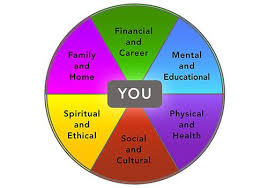
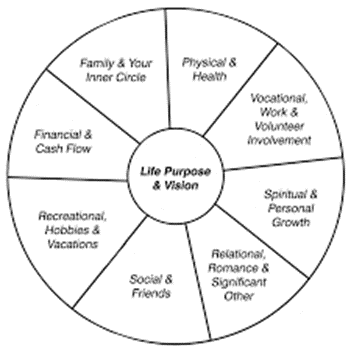
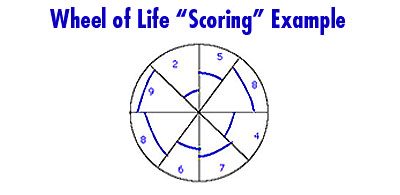
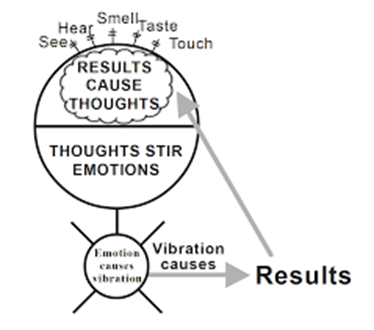
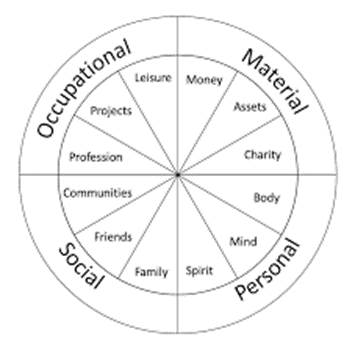
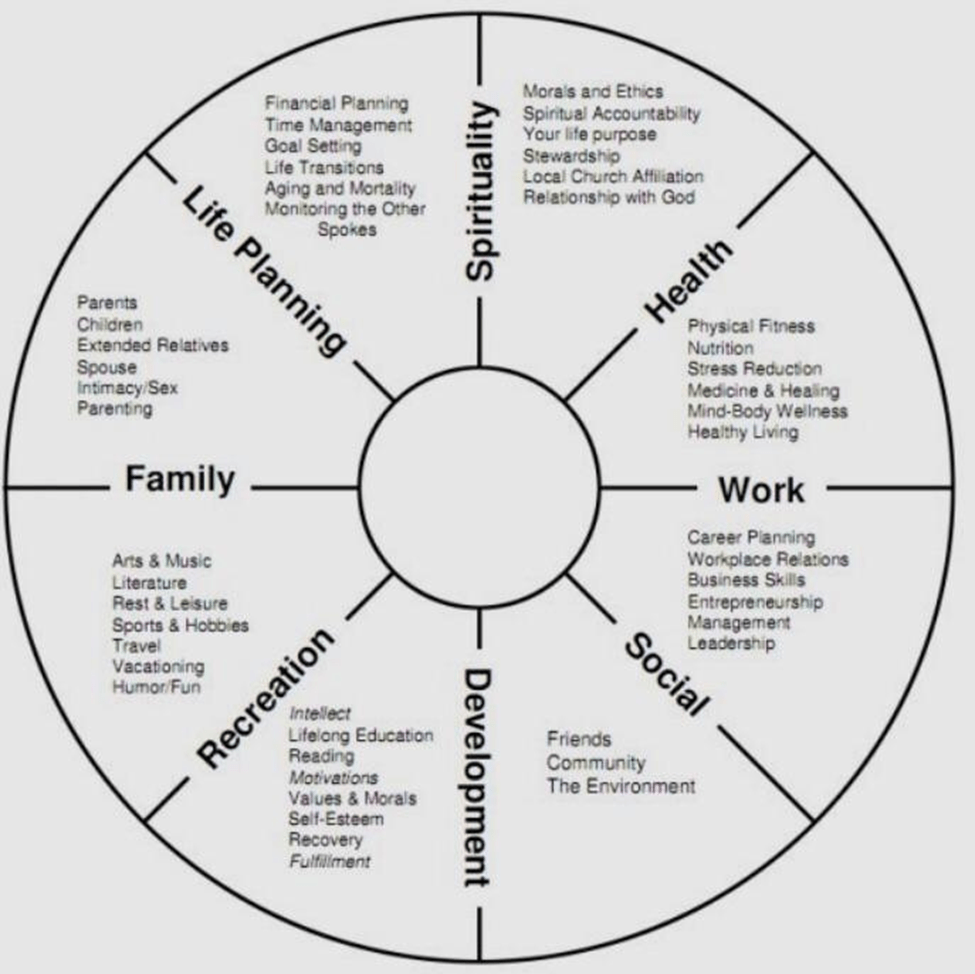

 REACH YOUR PEAK PERFORMANCE TODAY with the World's #1 Consulting Firm. The Reitenbach-Kissinger Institute and the MKS Master Key Consulting-Law-Engineering Systems. You are committed to achieving your goals. Do not compete without proven consultants. FREE 30-Minute Win the Game of Life or Business Consulting Session Call: 650-515-7545